
What to Actually Prioritise when Your Board Wants AI and Everything Feels Urgent
Boardrooms across APAC are fast‑tracking AI projects without first confirming that underlying infrastructure can support them. While 78% of organisations now use AI in at least one function—up from 55% a year ago—only 21% have rewired workflows to capture genuine value. A talent shortage compounds the problem: 40% of enterprises lack internal AI expertise, and 81% of APAC IT employers struggle to fill specialist roles. The article argues that readiness, capacity, and governance must precede ambitious use‑case selection to avoid costly delivery gaps.
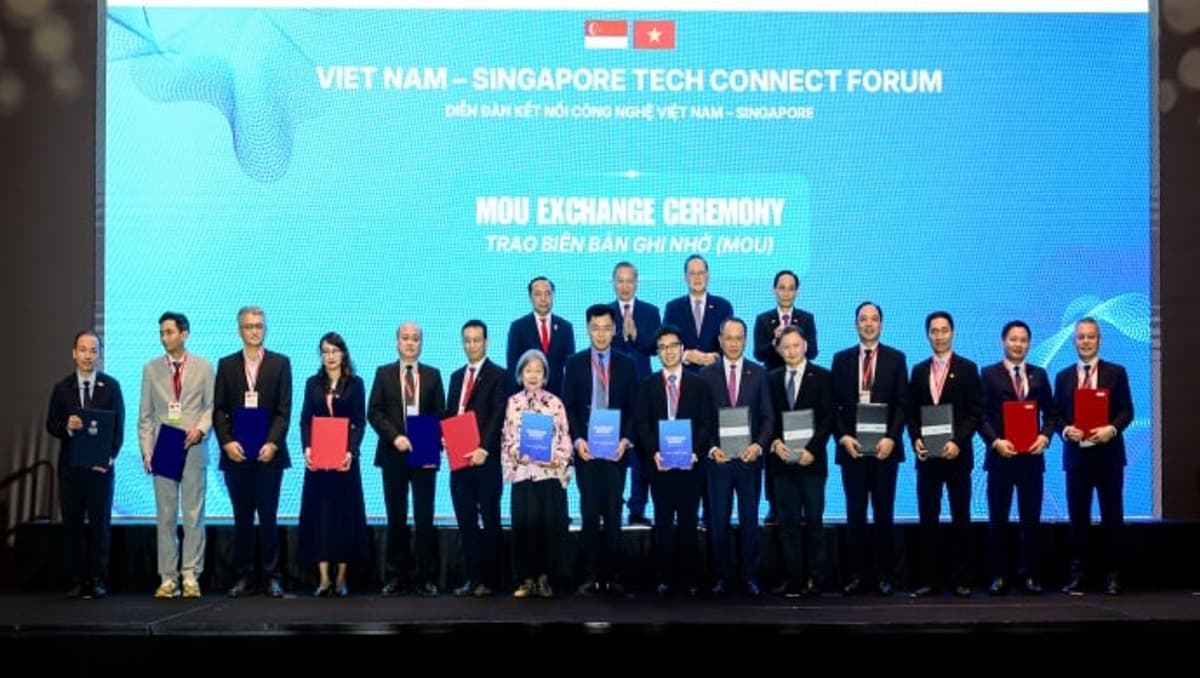
Singapore-Vietnam Collaboration Targets Climate-Tech Scale-Up as VIFC-HCMC Opens Doors to Global Capital
A three‑way pact between Vietnam’s International Financial Center in Ho Chi Minh City, Touchstone Partners and Singapore’s Temasek Foundation was signed on 29 May to turn climate‑tech pilots into funded, scalable businesses. The agreement launches Net Zero Challenge 2026 as a full‑stack pipeline that...

Gaming Is Not a Channel. In SEA, It’s the Entire Playing Field
Ampverse’s Southeast Asian gaming report argues that gaming is not a media channel but a cultural substrate shaping identity, trust and consumption for the region’s youth. It estimates 290 million active gamers in 2025, rising to over 330 million by 2028, across...

Carbon Capture, Cyber Capture: What CCS Really Means for Oil and Gas Accounting
Carbon capture and storage (CCS) is shifting from a pure engineering problem to an accounting integrity challenge. With more than 700 projects in development and only about 45 commercial facilities, operators must demonstrate, with verifiable data, how much CO₂ is...

Anthropic’s US$65B Cheque Redraws AI Funding Map
Anthropic closed a $65 billion Series H round, lifting its post‑money valuation to roughly $965 billion and positioning it as a heavyweight in enterprise AI. The company claims a $47 billion run‑rate revenue from its Claude large language model, a figure that would rival...

Inside the AI Workflow Competition at Echelon Singapore 2026
The AI Workflow Competition at Echelon Singapore 2026 challenged builders to solve real‑world SME bottlenecks in just 48 hours. Participants tackled Boldr’s support‑inbox overload, turning tickets into a customer‑intelligence engine, and The Social Space’s 1.5‑week monthly consignment reporting process, automating...

ETF Outflows and Macro Fear Put Bitcoin and Ethereum Under Pressure
Bitcoin slipped 2.02% to $74,326 as a $1.29 bn BlackRock iShares Bitcoin Trust block trade sparked institutional de‑risking. Spot Bitcoin ETFs recorded $333.6 m of net outflows over seven consecutive days, while Ethereum ETFs logged an 11‑day, $506 m outflow streak, the longest...

The Philippines Never Lacked Talent, It Lacked Leverage and AI Is Changing That
StellarPH, a Philippine‑based founder hub, observes that AI tools are letting students and non‑technical entrepreneurs build MVPs in days rather than months. Weekend hack‑sessions and AI‑driven workshops are producing functional prototypes without full development teams. The author argues that the...

The Moat Is No Longer the Model, It Is the Memory
A new paper from Accenture’s Centre for Advanced AI, Memex(RL), introduces an indexed external memory system for long‑horizon LLM agents. By storing full‑fidelity artifacts in a searchable database and letting the agent decide when to retrieve them, the approach avoids...

The Future of AI Is Not Conversation, It Is Action
The article argues that artificial intelligence is moving beyond chat‑based large language models toward action‑oriented systems that can perceive, decide, and execute in real environments. It highlights the need for world models and reinforcement learning to give AI a grounded...

How AMD Is Enabling the Next Wave of AI and High-Performance Computing in Southeast Asia
AMD is positioning its AI‑optimized CPUs, GPUs, networking and software as the backbone of Southeast Asia’s emerging AI and high‑performance computing (HPC) ecosystem. The company will showcase these solutions at Echelon Singapore 2026, a two‑day gathering of startups, investors and...

How Qwen Is Enabling AI Adoption Across Southeast Asia
Alibaba Cloud’s Qwen large language model suite is being positioned as a catalyst for AI adoption across Southeast Asia. By bundling advanced LLM capabilities with native cloud infrastructure, Qwen lets startups, SMEs and enterprises deploy AI‑driven workflows without building costly...

First Circle Lands US$4.87M From Cathay United to Expand Philippine SME Loans
First Circle, a Philippine fintech that provides unsecured lines of credit to SMEs, has secured a 300 million‑peso ($4.87 million) credit facility from Taiwan’s Cathay United Bank. The funding will boost its capacity to issue short‑term working‑capital loans, term loans and an...

Danish Startup Alcolase Is Betting Its Future on Asia’s Drinking Culture
Alcolase, a Copenhagen‑based biotech, raised €1.5 million (~US$1.65 million) seed funding to develop a liposome‑encapsulated enzyme supplement that breaks down alcohol in the stomach for people with ALDH2 deficiency. The condition affects roughly 540 million, mainly in East Asia, where social drinking is...

The Invisible System: How AI Is Redefining Game Testing and Balancing
Artificial intelligence has transformed game testing from a manual, end‑stage activity into a continuous, scalable simulation engine. AI agents now run thousands of scenarios in real time, detecting exploits, resource hoarding, meta dominance, and progression breakdowns before launch. The data...