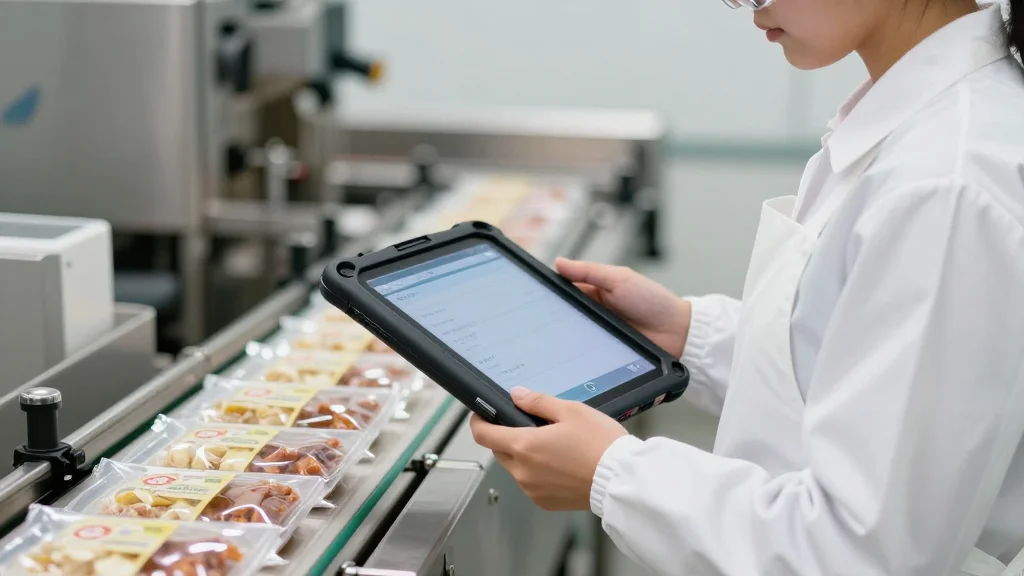
Replacing the Clipboard: Digitizing Compliance on the Factory Floor
Food and beverage manufacturers are moving from paper logs to digital compliance systems that timestamp inspections, record locations, and capture voice confirmations. The shift addresses audit vulnerabilities highlighted by a 15% rise in FDA recalls in 2025, where average direct costs exceed $10 million per incident. High workforce turnover—about 36% annually—makes automated, verifiable workflows critical for consistent safety practices. Real‑time digital records give operators instant visibility and strengthen audit readiness across increasingly complex plants.
Why Execution Gaps, Not Technology, Are Draining Food Manufacturers
Food manufacturers have widely adopted digital quality tools, yet many still rely on manual record‑keeping and fragmented workflows. SafetyChain labels the hidden cost of this misalignment as the “Invisible QA Tax,” where teams spend hours reconciling data instead of acting...

Food Exec Brief: Stagflation Signals Return, Food Fraud Surges, and AI Moves Off the Pilot Floor
Stagflation risk is resurfacing as Brent crude climbs above $90 a barrel, squeezing food manufacturers with higher input costs and waning consumer demand. Volume declines mark a fourth consecutive year for North‑American F&B sales, leaving price hikes as the sole...
Why Your Digital Transformation Didn’t Fail. Your Data Environment Did.
Manufacturers are investing heavily in digital transformation—ERP, MES, and BI layers—but many projects stall because the underlying data environment remains unfinished. Without clear KPI ownership, reconciled metric definitions, and validated inputs, shop‑floor teams distrust system outputs and revert to spreadsheets....

The CPG Growth Model Is Broken. McKinsey’s Research Points to What’s Next.
McKinsey’s April 2026 State of Food & Beverage report finds the traditional CPG growth model has hit structural limits, with volume expansion slipping below 1% and total shareholder returns falling about 7% while the S&P 500 rose 9%. Consumers are...

Smart Building Technology as a Risk Management Strategy for Food Manufacturers
Smart building technology is emerging as a core risk‑management tool for food manufacturers, converting existing facility data into an early‑warning system that flags equipment strain, environmental shifts, and safety threats before they cause downtime or compliance breaches. The greatest return...
Beyond GenAI: How Agentic AI Is Redefining the Human-Machine Relationship in Food Manufacturing
Agentic AI is emerging as autonomous digital co‑workers on food‑manufacturing shop floors, moving beyond generative AI tools. These agents can assess conditions, troubleshoot issues, and detect anomalies, boosting uptime and operational insight. Manufacturers are adopting a human‑in‑the‑loop model to keep...
![[Whitepaper] Chemicals on the Edge: Bringing Danger Outside the Production Floor Into Compliance](https://hixhlmpcokxhartfkpyi.supabase.co/storage/v1/object/public/images/thumbnails/c0fa029fdac0323d0223564bfeb9a767.webp)
[Whitepaper] Chemicals on the Edge: Bringing Danger Outside the Production Floor Into Compliance
The whitepaper from US Chemical Storage highlights that chemical hazards in food and beverage plants often originate outside the production line, in maintenance shops, labs, utility rooms and storage areas. These peripheral zones house flammables, corrosives, sanitation chemicals and increasingly...

What Your CFO Will Ask Before Approving Any Capital Investment
Preparing a capital investment proposal for a CFO requires answering a specific set of questions that go beyond the project’s merits. CFOs first ask for the cost of doing nothing, then demand transparent methodology, a clear payback period, evidence of...
Food Exec Brief: Protein Gets the Capex, Hormuz Hits the Harvest, and AI Takes the Wheel
Food manufacturers are channeling capital into protein production, with Michigan attracting more than $1.2 billion in new plant expansions from Chobani’s La Colombe and Coca‑Cola’s Fairlife brands. The FDA postponed its food traceability rule compliance deadline to July 2028, while the closure of...

FDA Food Traceability Rule Extended: How Companies Can Approach Compliance Ahead of 2028
The FDA has pushed the Food Traceability Rule compliance deadline to July 2028, giving the food sector an extra 30 months to meet stringent record‑keeping requirements. Recent data show recall announcements climbing to 320 in 2025, while a 2025 survey...

Mood-Boosting Functional Snacks: Which CPG Brands Are Winning “Calm” And “Focus” In 2026
Functional snack makers are turning mental‑wellness demand into "calm" and "focus" products, leveraging ingredients like L‑theanine, ashwagandha, and lion’s mane. Brands such as MOSH, The Feel Bar, Good Day Chocolate, Deuxnuts, and gummy makers are staking distinct emotional claims and...
How AI Is Solving HACCP Documentation and Quality Control (and What Execs Should Know Before Buying)
AI-driven platforms are transforming HACCP documentation, shrinking plan creation from weeks to roughly 30 minutes and adding real‑time monitoring, vision inspection, and predictive analytics. The global AI food‑safety market, valued at $2.7 billion in 2024, is projected to hit $13.7 billion by...
Recall Liability: Who Should Be Held Responsible?
The recent ByHeart infant formula recall exposed severe supply‑chain communication breakdowns, allowing contaminated product to remain on store shelves and endangering 48 infants. While the manufacturer originated the contamination, distributors and retailers that continued shipping the product faced liability, highlighting...
![[Webinar] From System of Record to System of Action: Rethinking ERP and AI in Food & Beverage and Consumer Products...](https://hixhlmpcokxhartfkpyi.supabase.co/storage/v1/object/public/images/thumbnails/2cc5d7b0b267499cdedb3314c93568ff.webp)
[Webinar] From System of Record to System of Action: Rethinking ERP and AI in Food & Beverage and Consumer Products...
The upcoming webinar spotlights a paradigm shift from traditional ERP as a passive system of record to an AI‑driven system of action for food‑and‑beverage and consumer‑products manufacturers. It showcases QAD Adaptive ERP and Champion AI’s ability to turn real‑time operational...

Why Most ERP Modernization Projects Die Before They Start
Food manufacturers recognize legacy ERP systems erode profitability, but most modernization projects stall before funding. The primary obstacle is translating operational pain points—such as manual workarounds and slow closes—into a concrete financial case that satisfies CFOs and boards. Without a...

How Passover Foods Appeal to Gluten-Free and Health-Conscious Shoppers Year-Round
Passover’s strict dietary rules are turning the holiday into a year‑round driver of gluten‑free demand. Kosher‑for‑Passover certification now touches roughly 35 million non‑Jewish consumers, prompting manufacturers to swap wheat for almond, potato and coconut flours. This reformulation expands the shelf of...
Building Resilient Food and Beverage Operations Through Digital Thread Strategies
The article explains how food and beverage manufacturers can boost resilience by adopting a digital thread—a unified, real‑time data flow linking formulation, packaging, quality, and regulatory systems. Disconnected legacy systems create risks such as mislabeling, compliance failures, and supply‑chain disruptions....
What March Madness Teaches Food Manufacturers About Workforce Development
Food manufacturers face a talent crunch similar to March Madness, where turnover and skill gaps threaten operational momentum. The article argues that championship-level workforce development hinges on three pillars: protecting the roster through clear career pathways, modernizing learning with bite-sized...
CPG Supply Chain Digital Transformation: What’s Working in 2026 and What’s Still Theory
CPG food manufacturers are midway through digital transformation, with foundational projects delivering measurable gains while advanced AI and autonomous supply chains lag. Real‑time production and warehouse visibility, clean‑data AI demand forecasting, and digital traceability are showing up to 20% output...
After a Year of Recalls and Outbreaks, the Food Industry Confronts a Cold Chain Visibility Gap
After a year marked by more than 30 multistate food‑borne outbreaks, the food industry has identified a cold‑chain visibility gap that allows temperature excursions to go undetected during system handoffs. Ambient IoT, using battery‑free BLE tags, offers continuous, real‑time temperature...

The 25 Most Influential Executives in Food and Beverage (2026)
The 2026 list of the 25 most influential food‑and‑beverage executives replaces revenue‑centric rankings with a seven‑signal influence model, measuring LinkedIn reach, earnings‑call narrative, M&A activity, conference keynotes, trade‑press visibility, policy shaping, and transformation impact. The list highlights leaders from both...
Are Your Cost-Cutting Initiatives Actually Saving You Money?
Food manufacturers are feeling a sharp cost squeeze, with 78% reporting a 13% average rise in per‑product expenses. Common cost‑cutting tactics—deferring maintenance, slashing training budgets, and postponing visibility investments—often generate hidden expenses that outweigh the intended savings. The article argues...
![[Business Case Builder] The High Cost of Doing Nothing](https://hixhlmpcokxhartfkpyi.supabase.co/storage/v1/object/public/images/thumbnails/ccbcb1a37a7fb9c5f2302325e578e67d.webp)
[Business Case Builder] The High Cost of Doing Nothing
Food manufacturers facing the FSMA 204 deadline are urged to modernize legacy ERP systems, which silently generate costs in inventory waste, recall exposure, compliance labor, manual workarounds, and slow financial closes. QAD’s sponsored Business Case Builder provides fill‑in worksheets, KPI‑to‑dollar translation,...
![[Webinar] Firefighting Vs. Foresight: AI and the Industry 5.0 Shift in Food & Beverage](https://hixhlmpcokxhartfkpyi.supabase.co/storage/v1/object/public/images/thumbnails/4ba93ef6d39045f1f7ffad09eece49a5.webp)
[Webinar] Firefighting Vs. Foresight: AI and the Industry 5.0 Shift in Food & Beverage
Frost & Sullivan and Aptean are hosting a webinar on March 26, 2026 to discuss the Industry 5.0 shift in food and beverage. The session highlights how AI‑embedded, unified platforms can replace fragmented, reactive processes across production, quality, supply chain, and finance. Speakers will illustrate...
The 4-Stage Integration Gap Holding Food Manufacturers Back in 2026
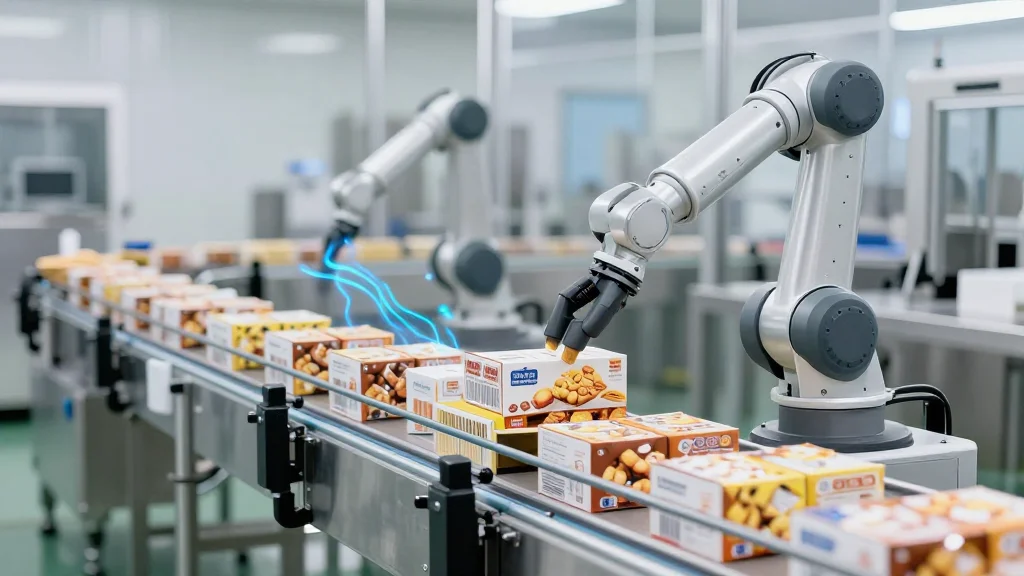
Food manufacturers are largely stuck in a hybrid, partially connected integration state, where systems like ERP and MES exchange data inconsistently. A 2025 survey shows nearly 70% of firms cite cost as the primary obstacle to deeper digital transformation, yet...
![[EBook] Winning the Shelf Playbook](https://hixhlmpcokxhartfkpyi.supabase.co/storage/v1/object/public/images/articles/db8c4581aaa2e332f96e79d1b6b92fab.webp)
[EBook] Winning the Shelf Playbook
Tastewise’s new eBook, “Winning the Shelf Playbook,” argues that point‑of‑sale data alone can no longer secure shelf space in 2026. Brands must leverage real‑time consumer signals—claims, usage occasions, prep contexts, and basket behavior—to craft SKU stories that resonate with empowered...