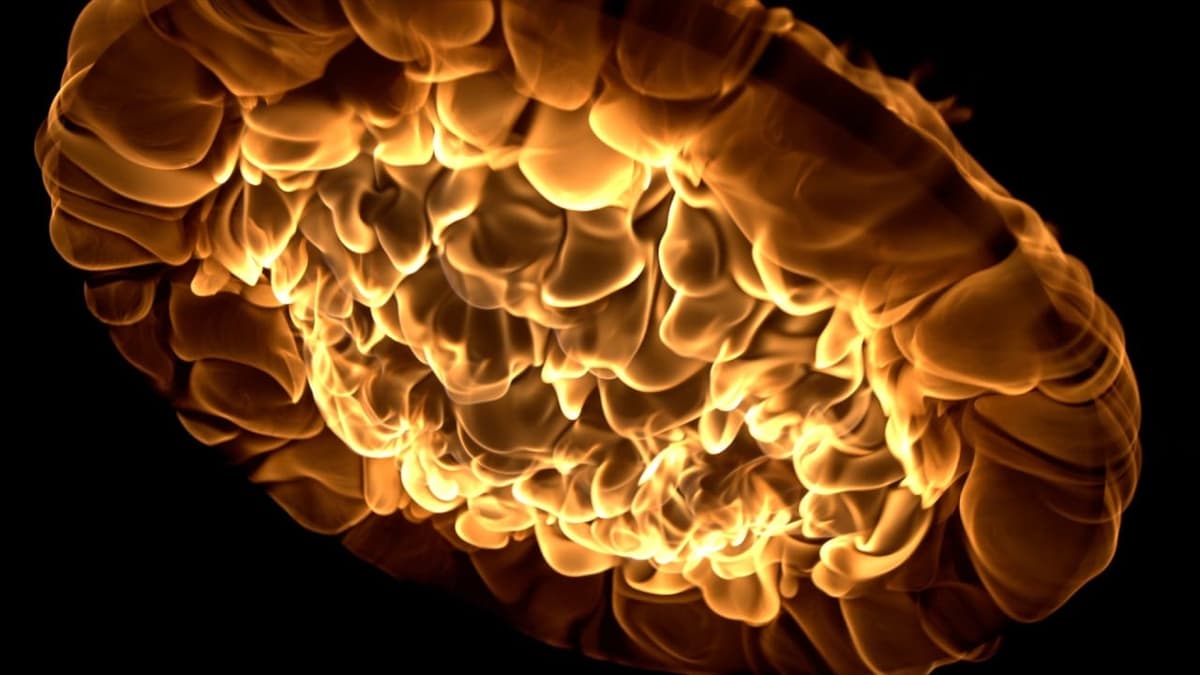
Fire From Below
The Slow Mo Guys filmed a gas grill mounted upside‑down, letting viewers watch a burning flame from below. This unconventional perspective blocks the usual upward buoyancy, forcing hot gases to escape around the grill’s edges. The resulting footage shows surprisingly laminar flame sheets and, later, ground cinnamon igniting as bright sparks. The visual experiment blends fluid‑dynamics insight with striking cinematic effect.

Making a Star-Shaped Droplet
Researchers have demonstrated that tiny oil droplets suspended in a soapy fluid can form a crystalline shell that changes shape with temperature. By heating or cooling the system, the droplets reversibly morph from a regular hexagon to a six‑pointed star...

Particles Separate When Flowing Downhill
Researchers demonstrated that well‑mixed particle suspensions can self‑segregate when flowing down an incline. By mixing equal‑density glass spheres of two sizes in silicone oil, they observed larger red particles overtaking smaller blue ones near the flow front. Side‑view imaging revealed...

Explaining the Swirl of Wildfire Smoke
Recent research explains why wildfire smoke in the stratosphere consistently forms anticyclonic vortices. Smoke injected at roughly 15 km rises to 35 km, stretching and intensifying any rotation. While classic theory predicts a cyclone‑anticyclone pair, the study shows that vertical shear can...

Crowned Jets
Researchers have visualized a new fluid‑dynamic phenomenon dubbed “crowned jets,” where a simple water drop in a test tube produces a central jet surrounded by a crown‑like liquid sheet. The effect arises when the impact generates a pressure wave that...

Observing Ice Giant Atmospheres
The James Webb Space Telescope spent 17 uninterrupted hours imaging Uranus in the near‑infrared, revealing detailed structure of its ionosphere and auroral regions. Temperature measurements show a peak between 3,000 and 4,000 km altitude, while ion densities reach a maximum near...

Bioconvection
Researchers have demonstrated that the sulfur‑laden Thiovulum bacteria generate convection patterns without temperature gradients. Their negative buoyancy and asymmetric moment of inertia cause flow‑induced torques that steer swimming direction. In a thin‑gap Hele‑Shaw cell with decreasing oxygen concentration, the microbes...

Turbulence and Bioluminescence
Researchers modeled dinoflagellates as elastic dumbbells that emit light when deformed, linking their bioluminescence to fluid stresses. The study examined how different turbulent flow regimes influence the intensity and frequency of light flashes. Results show that both the fluctuations and...

Aging Salty Ice
When ice forms in salty water it initially creates a mushy, porous matrix as brine becomes trapped between crystal lattices. Over roughly sixteen days, the denser brine convects downward, expelling itself and leaving a thinner yet more solid ice layer...

Mixing Bubble Caps
Researchers investigated how bubble caps thin and burst, focusing on the buoyant plumes that rise from the foot of the cap where fluid exchange occurs. In still air, these plumes appear as dark‑blue vertical columns, leading to localized thinning. Introducing...

Richtmyer-Meshkov Instability
A recent study demonstrates that sending a shock wave through a magnetized plasma triggers the Richtmyer‑Meshkov instability, which manifests as mixed Kelvin‑Helmholtz roll‑ups and Rayleigh‑Taylor‑like plumes. Researchers used a two‑fluid model—separating ion and electron fluids—to capture these structures, which are...

Testing Structures Against Hurricane Storm Surge
Engineers are using the Directional Wave Basin to simulate hurricane storm surge on scaled‑down structures, providing controlled, repeatable data. A recent test compared two identical one‑third‑scale houses, differing only by a one‑foot elevation increase, under identical surge conditions. The elevated...
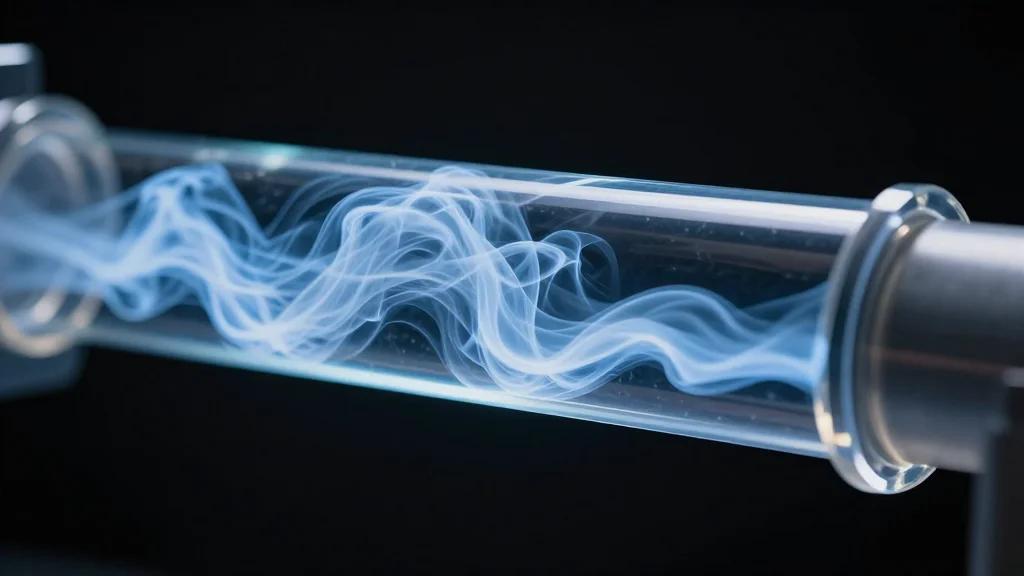
Improving Turbulence Models
Researchers have introduced a new sub‑scale turbulence equation derived via an equation‑discovery tool, targeting the small‑scale dynamics that large‑eddy simulation (LES) typically approximates. By running a full, high‑fidelity turbulent flow simulation and matching its output against a library of over...

Drag Reduction Via Bubbles
Researchers used computational fluid dynamics to model bubbly flow beneath a moving container ship, exploring how inertial, buoyancy, and surface‑tension forces interact. Their simulations showed that when bubbles coalesce into a continuous air layer on the hull, drag can drop...
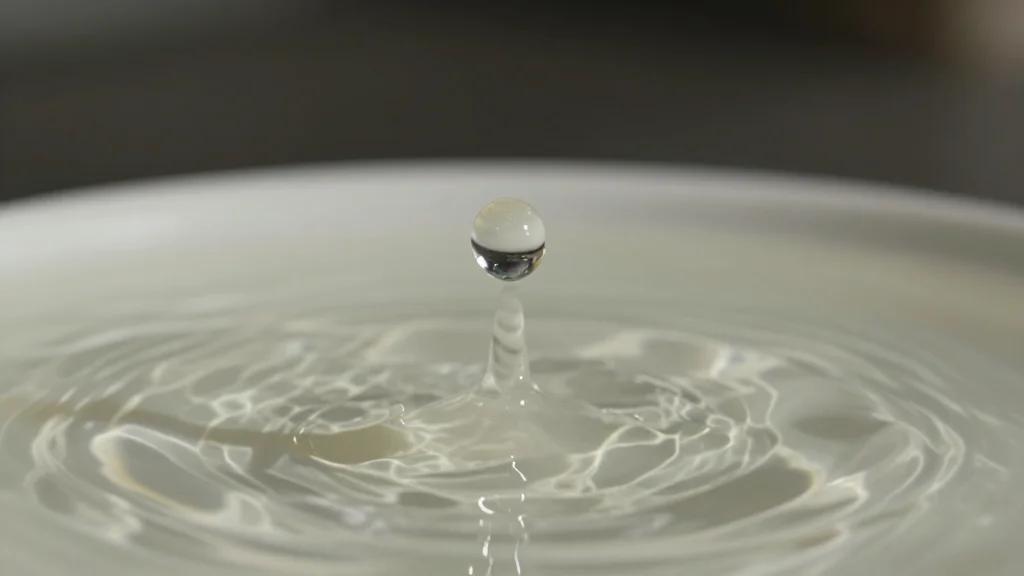
Mimicking Quantum Effects
Researchers have used vibrating pools of silicone oil to create macroscopic droplets that bounce and walk, reproducing quantum phenomena in a fluid medium. By introducing a standing Faraday wave, the team mimicked the Kapitza‑Dirac effect, causing droplets to diffract similarly...
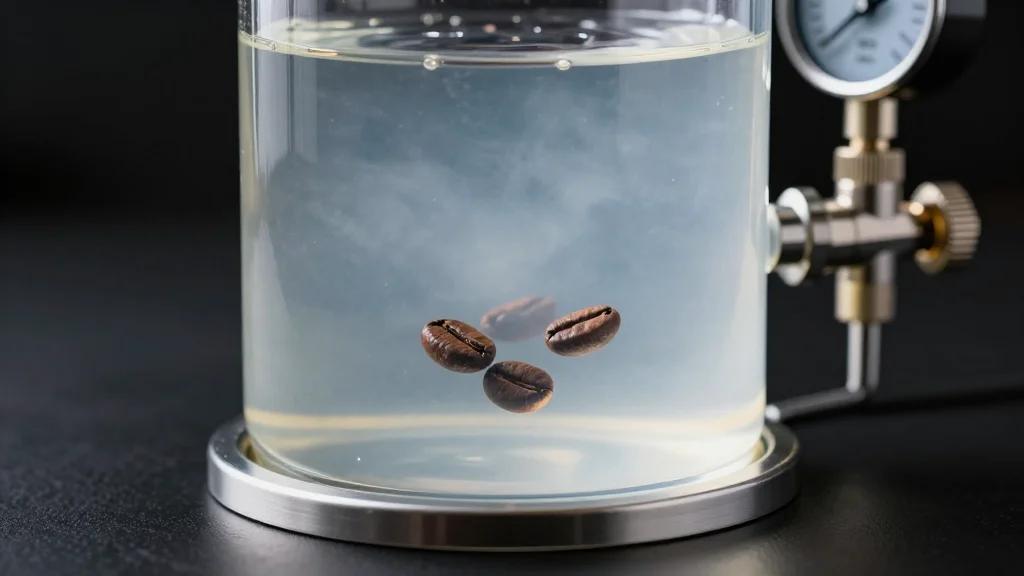
When the Meniscus Disappears
The article highlights supercritical fluids, a fourth state of matter that blends the diffusion of gases with the solvating power of liquids. It explains how carbon dioxide surpasses its critical temperature of 31 °C and pressure of 73 bar, erasing the traditional...
Icy or Rocky Giants?
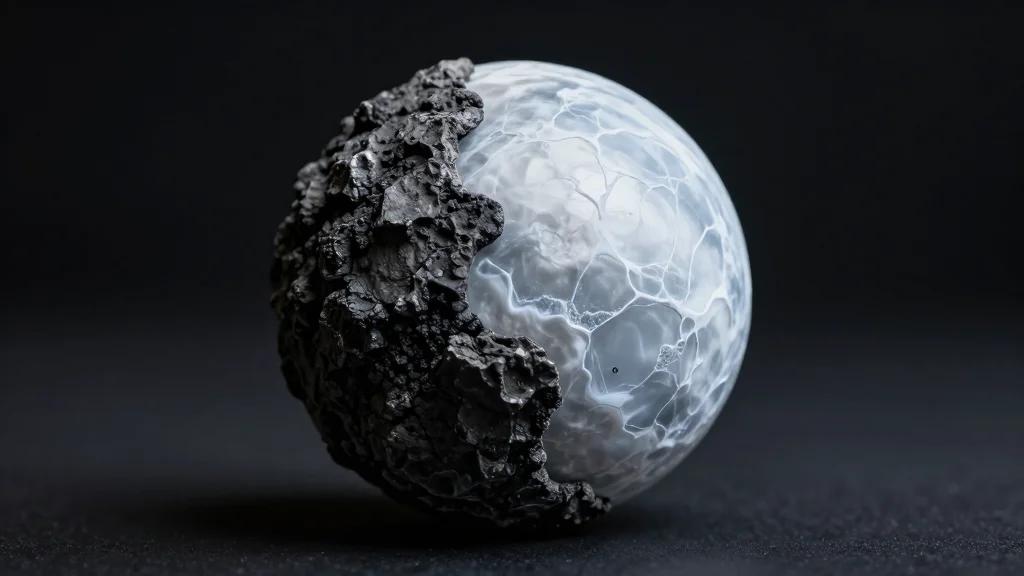
A new simulation study suggests Uranus and Neptune may be more rocky than icy, challenging the traditional "icy giant" label. Researchers generated thousands of interior configurations that simultaneously satisfy gravitational data and thermodynamic constraints, revealing both water‑rich and rock‑dominant possibilities....
Swirling Without Blades
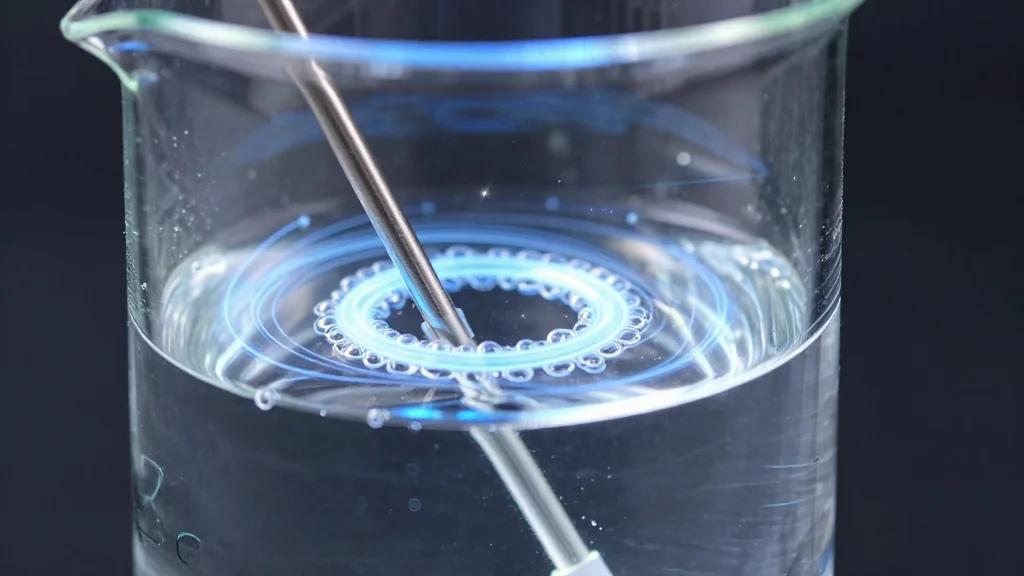
Researchers observed a ring of hydrogen bubbles rising and rotating clockwise during electrolysis, despite the absence of any fan blades. The rotation is caused by a Lorentz force generated by the interaction of electric currents and magnetic fields in the...
“Frozen”
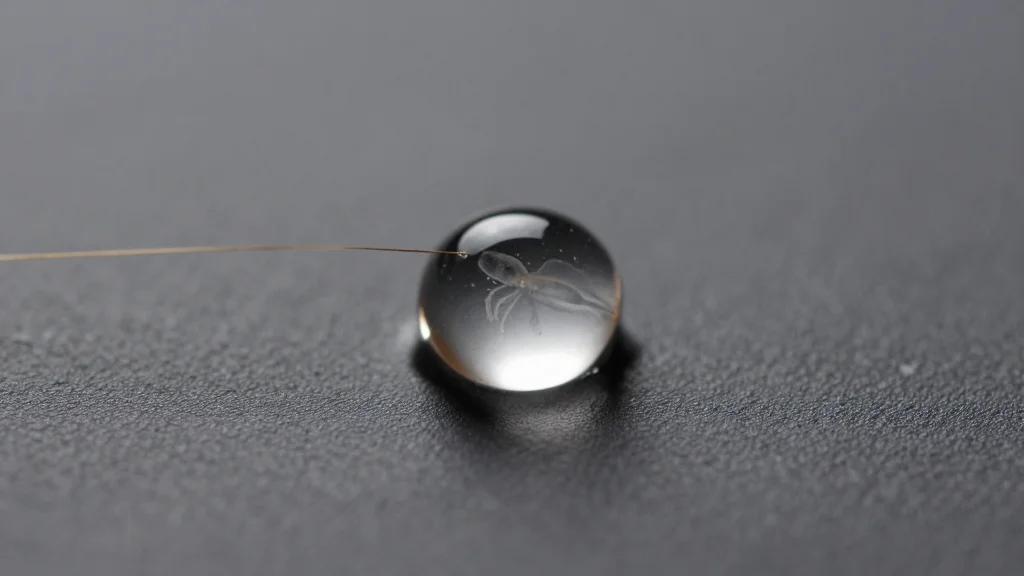
The article explores how water behaves fundamentally differently for microscopic invertebrates, where surface tension outweighs gravity. At this scale, droplets cling to spiky hairs and retain a perfect spherical shape. Even pond surfaces act like elastic trampolines, allowing tiny creatures...
Understanding Schlieren
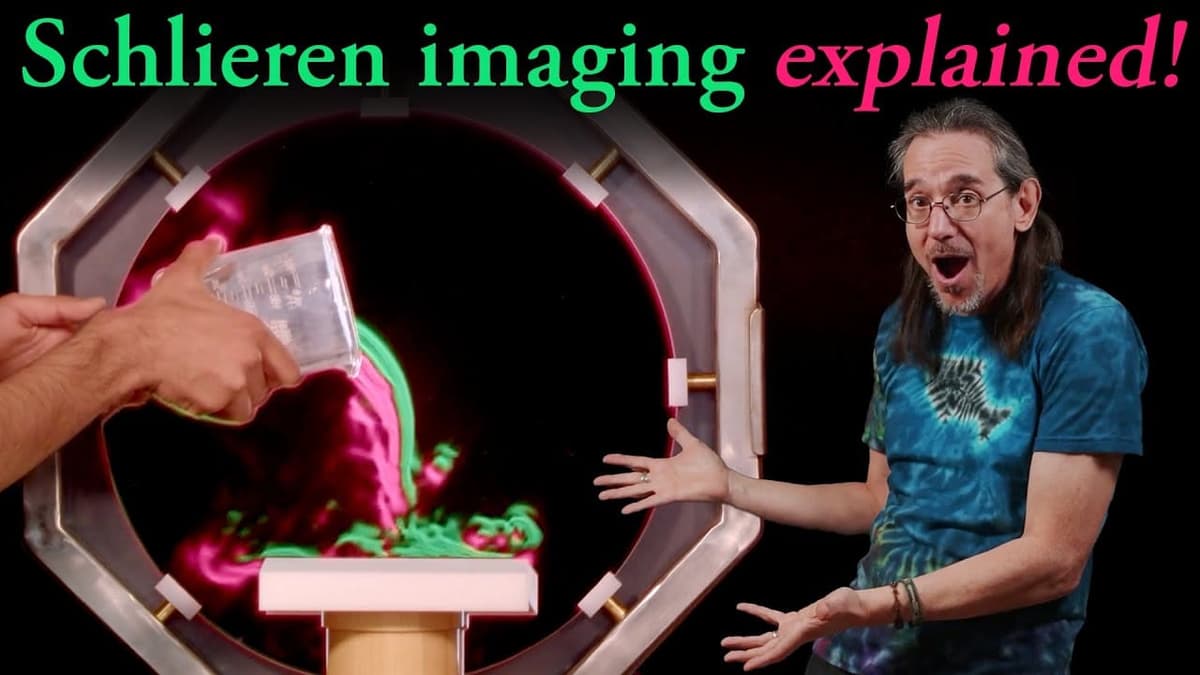
The article explains schlieren imaging, an optical technique that makes density variations in fluids visible. It focuses on a spherical‑mirror configuration that can render invisible gases, candle plumes, and shock waves detectable on camera. Sample images show carbon‑dioxide vortex rings...

Connecting Canals
Scotland’s Falkirk Wheel, completed in 1999, replaced a historic series of 11 locks linking the Union Canal and the Forth and Clyde Canal. The rotating boat lift raises vessels 24 meters using only about 75 kWh per turn, making it one of...