Key Takeaways
- •Supercritical fluids combine gas diffusion and liquid solvency.
- •CO2 becomes supercritical above 31°C and 73 bar.
- •Used to decaffeinate coffee and extract pharmaceuticals.
- •No distinct liquid‑gas boundary in phase diagram.
- •Enables greener, low‑temperature processing.
Pulse Analysis
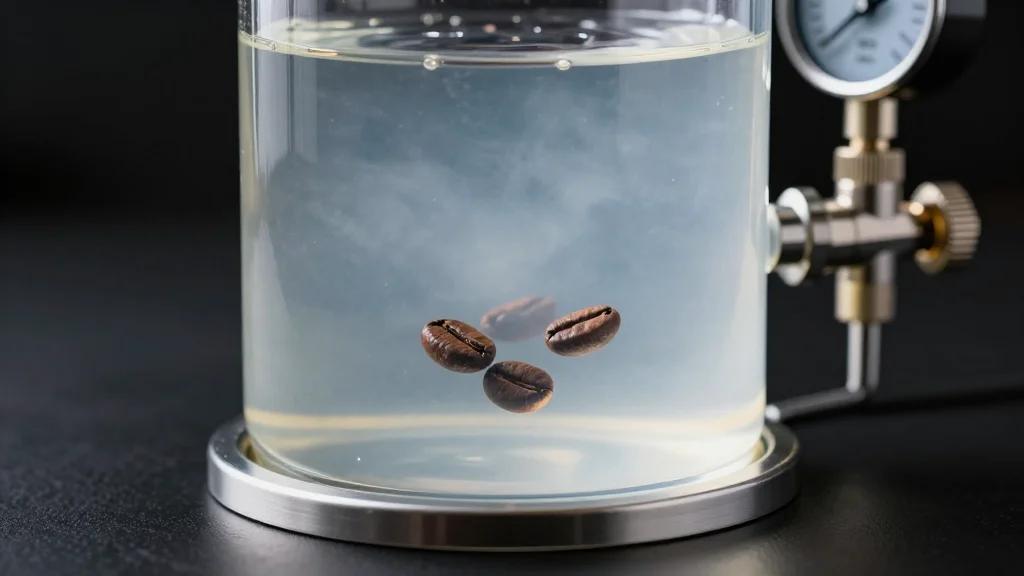
Supercritical fluids occupy a niche beyond the classic solid‑liquid‑gas trio, existing where temperature and pressure exceed a substance’s critical point. In this regime, molecules retain enough kinetic energy to move freely like a gas, yet remain densely packed enough to dissolve materials like a liquid. The disappearance of the meniscus on a pressure‑temperature chart signals this transition, challenging traditional thermodynamic teaching and opening a realm where phase boundaries blur.
Industries have quickly adopted supercritical carbon dioxide (scCO₂) for its dual benefits: high diffusivity and strong solvating ability without leaving toxic residues. The coffee industry leverages scCO₂ to strip caffeine while preserving flavor compounds, a process that is faster and more environmentally friendly than solvent‑based methods. Pharmaceutical manufacturers use it to extract active ingredients, achieving higher purity and lower thermal degradation. Moreover, scCO₂’s tunable density allows precise control over solubility, making it ideal for nanomaterial synthesis and polymer processing.
Looking ahead, research aims to expand supercritical applications into carbon capture, advanced metallurgy, and sustainable fuel production. Challenges remain, such as the need for high‑pressure equipment and safety protocols, but ongoing engineering advances are lowering costs. As regulatory pressure mounts for greener processes, the supercritical fluid market is projected to grow substantially, positioning it as a cornerstone technology for the next wave of low‑impact manufacturing.
When the Meniscus Disappears
Comments
Want to join the conversation?