
7 Tests to Expose Wise Leaders
The article outlines seven observable tests that separate wise leaders from merely competent managers. It argues that wisdom is demonstrated through curiosity toward feedback, listening to understand, seeking input, consistent conduct, influential peers, emotional control, and the ability to develop others. Each test is presented as a behavioral cue that can be watched in real time. The piece concludes with actionable steps for individuals to practice these patterns and assess leadership potential in their organizations.
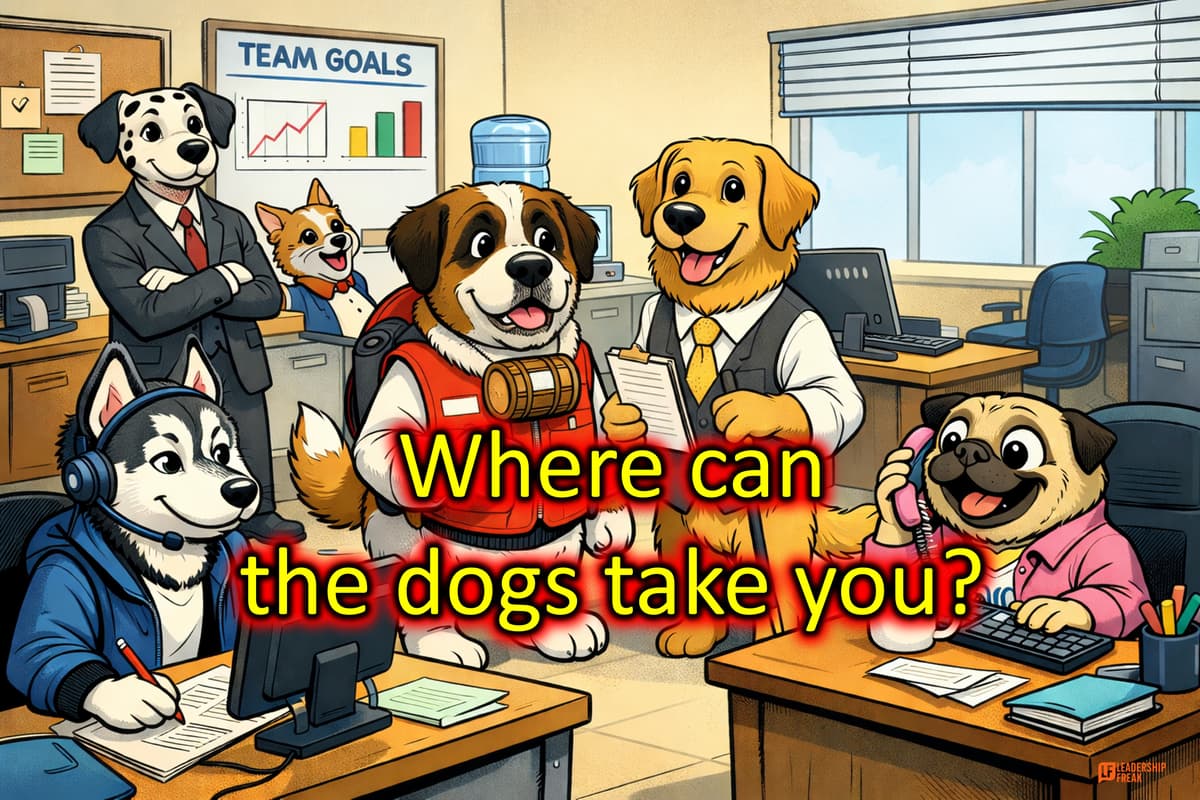
The Dogs In the Shed
Leadership expert uses dog‑breed metaphors to illustrate that employees thrive when placed in roles that match their innate strengths. The article argues managers should stop trying to fix mismatched talent and instead focus on identifying and releasing individuals into positions...
The 6 Sense-Making Questions
The article frames sense‑making as a map‑making process that helps leaders interpret events rather than react reflexively. It outlines six core questions—from labeling what’s happening to deciding what to do—that structure how people assign meaning, cause, identity, and future expectations....
Multiply Or Die
“Multiply Or Die” contends that true leadership is measured by the ability to develop other leaders, not by exercising control. It promotes freedom over authority, urging leaders to set direction, establish boundaries, and let capable team members act independently. The...
Comfort Makes You Stupid
Leadership Freak outlines four practical habits to counteract complacency and boost mental growth. It urges readers to step out of comfort zones, ask probing questions, reflect through journaling or coaching, and avoid the arrogance trap by staying open to diverse...

Enjoy Happiness
"Enjoy Happiness" offers a contrarian view that chasing happiness directly hampers well‑being, recommending instead that individuals focus on meaning, accept sadness, and cultivate intentional positive habits. The piece lists seven actionable steps—from pursuing purpose over fleeting pleasure to giving away...

Absolutely Fit to Lead
Leadership expert Jimmy Collins argues that true leadership starts with the ability to follow. He emphasizes humility, learning from experienced mentors, and aligning with a larger vision as essential steps before assuming a title. The article outlines four practical ways...

Escape The 4 Traps
The article outlines four common leadership traps—friction, relational, moral drift, and ego—that silently undermine organizational health. Each trap is described with behaviors that create inefficiency, erode trust, compromise ethics, or stifle collaboration. Simple action steps, such as “to‑stop” meetings and...

The Destruction of “Maybe”
The article warns that using “maybe” as a stand‑in for “no” creates false hope, stalls decision‑making, and erodes trust within teams. It lists common “maybe” phrases that leave talent hanging and explains how indecision paralyzes progress. The piece advocates for...

3 Ways to Ignite Commitment
The article argues that true employee commitment, unlike forced compliance, is generated through genuine relationships and mutual investment. It outlines three practical levers—demonstrating care, committing to people through development, and aligning personal benefits with organizational goals—to transform intent into action....

7 Unexpected Ways to Exceed Expectations
The article outlines seven practical ways leaders can exceed expectations by intentionally breaking everyday rituals. It first highlights the seven joys of ritual—predictability, stability, energy, freedom, trust, speed, and belonging—showing how routines free mental bandwidth. It then proposes specific disruptions,...

Defeat Negativity
The article reframes negativity as an explanatory habit, contrasting pessimistic (permanent, personal, pervasive) and optimistic (temporary, specific, changeable) lenses. It presents five practical steps for leaders to shift from self‑defeating narratives to constructive optimism, anchored by the ABCDE method. Action...

Challenge All Requirements
The article urges leaders to treat every existing requirement as a hypothesis rather than a mandate, encouraging teams to actively challenge and discard rules that lack clear justification. It outlines a four‑step framework—assuming requirements are wrong, identifying the originator, rejecting...

10 Warning Signs You’re Off Track
The article outlines ten subtle warning signs that leaders are drifting off course, such as recurring issues, slowed decision‑making, and top performers stumbling. It argues that hectic schedules often conceal strategic misalignment and that recognizing these symptoms early can prevent...

Values: Where Good Intentions Go to Die
Leaders often draft corporate values but fail to embed them in daily behavior. The article urges quarterly alignment meetings and a rotating Chief Values Officer to monitor and enforce values through concrete actions. It stresses that promotions, performance reviews, and...

5 Daily Responsibilities of Managers
Effective managers balance present‑focused execution with future‑oriented leadership by adhering to five core daily responsibilities. They define current priorities, coach talent, stay connected yet non‑intrusive, eliminate operational friction, and lift teams out of day‑to‑day weeds. The article emphasizes that clarity...

Seize Pivotal Moments
Leadership expert Marcus Aurelius' insight frames pivotal moments as catalysts that expand potential. The article outlines five characteristics of such moments—unexpected arrival, involvement of others, awkward discomfort, reflective necessity, and a call for change. It provides practical prompts for leaders...

Your Ego the Saboteur
The article frames ego as a hidden saboteur that drives reactive behavior in leaders. It identifies three ego expressions—Complier, Protector, and Controller—each undermining team dynamics. Practical action items include naming defensive reactions, pausing before saying “yes,” and soliciting candid feedback...

10 Ways to Fight Fair
Most organizations avoid conflict, leading to mediocrity. A recent leadership piece outlines ten practical steps to foster “fair fighting,” encouraging small, invested groups, flattened hierarchies, honest yet kind communication, and protected constructive dissent. It stresses that once decisions are made,...

Respect: A Free Untapped Advantage
The article highlights how disrespect erodes employee commitment, with nearly 80% reducing engagement when they feel undervalued. It frames disrespect as a driver of learned helplessness and outlines seven concrete ways leaders can demonstrate respect, from actively describing others' viewpoints...

The Generosity Advantage
The article frames generosity as the missing ingredient for greatness, presenting seven actionable practices and four core strengths that leaders should adopt. It argues that skill alone cannot compensate for a stingy heart, and that giving without expectation multiplies influence....

5 Positive Ways to Say No
The article outlines five positive techniques for declining requests, emphasizing that saying no protects time, credibility, and relationships. It frames boundaries as a strategic asset rather than a personal rejection. Each step—starting with gratitude, being direct, offering brief reasons, suggesting...

Goals Aren’t Finish Lines
The article argues that effective goals are habits, not distant finish lines, using a personal experiment of doubling stair trips to illustrate low‑friction goal setting. It introduces habit stacking—linking small, repeatable actions to existing routines—to create sustainable behavior change. A...

Escape the Traps in Your Head
The article outlines three common mental traps—imagined fear, approval‑seeking, and perfectionism—that undermine leaders’ effectiveness. It explains how each trap creates self‑reinforcing cycles of anxiety, wasted energy, and stalled execution. Actionable items such as speaking honestly, serving freely, and showing up...
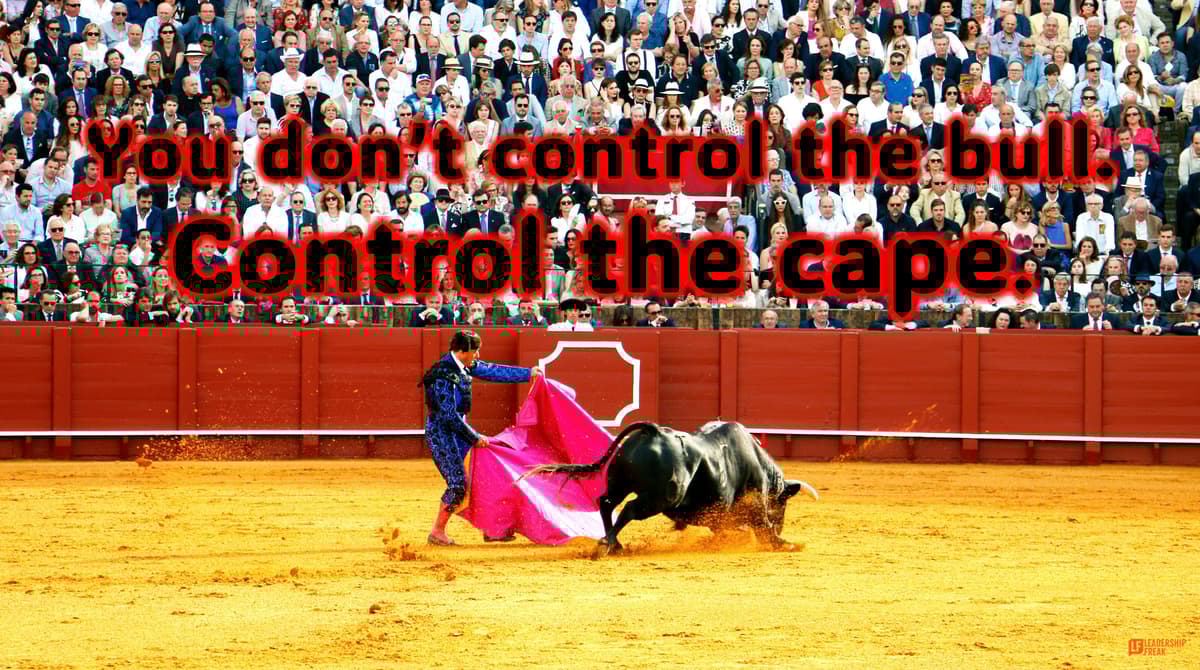
Control the Cape
The "Control the Cape" article uses a bullfighting metaphor to argue that leaders cannot command external forces such as politics, markets, or people, but they can master their own responses. It stresses shifting focus from futile control attempts to intentional...

The Focus Most Get Wrong
The piece advises shifting focus from lofty outcomes to concrete daily actions. It uses the author’s stair‑climbing habit and a "friction audit" exercise to illustrate how micro‑behaviors drive progress. Long‑term goals are presented as directional guides, while consistent rituals translate...

Character Before Skill
The article argues that leadership character, not skill, determines long‑term success. It outlines seven core virtues—integrity, courage, humility, responsibility, self‑control, care for people, and reliability—as the foundation of effective leaders. It advises hiring teams to probe moral fiber through interview...
10 Tactics of Obnoxious Leaders
The article outlines ten hallmark tactics used by obnoxious leaders, from obsessing over short‑term results to withholding gratitude and demanding respect without earning it. It argues that such behavior stems from self‑deception and a belief that problems lie with people...

Credibility Gives You A Voice
The article outlines seven practices that leaders can adopt to build credibility and amplify their influence. It emphasizes quiet, backstage work such as processing emotions, avoiding outbursts, focusing on ideas, analyzing success, growing personal capability, investigating issues before speaking, and...

5 Ways to Redefine Meetings
The article challenges the status quo of traditional meetings, labeling many as unproductive "zombie" or "black‑hole" sessions. It proposes five new definitions that view meetings as platforms for expanding team intelligence, multiplying results, and fostering diverse perspectives. Concrete rules—such as...

The “Call Five People” Rule
The article introduces the “Call Five People” rule, a ten‑minute practice where leaders discuss a problem with five diverse contacts to break isolation. It outlines specific questions to surface blind spots and lists scenarios—stalled decisions, crossroads, high‑stakes moments—where the rule...