
ConnectLive 2026: The DMS Rewires Itself for the Agentic Era
iManage used its ConnectLive 2026 conference to unveil a major overhaul of its document management system, branding the shift as comparable to the industry’s move to cloud computing. The new platform, dubbed iManage Work 2026, embeds generative‑AI agents that can draft, review, and route legal documents autonomously. Early adopters, including 30% of Fortune 500 law firms, report a 40% reduction in manual review time and a 20% boost in compliance accuracy. Pricing is tiered, with a base subscription of $45 per user per month, positioning the solution for both large enterprises and midsize practices.
Weightmans Selects Clio Operate (Formerly Sharedo) After Major Selection Process
Weightmans, a leading UK law firm, has chosen Clio Operate—formerly Sharedo—as its new case and matter management platform after an extensive selection process. The firm cited Clio Operate's integration capabilities, scalability, and modern user experience as decisive factors. Implementation will...
Report From the FT Innovative Lawyers Asia-Pacific Awards in Hong Kong
The Financial Times Innovative Lawyers Asia‑Pacific Awards convened in Hong Kong amid a wave of optimism across the region’s legal sector. Firms reported a surge in deal activity, with IPOs accelerating at the fastest pace in years. The event highlighted...
Big Tech Sets Sights on the Legal Market
Two mainstream technology giants have rolled out AI‑powered legal platforms, marking a decisive entry into a market long dominated by specialized legal‑tech firms. The new solutions automate contract review, risk assessment, and regulatory research, promising speed and cost savings for...

Claude for Legal and Access to Justice: The Good, the Bad, and the Unknown
Anthropic unveiled Claude for Legal, adding more than 20 MCP connectors, 12 practice‑area plugins and native integrations with Microsoft Office apps. The rollout partners the Justice Technology Association and Free Law Project, embedding CourtListener, Courtroom5, BoardWise and Descrybe as free...
Littler Rolls Out DepoSim After Partnering on Employment Law Capability
AltaClaro announced that its AI‑powered deposition simulation platform, DepoSim, now includes employment‑law scenarios, a capability co‑developed with leading labor firm Littler. The partnership expands DepoSim beyond civil litigation, enabling lawyers to rehearse workplace‑dispute depositions using realistic, data‑driven mock sessions. Littler’s...
Illinois Bill Targets Investor Influence Over Law Firms
Illinois lawmakers are advancing a bill that creates ethical firewalls between law firms and outside capital providers such as private‑equity investors and management service organizations. The legislation seeks to prevent nonlawyer investors from exerting operational or strategic control that could...
Emergency Stay Bid in Carter’s Federal Circuit Appeal Signals High-Stakes Interim Relief Fight
On May 16, appellant Daitona Carter filed an emergency stay motion in the Federal Circuit, invoking Rule 8/18 to pause a lower‑court order while the appeal proceeds. The request hinges on the court’s four‑factor test—likelihood of success, irreparable harm, impact on...
How In-House Teams Are Using AI Agents—Without Letting Risk Run Wild
In-house legal departments are rapidly deploying generative AI agents to automate routine tasks such as contract drafting, e‑discovery, and regulatory research. Companies like Super.com are granting agents limited permissions while instituting guardrails to prevent unintended actions, such as file deletion....
TalkingTech: Real Conversations on Product Adoption, Pricing and Data in Legal Tech
Legal IT Insider convened a boutique "TalkingTech" roundtable in France, gathering IT directors and legal‑tech innovators to dissect real‑world product adoption hurdles. Participants examined how pricing structures—from flat‑fee subscriptions to usage‑based models—are influencing procurement decisions across law firms and corporate...

The Maverick Era: Inside the DIA’s (Defense Intelligence Agency) Digital Insurgency
At the SCSP summit, DIA Chief AI Officer Major General Robert Kinney unveiled the Digital Modernization Accelerator, nicknamed the Maverick Accelerator, to replace siloed, bespoke projects with a hub‑and‑spoke architecture. The initiative leverages Other Transaction Authorities to compress procurement cycles—six...
Legal Knowledge: Lexsoft Announces T3 Is Accessible via MCP and Tiger Eye Launches AI Curation Assistant
Lexsoft Systems announced that its T3 legal knowledge management platform is now fully accessible through the Model Context Protocol (MCP), allowing firms to embed the system directly into existing applications. The integration promises real‑time data exchange and streamlined workflow automation...
Bar Standards Board Introduces New Guidance on the Use of AI
The Bar Standards Board (BSB) has issued new guidance outlining how solicitors should safely and responsibly incorporate artificial intelligence into legal practice. The framework requires firms to conduct risk assessments, disclose AI‑generated content to clients, and implement robust data‑privacy safeguards....
D.C. Judge Flags “Red Flags” In SEC’s Musk Twitter Stock Settlement
A Washington, D.C. federal judge signaled concerns about the SEC’s proposed settlement with Elon Musk over his 2022 Twitter stock purchases, describing “red flags” in the agreement. While courts usually defer to SEC consent orders, the judge’s pushback suggests a...
Boston Insider-Trading Case Puts M&A Law Firm Confidentiality Under a Microscope
Federal prosecutors and the SEC have unsealed an insider‑trading case alleging that confidential merger information was passed from attorneys at Goodwin Procter and Latham & Watkins to a trading network. The indictment targets Nicolo Nourafchan and Robert Yadgarov and centers...

Practice Strategies From Cook County Bar Association’s Inaugural Trial Master Award Honoree
On May 29, the Cook County Bar Association hosted its inaugural Trial Master Symposium and presented the first Larry R. Rogers Sr. Trial Master Award to former president Larry R. Rogers Jr. The one‑day CLE aimed to equip attorneys and...
Legaltech Rundown: LexisNexis Announces Protégé Updates, Deloitte Expands Legora Partnership, and More
LexisNexis unveiled a suite of upgrades to its Protégé AI‑driven legal research platform, adding multilingual support for 15 languages, real‑time case analytics, and a new open API that lets firms embed the engine directly into their case‑management tools. Deloitte announced...
Salesforce CLO: Law Firms That Lag in AI Are Putting Themselves in Peril
Salesforce’s chief legal officer, Sebastian Niles, warned that law firms ignoring artificial‑intelligence tools risk losing efficiency, talent, and clients. He highlighted that AI can streamline document review, predictive analytics, and case management, turning firms into service leaders rather than observers....

When AI Notetakers Enter Your Client Meetings: Ethical Duties and Risks for Lawyers
AI notetaking tools that record, transcribe, and summarize attorney‑client meetings are raising serious confidentiality and privilege concerns. The New York City Bar’s Formal Opinion 2025‑6 and Illinois ethical rules require lawyers to obtain informed consent, assess third‑party vendors, and independently...
Bring Your AI Model (BYAIM): Redefining eDiscovery Control
Legal leaders are moving from debating AI adoption in eDiscovery to questioning who controls the model, where it runs, and how data is protected. Standard vendor‑provided AI offers speed but can lock firms into a single intelligence layer, raising governance...
Legal AI Is Dead. Long Live Legal AI?
At the Royal Opera House, Legora CEO Max Junestrand announced that the first generation of legal AI has reached its limits, heralding a shift toward purpose‑built, domain‑specific platforms. He argued that early tools, largely repurposed from generic large language models,...
D.C. Circuit Set to Hear Trump’s Bid Targeting Major Law Firms
The D.C. Circuit will hear former President Donald Trump’s appeal seeking to punish major law firms for representing politically charged clients. The case raises fundamental questions about the government’s ability to retaliate against counsel based on the positions they advocate....
How In-House Legal Teams Are Using AI to Cut Costs and Win Budget Approval
In‑house legal departments are turning to generative AI to automate routine tasks such as contract review, e‑discovery and compliance monitoring, aiming to slash external spend and justify technology budgets. A recent CLOC Global Institute briefing revealed that while many firms...
Anthropic Is Building a Legal Tech Ecosystem in Claude. Can Companies Adapt?
Anthropic is expanding its Claude platform into a full‑stack legal tech ecosystem, offering AI‑driven contract analysis, compliance monitoring, and litigation support tools. The company has secured pilot partnerships with three leading law firms and opened a public API priced at...
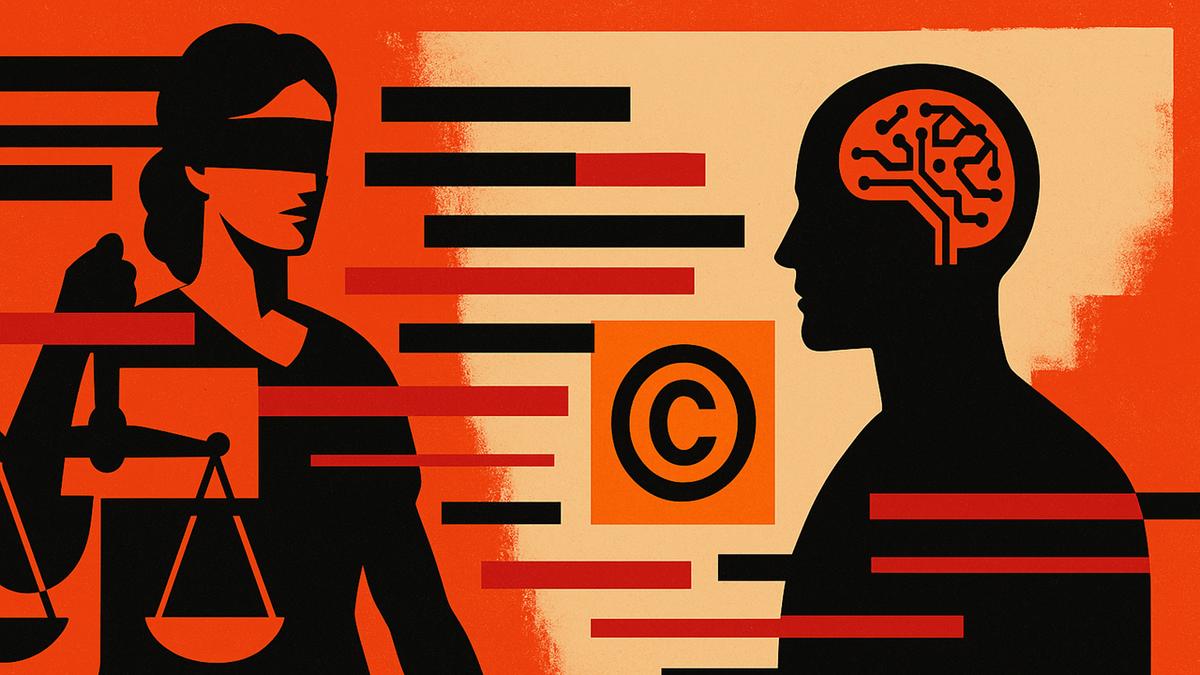
Each Side Claims the Same Recent Ruling Supports Its Position in Thomson Reuters V. ROSS Appeal
The 3rd U.S. Circuit Court of Appeals ordered Thomson Reuters and ROSS Intelligence to file supplemental briefs on how the recent *American Society for Testing & Materials v. UpCodes* decision affects their copyright appeal. Both parties argue that the UpCodes...
Claude for Legal: What the Industry Needs to Know
Anthropic unveiled Claude for Legal, a foundation‑model AI tailored for law firms and corporate legal departments. The service provides secure, on‑premise deployment, jurisdiction‑aware reasoning, and citation verification, and is priced at $0.12 per 1,000 tokens. By offering native integrations with...
FTC, DOJ Urge Tennessee to Rethink ABA Accreditation Requirement for Bar Entry
The Federal Trade Commission and the Department of Justice have submitted comments urging the Tennessee Supreme Court to ease its reliance on American Bar Association accreditation as a prerequisite for bar admission. They contend that the ABA’s de‑facto monopoly inflates...
'We Are at an Inflection Point': Legal Ops Pioneer Says Surging Sector Is Just Getting Started
Legal operations veteran Mary O’Carroll told Law.com that the sector has reached an inflection point, with adoption accelerating across corporate legal departments and law firms. She highlighted that change‑management remains the toughest obstacle despite rapid uptake of AI‑driven contract tools...
Your DMS Has a New Job: From Document Store to Intelligence Layer
NetDocuments is redefining its document management system (DMS) from a passive repository to an AI‑powered intelligence layer. At a recent ILTA roundtable, legal knowledge‑management leaders highlighted that lawyers now expect search tools to deliver context‑aware, predictive results rather than simple...
Docusign Enhances IAM Contract Platform With Agentic Features
DocuSign announced a major upgrade to its Intelligent Agreement Platform (IAM), adding an AI‑driven assistant, tools for building custom AI agents, and a suite of new integrations with enterprise software. The enhancements aim to automate clause extraction, streamline negotiations, and...
A Curious Footnote Misses the Point on Judicial Use of AI and Judge Rodriguez's AI Scholarship
U.S. Circuit Judge Edith Jones added a footnote to a Fifth Circuit decision on alleged ballot harvesting that implied Judge Rodriguez relied on artificial‑intelligence tools for his legal judgment. The footnote’s source, however, demonstrates that Rodriguez used AI responsibly for...
Linklaters Launches Applied Intelligence for Firepower “Where Off-the-Shelf Tools Can’t Deliver”
Linklaters has launched Applied Intelligence, a new unit that blends lawyers with data‑science experts to build custom AI‑enabled legal solutions. The team focuses on complex matters where generic, off‑the‑shelf tools fall short, delivering bespoke technology that can accelerate analysis and...
Jylo Founders Offer Free Consultancy to Organisations Deploying Open Source AI
Jylo announced that co‑founders Sam Lansley and Shawn Curran will provide free strategic consultancy to organisations deploying open‑source AI systems. The service targets firms using models such as LLaMA, Mistral, and Stable Diffusion, offering risk‑assessment, compliance, and governance guidance. By...
The Light Touch of Leadership
The article argues that new managers should avoid over‑planning and instead listen, observe, and adapt to the unknown realities of a new team. It highlights the pitfalls of applying generic leadership advice without tailoring it to the specific context, and...
Ninth Circuit Clarifies Limits of Appellate Review in McKeown Civil Opinion
The Ninth Circuit’s May 7 2026 opinion by Judge McKeown reasserts that appellate review is confined to the trial record, the arguments raised in district court, and the applicable standard of review. The court warned that parties cannot introduce undeveloped theories or...
AT&T Opens New PTAB Challenge in IPR2026-00349
AT&T Services, Inc. filed inter partes review IPR2026-00349 on May 5, 2026, marking another major operator’s use of the PTAB to challenge a patent. The petition will likely rely on anticipation and obviousness grounds, seeking a reasonable likelihood of invalidity. While...
Linklaters Launches New Practice to Build Matter-Specific AI Solutions
Linklaters has launched an Applied Intelligence practice that blends lawyers with data scientists to develop custom AI solutions for specific legal matters. The new unit will create bespoke tools and automated workflows tailored to complex cases, offering clients a fixed‑fee...
Legaltech Rundown: Norm Law Hires Partner From Sidley, K&L Gates Appoints Global AI and Innovation Partner, and More
Norm Law announced the addition of a senior partner from Sidley Austin, bolstering its litigation and regulatory practice. K&L Gates named a new Global AI and Innovation Partner to lead its technology‑driven service offerings. Both moves reflect a broader trend...
Federal Indictment Puts Attempted Assassination Allegations at Center of High-Stakes Criminal Case
Federal prosecutors have indicted Cole Tomas Allen on charges of attempted assassination of the president and assault on a federal officer with a deadly weapon. The case, United States v. Cole Tomas Allen, is poised to become one of the...
Aderant Looks for New CTO
Aderant, a leading legal‑technology firm, announced it is searching for a new chief technology officer after Andy Hoyt’s departure. Hoyt, who joined in 2023, oversaw the global development team and steered the company’s product roadmap. The vacancy comes as Aderant...

Today on Legaltech Week: MikeOSS, Legaltech Giants Supporting ICE, ILTA Evolve, Rethinking Lawyer Training, AI Mansplaining, and More!
Legaltech Week returns with a live, free panel on Friday at 3 p.m. ET, featuring a rotating roster of leading legal‑tech journalists. The agenda covers Mike OSS, the role of major legal‑tech firms in supporting ICE, AI‑generated court documents, and evolving...
Finally, Something For Small Law Firms
The Smokeball‑Thomson Reuters partnership bundles legal research with practice‑management tools, explicitly targeting small law firms. By merging Thomson Reuters' extensive research database with Smokeball's cloud‑based workflow platform, the alliance promises a single, streamlined solution. The collaboration arrives as boutique firms...

Ken Crutchfield: When Open Source Meets Legal — How MikeOSS Signals the End of Legal’s Secret Sauce
Last week Will Chen launched MikeOSS, an open‑source legal‑tech platform that mirrors the functionality of commercial products like Harvey and Legora. The project leverages AI‑driven code generation, slashing development costs by an order of magnitude and sparking viral interest among...
DOJ Spotlights Cyber Insider Threats and Terrorism With Two High-Stakes Prosecutions
The Department of Justice this week announced two high‑profile prosecutions: a Virginia jury conviction of Sohaib Akhter for deliberately deleting U.S. government databases, and a guilty plea by Muhammad Shahzeb Khan for an ISIS‑inspired plot against a Brooklyn Jewish center....
LegalTechTalk Launches First Vibeathon for Non-Coders to Turn Ideas Into Tech
LegalTechTalk announced its inaugural Vibeathon, a one‑day event that lets non‑coding legal professionals turn ideas into functional tech prototypes. Attendees will use on‑site AI‑driven no‑code platforms and natural‑language prompts to build proof‑of‑concept applications. The initiative aims to lower the technical...
AI Chatlogs Promise Discovery Risk, Windfall
Judges across several federal districts have begun issuing rulings that treat AI‑generated chat logs as discoverable evidence in civil litigation. The emerging jurisprudence forces law firms to preserve and produce interactions with tools such as ChatGPT, Claude, and Gemini, creating...
Supreme Court Keeps Abortion Pill Mail Access in Place for Now
The U.S. Supreme Court has left in place lower‑court rulings that allow the abortion pill mifepristone to be mailed while the case proceeds. By refusing emergency relief, the Court maintains the current federal framework for medication abortion. The decision highlights...
How AI Shapes the Way IBM's Legal Chief Approaches Almost Everything
IBM appointed Anne Robinson as general counsel in July 2024 and has since made artificial intelligence a cornerstone of the legal function. She is deploying IBM Watson and custom large‑language‑model tools to automate contract review, predict litigation outcomes, and streamline...
BIPA Exclusions Gaining Traction: What Policyholders Need to Know
A wave of recent lawsuits is forcing insurers to tighten Biometric Information Privacy Act (BIPA) exclusions in liability policies. Courts are increasingly scrutinizing whether standard commercial general liability (CGL) coverage applies to biometric claims, and many rulings are siding with...
As Deepfake Evidence Spreads, Rulemaking Efforts Stay Stuck in Development
U.S. federal courts' advisory committee on evidence rules voted against moving forward with a proposed amendment that would bar AI‑generated deepfakes from trial admission. The decision leaves the legal community without a uniform standard as deepfake technology becomes increasingly sophisticated...