
David Sinclair Plans to Test Whole-Body Rejuvenation Drugs in the XPrize Competition
Harvard biologist David Sinclair plans to test an oral epigenetic reprogramming drug, code‑named SL‑100, in the XPRIZE Healthspan competition, which offers $101 million for teams that can demonstrate a ten‑year functional improvement after a year of treatment. The trial would be the first whole‑body chemical rejuvenation study, contrasting with his company Life Biosciences’ gene‑therapy eye trial. The competition, backed by Saudi Arabia’s Hevolution Foundation, will select ten finalists from 65 entrants, with the grand prize awarded to the first team achieving the age‑restoration benchmark. Industry interest is intensifying, exemplified by NewLimit’s recent $435 million raise to pursue liver‑focused reprogramming.

The Meta Hack Shows There’s More to AI Security than Mythos
On June 5, researchers reported that attackers exploited Meta’s AI‑driven Instagram support bot to reassign high‑profile accounts to email addresses they controlled, including a dormant Obama White House profile. The hack required only a VPN matching the owner’s location and a...

How Courts Are Coping with a Flood of AI-Generated Lawsuits
A new study of 4.5 million federal civil cases shows self‑represented filings jumping from 11% in 2022 to 16.8% in 2025, with AI‑generated pleadings accounting for a rapid rise after 2023. Judges like Maritza Braswell report that AI‑assisted drafts are clearer but...

How Small Businesses Can Leverage AI
Small businesses are turning to generative AI to automate routine tasks, with Notion AI emerging as a popular virtual assistant for freelancers and tutors. The article follows London‑based tutor Sam Finnegan‑Dehn, who uses Notion AI for meeting notes, invoicing, goal‑setting...

China Has Approved the World’s First Invasive Brain-Computer Chip—Here’s What’s Next
Chinese startup Neuracle’s NEO invasive brain‑computer interface received the world’s first regulatory approval for commercial use, allowing patients with spinal‑cord paralysis to regain hand function. The coin‑size device, placed on the dura mater, enabled patient Dong Hui to write and...

The Download: Climate Tech Goes Public and the AI Hype Index Returns
Climate‑tech firms Solv Energy, X‑energy and Fervo Energy went public this year, achieving combined market capitalizations of roughly $30 billion and underscoring investor appetite for grid‑scale power solutions. The surge aligns with rising electricity demand from data centers and broader decarbonisation...

The AI Hype Index: AI Gets Booed in Graduation Season
MIT Technology Review’s AI Hype Index notes that graduating classes are openly booing AI advocates. Speakers like former Google CEO Eric Schmidt faced jeers at multiple universities, reflecting student anxiety over job displacement. Despite the backlash, OpenAI continues to secure...

Rethinking Organizational Design in the Age of Agentic AI
Enterprise adoption of agentic AI is accelerating, with 85% of organizations planning to become “agentic” within three years. However, 76% say their current people, processes, and technology cannot support that shift, leading to a “sticky tape” problem of layering agents...

Google I/O Showed How the Path for AI-Driven Science Is Shifting
At Google I/O, DeepMind CEO Demis Hassabis framed AI as nearing the singularity while showcasing WeatherNext, an AI system that issued early warnings for Hurricane Melissa in Jamaica. The event highlighted a strategic shift from narrowly‑focused scientific tools toward agentic,...

Climate Tech Companies Are Pivoting to Critical Minerals
Climate tech firms are pivoting toward critical minerals to secure cash flow as U.S. climate policy remains weak. Boston Metal raised $75 million to expand its molten‑oxide electrolysis production of niobium, tantalum, chromium and vanadium, shifting emphasis from its original green‑steel...
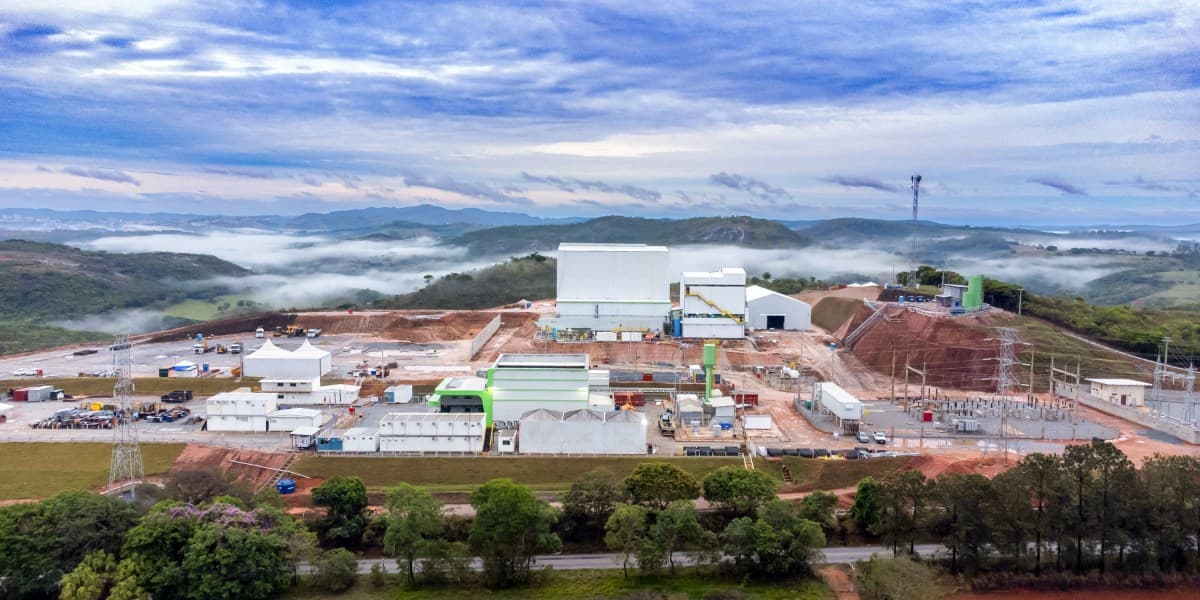
Boston Metal Gets a $75 Million Lifeline to Produce Critical Metals
Boston Metal raised a $75 million financing round to revive its Brazil subsidiary and accelerate production of critical metals such as niobium, tantalum, and tin. The capital injection follows a cash‑flow crunch caused by a refractory leak at the Brazil plant,...

Understanding the Modern Cybercrime Landscape
HPE’s 2025 "In the Wild" report reveals that cybercriminal groups have industrialized their operations, leveraging automation and generative AI to scale attacks. The study identifies five inter‑related factors shaping today’s threat landscape: heightened network expectations, tighter financial constraints, increasingly complex...

The Download: Musk V. Altman, Smart Glasses for Warfare, and Google I/O
Elon Musk’s lawsuit against OpenAI was thrown out because the claim was filed after the statute of limitations, leaving the substantive question of OpenAI’s nonprofit‑to‑for‑profit transition unanswered. The verdict clears a legal hurdle for OpenAI as it prepares for a...

Colossal Biosciences Is Growing Chickens in a 3D-Printed Artificial Eggshell
Colossal Biosciences unveiled a 3D‑printed, silicone‑lined artificial eggshell that can incubate chicken embryos outside a natural shell. The transparent plastic cup supplies oxygen through a specialized membrane, improving hatch rates compared with earlier synthetic systems. The breakthrough is part of...

What to Expect From Google This Week
Google’s I/O conference arrives with the company lagging behind rivals in AI coding, as Anthropic’s Claude Code and OpenAI’s Codex dominate the space. DeepMind has assembled a strike team, enlisting Nobel laureate John Jumper, to revive Google’s coding models, though a...