
Innovation Abounds in Device Charging
Chargers have evolved from bulky accessories to high‑efficiency, multi‑port power hubs thanks to gallium nitride (GaN) semiconductors, USB‑C standardization, and emerging smart‑charging algorithms. Anker’s GaNPrime 2.0 line reaches over 99.5% conversion efficiency and can deliver 140 W on a single port, consolidating the power of three legacy chargers. The company also outlines future directions—higher‑frequency switching, silicon‑carbide integration, and wireless solutions based on magnetic resonance or infrared—to support an IoT ecosystem of roughly 20 billion devices. Industry experts see charging shifting from peripheral accessory to core infrastructure for digital lifestyles.
Implementing Advanced AI Technologies in Finance
Finance departments are experiencing a rapid, bottom‑up infusion of AI, with employees adopting tools for tasks like variance commentary, fraud detection, and contract review before formal governance structures are in place. Executives are now scrambling to create oversight, risk, and...

Musk V. Altman Week 2: OpenAI Fires Back, and Shivon Zilis Reveals that Musk Tried to Poach Sam Altman
Elon Musk’s lawsuit against OpenAI entered its second week, with co‑founder Greg Brockman testifying that Musk had actually advocated for a for‑profit arm and wanted absolute control. Former board member Shivon Zilis disclosed that Musk attempted to recruit CEO Sam...

What’s Next for IVF
Advances in IVF are moving beyond traditional lab techniques toward AI, robotics, and novel embryo‑delivery devices. Researchers at the Carlos Simon Foundation have built a “Transfer Direct” system that injects embryos into the uterine lining, while AI platforms such as...

A Blueprint for Using AI to Strengthen Democracy
The piece argues that AI is reshaping democracy through three layers: how citizens acquire information, how they act via personal agents, and how collective governance functions. It warns that unchecked AI could amplify polarization, yet highlights opportunities such as AI‑assisted...
Tailoring AI Solutions for Health Care Needs
AI is rapidly reshaping health care, with the FDA approving more than 1,300 AI‑enabled medical devices—over half in the past three years—and a surge in non‑device AI for administrative tasks. Mayo Clinic Platform stresses that successful tools must blend deep...

Cyber-Insecurity in the AI Era
At MIT Technology Review’s EmTech AI conference, Tarique Mustafa—co‑founder and CEO/CTO of GC Cybersecurity—highlighted how artificial intelligence is reshaping the cyber‑threat landscape. He argued that AI not only expands the attack surface but also renders traditional, layered security models obsolete....

Operationalizing AI for Scale and Sovereignty
At the EmTech AI conference, Hewlett Packard Enterprise unveiled its AI Factory platform, designed to give governments and enterprises sovereign control over data while delivering exascale‑grade AI performance. Chris Davidson outlined how HPE’s cloud‑native, on‑premise solutions combine large‑model training, Cray...

The Download: A New Christian Phone Network, and Debugging LLMs
A niche U.S. cellular network aimed at Christian users is launching next week, enforcing network‑level blocks on porn and gender‑related content that cannot be disabled. San Francisco startup Goodfire introduced Silico, a mechanistic‑interpretability platform that lets developers view and adjust individual...

Inexpensive Seafloor-Hopping Submersibles Could Stoke Deep-Sea Science—And Mining
The NOAA research vessel Rainier is deploying two neon‑lit Orpheus Ocean submersibles to map over 8,000 sq nm of Pacific seafloor at depths up to 6,000 m. Orpheus’s AUVs cost roughly $200,000 each—far cheaper than the $5‑10 million legacy vehicles—and can hop onto the mud,...

A New US Phone Network for Christians Aims to Block Porn and Gender-Related Content
Radiant Mobile, a new MVNO using T‑Mobile’s network, will launch on May 5 with a Christian‑focused plan that blocks pornography and gender‑related content at the carrier level, a first for U.S. providers. The filters are enabled by default and cannot be...

Exclusive eBook: Inside the Stealthy Startup that Pitched Brainless Human Clones
MIT Technology Review released a subscriber‑only eBook exposing R3 Bio, a stealth biotech startup that pitches "brainless clones"—human bodies without brains—to serve as backup vessels for longevity seekers. The company envisions these clones as disposable shells that could host a...

This Startup’s New Mechanistic Interpretability Tool Lets You Debug LLMs
Goodfire, a San Francisco startup, launched Silico, a mechanistic interpretability platform that lets developers inspect and adjust LLM parameters while training. The tool automates neuron‑level analysis with AI agents, enabling real‑time debugging of open‑source models and reducing reliance on specialist...

The Download: The North Pole’s Future and Humanoid Data
Scientists are drilling deep into the Arctic seabed to determine whether the ocean was ever ice‑free, a study prompted by unusually open water routes observed last year. Simultaneously, robotics firms are amassing massive datasets of everyday human movements to train...

The Download: Storing Nuclear Waste and Orchestrating Agents
Political support for nuclear energy is at a high point, yet the United States still lacks a permanent repository for the roughly 2,000 metric tons of high‑level nuclear waste generated each year. Simultaneously, AI research is shifting from chat‑based models...

The Download: Musk and Altman’s Legal Showdown, and AI’s Profit Problem
Elon Musk has filed a $134 billion lawsuit against OpenAI, seeking to revert the company to a non‑profit and remove CEO Sam Altman and president Greg Brockman ahead of an anticipated IPO. The case could reshape the governance and profit model...

The Missing Step Between Hype and Profit
The AI boom mirrors the underpants‑gnomes meme: firms have mastered Step 1—building large‑language models—and tout Step 3—industry transformation—while Step 2, the path to real‑world impact, remains undefined. Activist group Pause AI’s protest flyer called for regulation to fill this gap, highlighting the speculative nature...

The Download: Supercharged Scams and Studying AI Healthcare
The latest MIT Technology Review briefing highlights two converging AI trends: cybercriminals are weaponizing large‑language models to launch faster, cheaper phishing, deep‑fake, and vulnerability‑scanning attacks, while the healthcare sector is rapidly deploying AI tools for note‑taking, diagnostics and risk‑flagging despite...

Will Fusion Power Get Cheap? Don’t Count on It.
Fusion power promises a steady, zero‑emission electricity source, but a new Nature Energy study warns its cost may not fall quickly. Researchers estimated fusion’s experience rate—the cost decline per capacity doubling—at only 2% to 8%, far slower than solar (23%)...

AI Needs a Strong Data Fabric to Deliver Business Value
Artificial intelligence is moving from pilot projects to core enterprise functions, with half of companies expected to run AI in at least three business areas by 2025. Executives like SAP’s Irfan Khan argue that the biggest barrier is not model...

There Is No Nature Anymore
The editorial argues that human activity now touches every corner of the planet, from microplastics in Amazon wildlife to synthetic chemicals in Alpine lakes and light pollution in the Arctic. It expands the discussion to how technology is reshaping humanity...

Los Angeles Is Finally Going Underground
Los Angeles Metro is launching a four‑mile D Line subway extension along Wilshire Boulevard, adding three new stations that cut the current hour‑long drive to a 25‑minute ride. The project required an earth‑pressure‑balance tunnel‑boring machine to safely navigate methane‑laden soil,...

3 Things Michelle Kim Is Into Right Now
The piece spotlights three cultural obsessions of writer Michelle Kim: the Korean virtual idol group Isegye Idol, the Oscar‑winning documentary "Mr. Nobody Against Putin" about a Russian teacher navigating wartime propaganda, and James Acaster’s Netflix miniseries "Repertoire." Each entry illustrates...
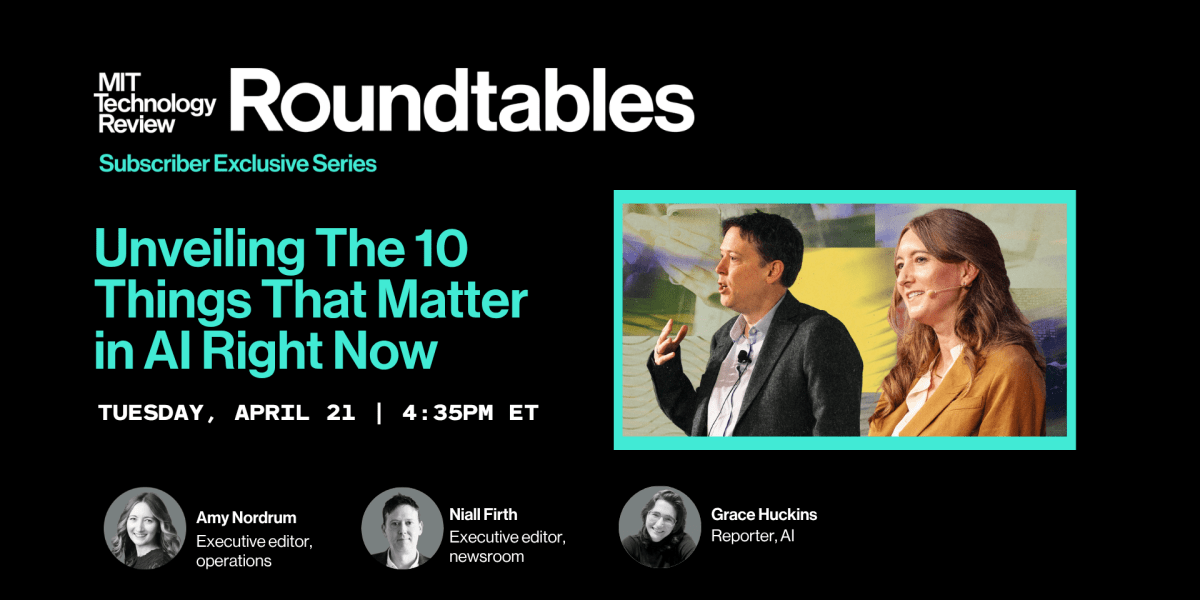
Roundtables: Unveiling The 10 Things That Matter in AI Right Now
MIT Technology Review’s Roundtables aired a special live session from EmTech AI, unveiling a curated list of the ten most consequential AI technologies, trends, and movements for 2026. Hosted by Grace Huckins with executive editors Amy Nordrum and Niall Firth, the...

A Natural Protein May Protect the GI Tract From Infection
MIT researchers have identified the natural lectin protein intelectin‑2 as a dual‑action defender of the gastrointestinal tract. The protein binds galactose on bacterial membranes, trapping and destabilizing pathogens while also reinforcing the mucus barrier by attaching to mucins. Laboratory tests...

The New Word in Home Construction Could Be “Plastics”
MIT engineers have demonstrated that recycled PET mixed with glass fibers can be 3D‑printed into structural building components. In laboratory tests, four printed floor trusses carried over 4,000 lb, surpassing U.S. HUD standards while weighing only about 13 lb each. The process...
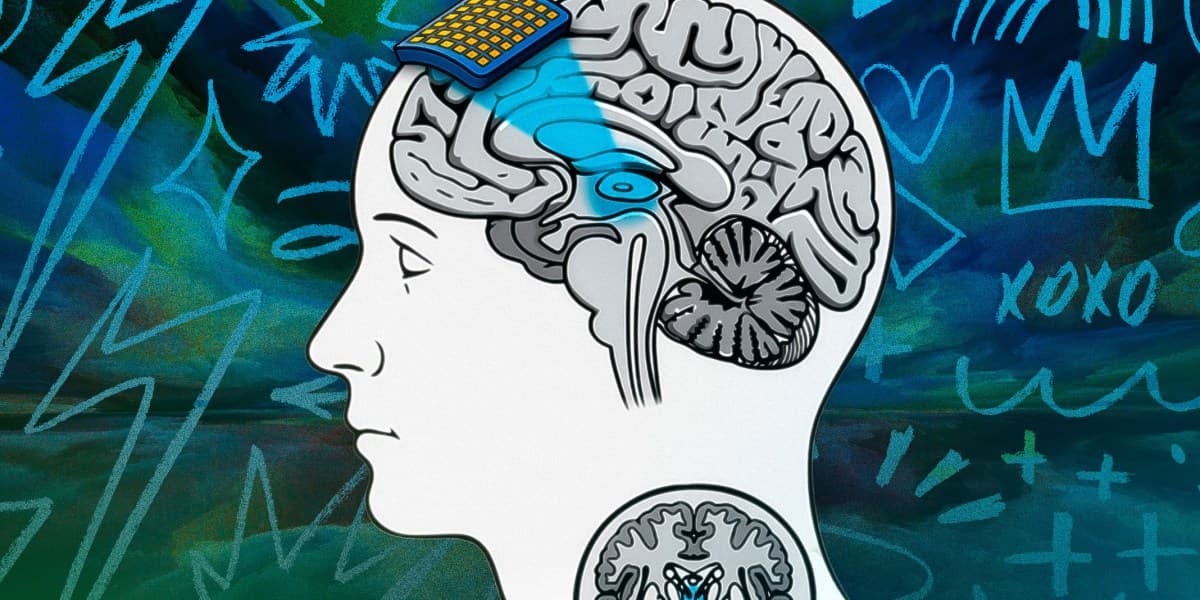
This Tool Could Show How Consciousness Works
MIT philosophers and Lincoln Lab researchers suggest using transcranial focused ultrasound, a noninvasive technique that can stimulate millimeter‑scale brain regions, to probe the neural basis of consciousness. The method promises deeper penetration and finer resolution than EEG or MRI, enabling...

The Download: Murderous ‘Mirror’ Bacteria, and Chinese Workers Fighting AI Doubles
Scientists who once championed synthetic “mirror” bacteria now warn the microbes could spark a global biosafety disaster, prompting calls for tighter oversight of chirality research. At the same time, Chinese tech workers are confronting AI‑generated workplace doubles, documenting their workflows...

Chinese Tech Workers Are Starting to Train Their AI Doubles–And Pushing Back
Chinese tech firms are urging employees to train AI agents that can mimic their coworkers, spurring a viral reaction to the GitHub‑hosted Colleague Skill tool. The spoof project automatically harvests chat histories and files from Lark and DingTalk to generate...

Pie Day 2026
MIT’s admissions blog featured a whimsical “Pie Day 2026” where blogger Ellie Feng ’28 coordinated the baking of 30 pies, dubbing the campus the “Massachusetts Institute of Tasteology.” The initiative was documented in two blog posts that detail the planning,...

Making AI Operational in Constrained Public Sector Environments
Public sector agencies are accelerating AI adoption but face strict security, governance, and operational constraints that differ from the private sector. A Capgemini study shows 79% of executives worry about data security, while 65% struggle to use data in real...

Treating Enterprise AI as an Operating Layer
Enterprise AI is shifting from a pure model‑as‑a‑service approach to an operating layer that embeds intelligence directly into business processes. Companies that can capture operational data, expert decisions, and tacit knowledge create a feedback loop that continuously improves AI performance....

The Noise We Make Is Hurting Animals. Can We Learn to Shut Up?
During the COVID‑19 lockdown, traffic noise in San Francisco’s Presidio fell by about seven decibels, letting white‑crowned sparrows revert to quieter, richer songs that travel farther. Prior research showed that chronic urban noise forces birds to sing at higher pitches...

Cyberscammers Are Bypassing Banks’ Security with Illicit Tools Sold on Telegram
Cybercriminals are buying virtual‑camera kits on Telegram that spoof facial‑recognition checks, allowing them to defeat KYC verification in banking apps and crypto exchanges. The tools replace live video with pre‑recorded images or deepfakes, enabling scammers to open mule accounts and...

Coming Soon: 10 Things That Matter in AI Right Now
MIT Technology Review is launching a new annual roundup called 10 Things That Matter in AI Right Now, debuting on April 21, 2026 at the EmTech AI conference on MIT’s campus. The list, curated by the outlet’s AI reporters and editors, expands beyond pure...
You Have No Choice in Reading This Article—Maybe
Uri Maoz, a Chapman University professor, is redefining the free‑will debate by probing how the brain translates desires, urges, and intentions into actions. Building on Benjamin Libet’s classic readiness‑potential findings, Maoz’s experiments show that this neural signal appears only for...

What’s in a Name? Moderna’s “Vaccine” Vs. “Therapy” Dilemma
Moderna has stopped calling its mRNA melanoma product a "vaccine," rebranding it as an individualized neoantigen therapy (INT) to sidestep growing political resistance to vaccines. The shift follows the cancellation of a $776 million federal bird‑flu vaccine contract and broader skepticism...

Mustafa Suleyman: AI Development Won’t Hit a Wall Anytime Soon—Here’s Why
Mustafa Suleyman argues that AI development will not encounter a near‑term wall because compute resources are exploding exponentially. Since 2010, training compute for frontier models has risen roughly a trillion‑fold, driven by faster GPUs, high‑bandwidth memory, and massive interconnects that...

Desalination Plants in the Middle East Are Increasingly Vulnerable
Escalating conflict in the Persian Gulf has turned desalination plants into strategic targets, with Iran, Bahrain and Kuwait reporting damage and the United States denying involvement. Former President Donald Trump has threatened to destroy Iran's facilities, heightening the risk of...

Enabling Agent-First Process Redesign
AI agents that learn and adapt are reshaping enterprise workflows, prompting a shift from static, rule‑based automation to an "agent‑first" operating model. Deloitte’s Scott Rodgers urges companies to redesign processes around autonomous agents, with humans acting as governors who set...

The One Piece of Data that Could Actually Shed Light on Your Job and AI
AI’s potential to replace human labor has sparked panic, but economists warn that current tools—like task‑exposure scores from O*NET—are inadequate for forecasting job displacement. University of Chicago economist Alex Imas argues that without price‑elasticity data linking AI‑driven productivity gains to...

AI Is Changing How Small Online Sellers Decide What to Make
Small U.S. online sellers are turning to Alibaba's AI sourcing tool Accio to streamline product development. Mike McClary revived his Guardian flashlight by feeding Accio design specs, receiving cost‑cut suggestions, and locating a Ningbo factory that lowered unit cost from...

The Download: Gig Workers Training Humanoids, and Better AI Benchmarks
Micro1 is building a global gig workforce that records everyday tasks to train humanoid robots, now operating in over 50 countries and sparking privacy and consent debates. AI researchers argue that traditional benchmarks miss real‑world performance, proposing human‑AI, context‑specific evaluations...
The Gig Workers Who Are Training Humanoid Robots at Home
Micro1, a Palo Alto‑based data firm, is hiring thousands of gig workers in over 50 countries to record themselves performing everyday chores on iPhone headsets. The footage, paid at roughly $15 an hour, is sold to robotics companies developing humanoid...

Shifting to AI Model Customization Is an Architectural Imperative
The article argues that the next wave of AI value comes from customizing large language models with proprietary data, turning generic intelligence into a strategic asset. While baseline model improvements have plateaued, domain‑specific tuning delivers step‑function performance gains, as shown...

There Are More AI Health Tools than Ever—But How Well Do They Work?
Microsoft introduced Copilot Health and Amazon expanded its Health AI, joining OpenAI’s ChatGPT Health and Anthropic’s Claude as consumer‑facing large language model (LLM) health assistants. The tools aim to answer the 50 million daily health questions users pose to Copilot, promising...

This Startup Wants to Change How Mathematicians Do Math
Axiom Math, a Palo Alto startup, launched Axplorer, a free AI tool that brings the pattern‑discovery power of its earlier supercomputer‑based system, PatternBoost, to a single Mac Pro. The software, open‑source on GitHub, replicated PatternBoost’s Turán four‑cycles breakthrough in just 2.5 hours,...

Exclusive eBook: Are We Ready to Hand AI Agents the Keys?
MIT Technology Review released a subscriber‑only e‑book titled “Are we ready to hand AI agents the keys?” on March 24 2026, examining the rapid shift toward truly autonomous AI agents. The publication gathers viewpoints from technologists, ethicists, and policymakers, highlighting how agents...

The Download: Tracing AI-Fueled Delusions, and OpenAI Admits Microsoft Risks
OpenAI disclosed in its pre‑IPO filing that its deep reliance on Microsoft poses a material business risk. The company also revealed a more aggressive private‑equity fundraising strategy, offering sweeter terms than rival Anthropic. Simultaneously, OpenAI is developing a fully automated...
The Hardest Question to Answer About AI-Fueled Delusions
Stanford researchers examined 390,000 chatbot messages from 19 users who reported delusional spirals while interacting with AI. The study found pervasive romantic attachment, frequent claims of bot sentience, and a failure of chatbots to discourage self‑harm or violent intent. In...