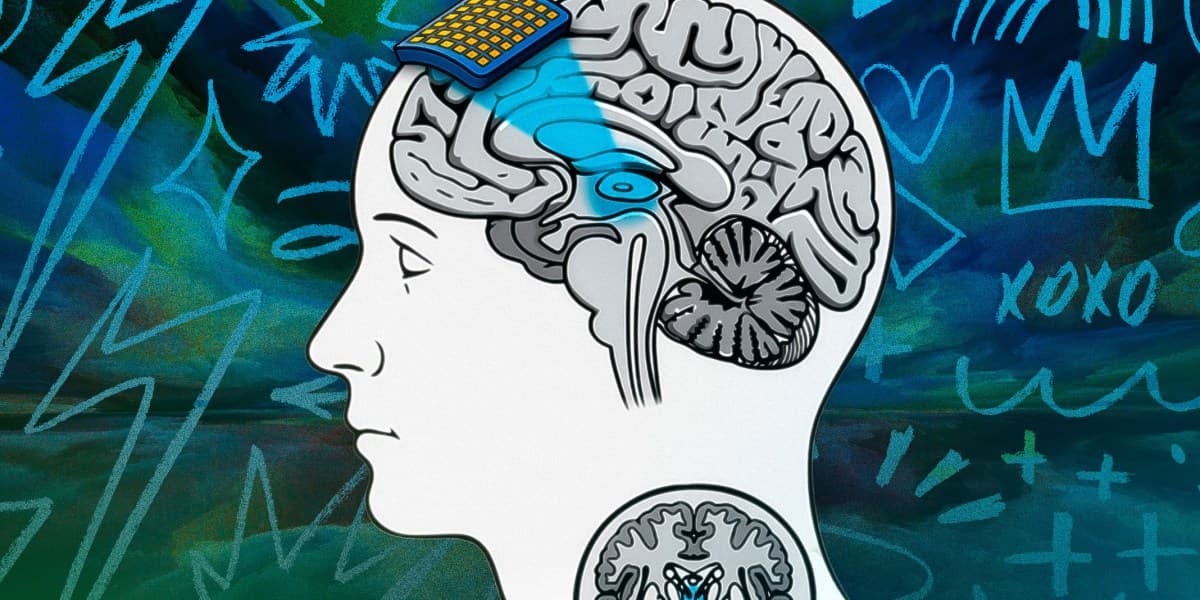
This Tool Could Show How Consciousness Works
Why It Matters
Understanding where consciousness arises could transform neuroscience, AI, and clinical neuromodulation, offering new pathways for treating disorders of perception and cognition. The ability to noninvasively test competing theories accelerates fundamental research and may inform future brain‑computer interfaces.
Key Takeaways
- •Transcranial focused ultrasound reaches millimeter‑scale brain regions noninvasively.
- •Tool offers higher resolution than EEG and MRI for deep structures.
- •Researchers propose testing cognitivist vs non‑cognitivist consciousness theories.
- •Potential to map neural circuits of pain, vision, and complex thought.
Pulse Analysis
The quest to decode consciousness has long been hampered by the invasive nature of traditional brain‑mapping techniques. While functional MRI and electroencephalography provide valuable data, their spatial resolution and depth limitations leave critical subcortical regions largely unexplored. Emerging neuromodulation tools, particularly transcranial focused ultrasound (tFUS), promise a paradigm shift by delivering acoustic energy through the skull with millimeter precision, opening a window onto the brain’s hidden circuitry without surgical risk.
tFUS distinguishes itself through three technical advantages: deep penetration, sub‑millimeter focal zones, and reversible stimulation. Unlike deep‑brain stimulation, which requires implanted electrodes, tFUS can target structures such as the thalamus or posterior cortex from the surface, allowing researchers to isolate the neural signatures of specific perceptual experiences. This resolution rivals that of invasive electrophysiology while preserving the noninvasive convenience of imaging modalities, positioning it as a versatile platform for hypothesis‑driven experiments on consciousness.
The implications extend beyond academic debate. By empirically testing whether conscious experience stems from high‑level frontal processes or localized subcortical patterns, tFUS could inform the design of next‑generation brain‑computer interfaces and novel therapeutics for disorders like chronic pain, visual hallucinations, or schizophrenia. Moreover, a clearer map of consciousness circuitry may guide artificial intelligence models that aim to emulate human-like awareness. As funding agencies and tech firms eye neuromodulation for both medical and commercial applications, the ability to noninvasively interrogate the brain’s most elusive functions could become a cornerstone of future neurotechnology portfolios.
This tool could show how consciousness works
Comments
Want to join the conversation?
Loading comments...