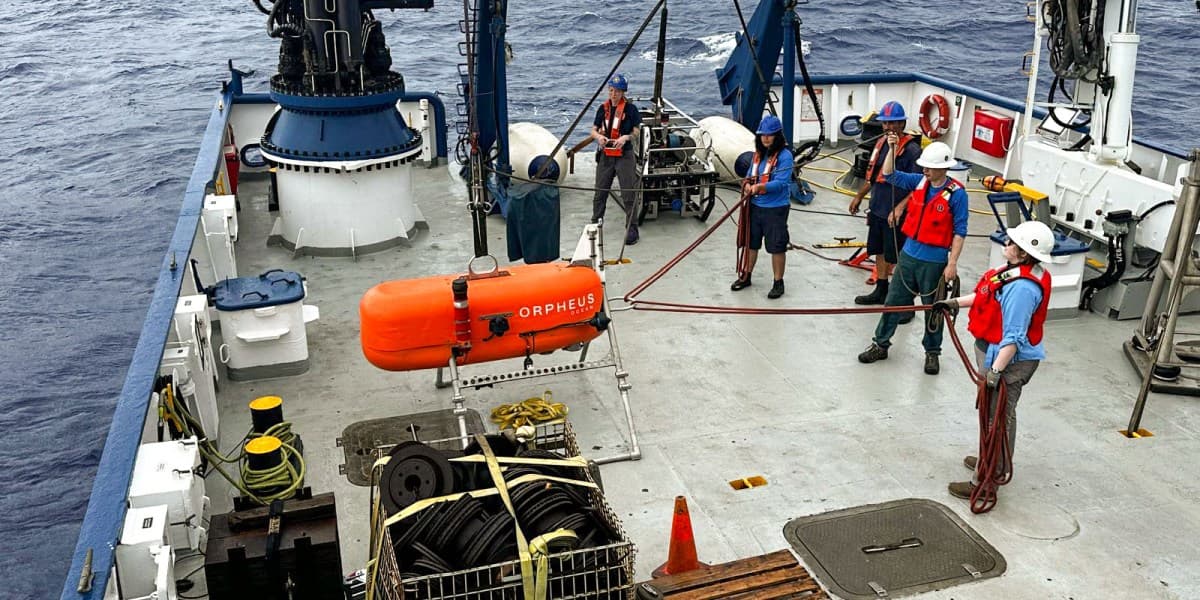
Inexpensive Seafloor-Hopping Submersibles Could Stoke Deep-Sea Science—And Mining
Why It Matters
Affordable, high‑resolution seafloor mapping lowers barriers for scientific discovery and informs responsible mineral extraction, reshaping the economics of deep‑sea research and mining.
Key Takeaways
- •Orpheus submersibles cost ~$200k versus $5‑10 million traditional units
- •Able to dive 6,000 m, collect sediment cores and high‑res images
- •Small size eliminates need for large research vessels, democratizing access
- •Potential to support deep‑sea mining surveys with precise, low‑impact sampling
- •NASA, NOAA, and WHOI collaborations accelerate technology validation and deployment
Pulse Analysis
The race to secure critical minerals has pushed governments and investors toward the ocean’s abyss, where copper, cobalt, nickel and manganese lie in nodules on the seafloor. Recent U.S. policy, including the creation of the Marine Minerals Administration, underscores the urgency of mapping these deposits before commercial extraction begins. Yet the deep sea remains one of the least charted frontiers, hampered by a shortage of affordable, high‑resolution survey tools. Orpheus Ocean’s low‑cost autonomous vehicles promise to fill that data gap, delivering detailed imagery and physical samples that can guide both scientific inquiry and regulatory frameworks.
Orpheus’s design philosophy—"deep for cheap"—translates into a submersible that weighs under 600 lb and measures less than two meters, yet can withstand pressures at 6,000 m. Built from syntactic foam and a glass‑encased electronics sphere, the AUVs hop onto soft sediment, drill cores, and surface with a new set of samples every few seconds. By capturing one image per second and up to eight cores per dive, the platforms generate a dense, three‑dimensional picture of the seafloor that rivals far more expensive ROVs and manned submersibles. Their modest price tag, roughly $200,000 per unit, opens the market to universities, smaller nations, and private firms that previously could not afford the multi‑million‑dollar fleets.
The implications extend beyond pure science. Precise, low‑impact sampling could become a cornerstone of responsible deep‑sea mining, allowing companies to target high‑grade nodules while minimizing habitat disturbance. Environmental groups warn that rapid exploitation could damage ecosystems that recover over centuries, so detailed baseline data are essential for robust impact assessments. As Orpheus vehicles prove their reliability on the Rainier expedition, they may catalyze a new era of democratized ocean exploration—balancing economic opportunity with the stewardship of one of Earth’s last frontiers.
Inexpensive seafloor-hopping submersibles could stoke deep-sea science—and mining
Comments
Want to join the conversation?
Loading comments...