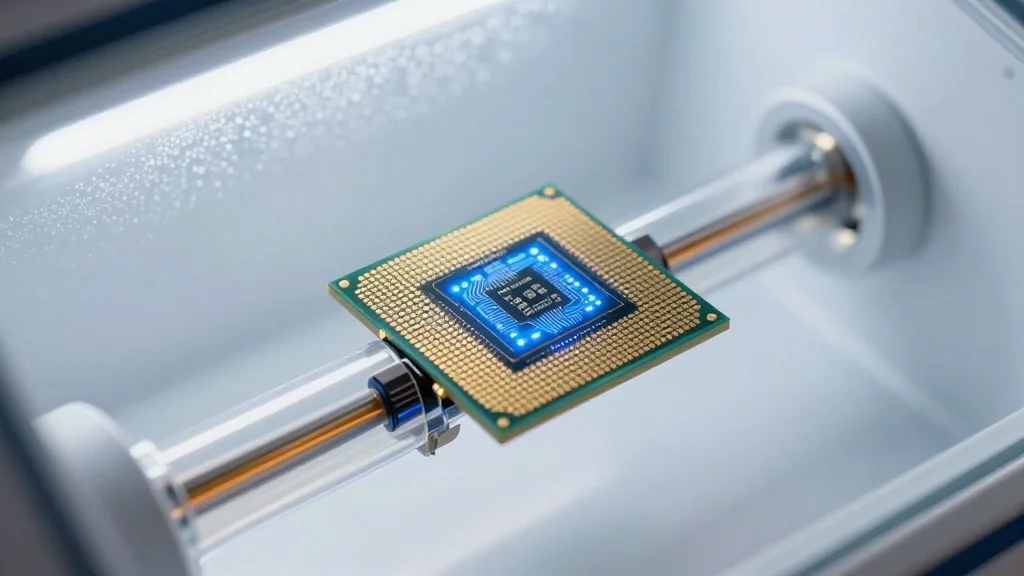
Qjump: Shallow-Circuit Quantum Sampling Guides Combinatorial Optimization On up to 104 Superconducting Qubits, Qjump Assists in Searching the Ground States...
Researchers at Zhejiang University introduced Qjump, a hybrid quantum‑classical algorithm that uses shallow quantum circuits to sample low‑energy states of Ising models. Demonstrated on a 104‑qubit superconducting processor, Qjump outperformed fixed‑parameter QAOA and a highly tuned simulated annealing baseline. The method achieved a 2.34‑fold speedup in time‑to‑solution compared with single‑core SA, highlighting potential quantum advantage on near‑term hardware.
Rice Study Resolves Decades-Old Mystery in Organic Light-Emitting Crystals: Findings Reveal How Molecular Defects Can Enhance Light Conversion Efficiency:
Rice University researchers have solved a long‑standing mystery in the organic semiconductor 9,10‑bis(phenylethynyl)anthracene (BPEA) by showing that tiny structural defects enhance light conversion. Using spectroscopy and advanced simulations, they discovered that X‑shaped molecular defect pairs create distinct low‑energy emission pathways...
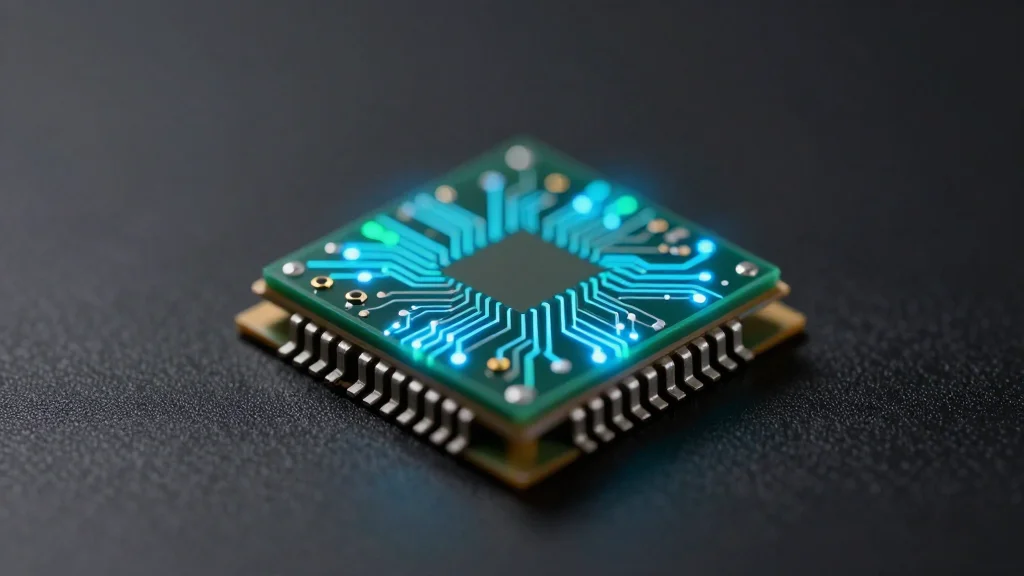
When Light Gets Trapped at Nanoscale: New Ways to Power the Future of Optoelectronics From Bound States in the Continuum...
Researchers have highlighted photonic bound states in the continuum (BICs) as a breakthrough for nanoscale light trapping, enabling ultra‑compact, chip‑compatible metasurfaces. A recent review by Do and Ha surveys material platforms, topological BIC variants, and emerging machine‑learning design methods, illustrating...

A Reusable Chip for Particulate Matter Sensing
Researchers at Ajou University have unveiled a reusable chip that combines surface acoustic wave (SAW) sensing with porous membranes to selectively detect PM10 and PM2.5 particles. The device uses two filter membranes (≈11 µm and ≈3 µm pores) and an on‑chip microheater...

Detecting Vibrational Quantum Beating in the Predissociation Dynamics of SF6 Using Time-Resolved Photoelectron Spectroscopy
Researchers used time‑resolved photoelectron spectroscopy to directly observe vibrational quantum beating during the predissociation of excited SF₆ molecules. An XUV pump (14.1 eV) and UV probe (3.1 eV) scheme captured oscillations with a 318‑fs period, indicating coherent interference between vibrational states separated...
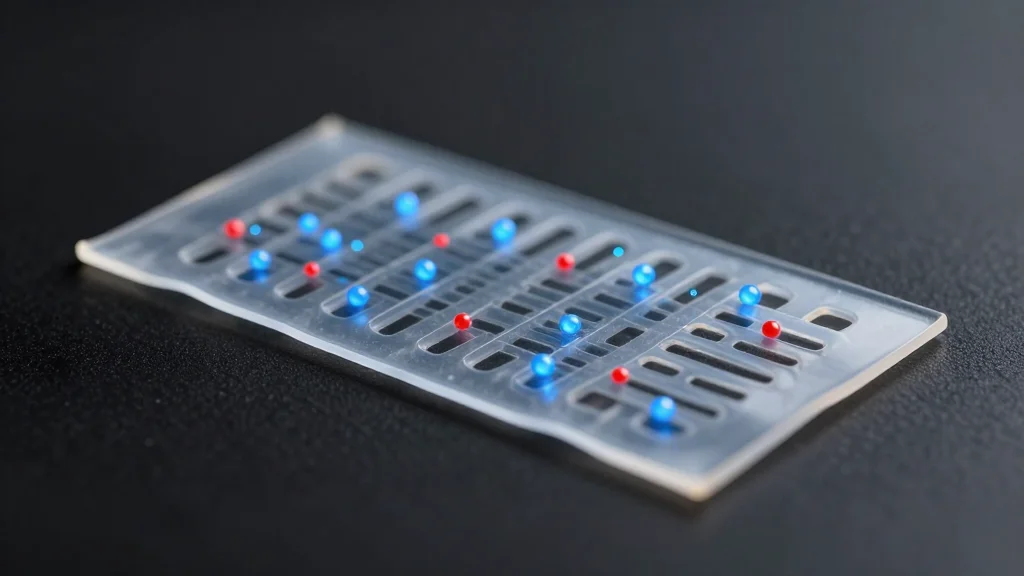
COF Scaffold Membrane with Gate‑lane Nanostructure for Efficient Li+/Mg2+ Separation
Researchers from Tianjin University, NUS and Sichuan University unveiled a covalent‑organic‑framework (COF) scaffold membrane featuring a gate‑lane nanostructure that simultaneously achieves record‑high Li⁺/Mg²⁺ selectivity (231.9) and high Li⁺ flux (11.5 L m⁻² h⁻¹ bar⁻¹). The membrane’s positively charged gating layer rejects Mg²⁺ while an...

MXene Nanomaterials Enter a New Dimension Multilayer Nanomaterial: MXene Flakes Created at Drexel University Show New Promise as 1D Scrolls
Researchers at Drexel University have developed a scalable method to roll two‑dimensional MXene flakes into one‑dimensional nanoscrolls, creating tubular structures up to ten thousand times thinner than a water pipe. The technique reliably produces 10 grams of scrolls across six MXene...

Decoding Hydrogen‑bond Network of Electrolyte for Cryogenic Durable Aqueous Zinc‑ion Batteries
Researchers at Southern University of Science and Technology and partners introduced a dual‑additive electrolyte—glycerol and methylsulfonamide—that reconfigures the hydrogen‑bond network of aqueous zinc‑ion batteries. The reformulated solvation shell suppresses dendrite formation, hydrogen‑evolution corrosion, and freezes the electrolyte down to –45 °C....

Beyond Silicon: Electronics at the Scale of a Single Molecule
Researchers report that molecular electronics is moving from proof‑of‑concept to practical architectures as single‑molecule switches, diodes and transistors become more stable and reproducible. Advances in nanogap fabrication, self‑assembled layers and carbon‑based electrodes have reduced variability that long hindered the field....
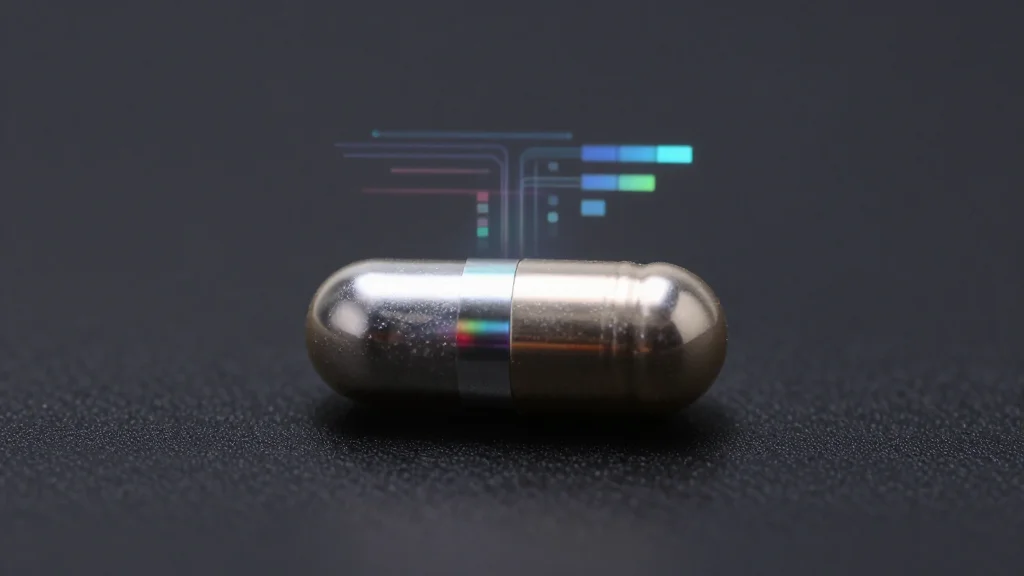
From Sensors to Smart Systems: The Rise of AI-Driven Photonic Noses
The 2025 review in *Microsystems & Nanoengineering* details how photonic noses combine optical sensing with AI to create highly selective, drift‑free chemical detectors. By leveraging colorimetric, refractive‑index, absorption and spectroscopy techniques, these devices generate rich spectral fingerprints that machine‑learning models...

Tiny Nanosheets, Big Leap: A New Sensor Detects Ethanol at Ultra-Low Levels
Researchers have unveiled a nanosheet‑based sensor that can detect ethanol at concentrations as low as 0.1 ppm, far surpassing the limits of conventional metal‑oxide and polymer devices. The sensor leverages atomically thin two‑dimensional materials to achieve rapid response times under one...
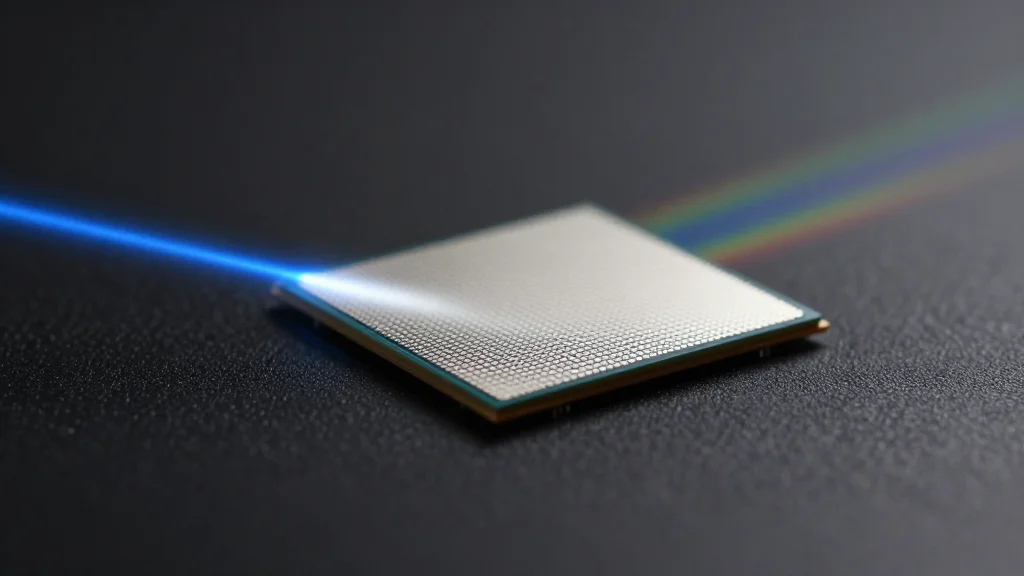
Metasurfaces Smooth Light to Boost Magnetic Sensing Precision
Researchers at Beihang and Westlake Universities have demonstrated a silicon‑based metasurface that converts a Gaussian laser beam into a spatially uniform pumping field by encoding intensity into polarization. The planar device eliminates the need for bulky beam‑shaping optics and works...
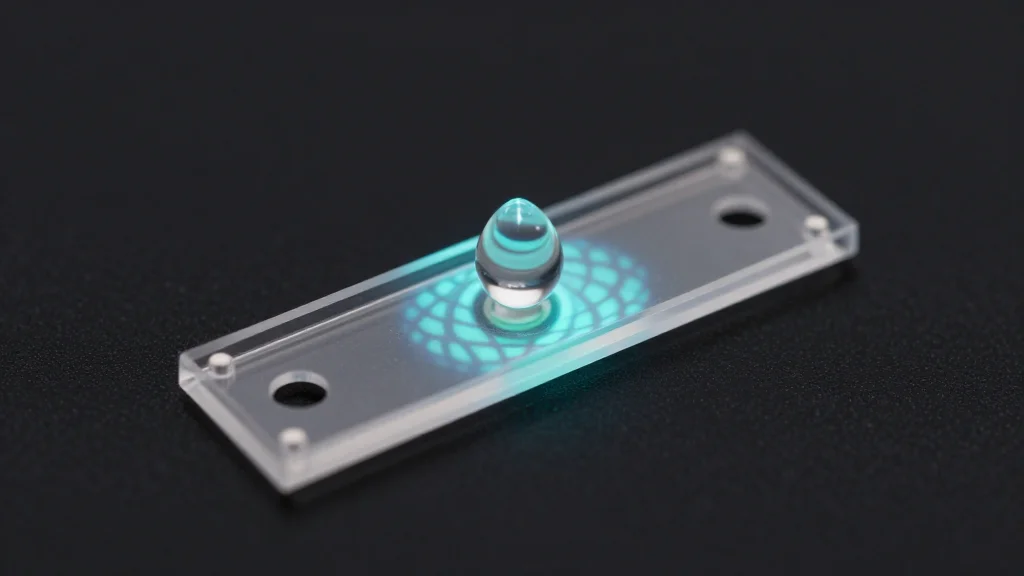
Projecting Light to Dispense Liquids: A New Route to Ultra-Precise Microdroplets
Researchers at Southern University of Science and Technology have unveiled an optoelectrowetting platform that uses programmable light patterns to dispense nanoliter droplets with unprecedented precision. By projecting dynamic illumination onto a microfluidic chip, the system creates virtual electrodes that guide...