New Scientist - Space - Latest News and Information
  • All Technology
  • AI
  • Autonomy
  • B2B Growth
  • Big Data
  • BioTech
  • ClimateTech
  • Consumer Tech
  • Crypto
  • Cybersecurity
  • DevOps
  • Digital Marketing
  • Ecommerce
  • EdTech
  • Enterprise
  • FinTech
  • GovTech
  • Hardware
  • HealthTech
  • HRTech
  • LegalTech
  • Nanotech
  • PropTech
  • Quantum
  • Robotics
  • SaaS
  • SpaceTech
AllNewsDealsSocialBlogsVideosPodcastsDigests

Technology Pulse

EMAIL DIGESTS

Daily

Every morning

Weekly

Sunday recap

NewsDealsSocialBlogsVideosPodcasts
New Scientist - Space

New Scientist - Space

Publication
0 followers

In-depth reporting on space exploration and emerging space technologies

Recent Posts

Filming the Universe’s Biggest Dramas: Best Ideas of the Century
News•Jan 19, 2026

Filming the Universe’s Biggest Dramas: Best Ideas of the Century

Astronomers have moved from relying on chance to systematically hunting fleeting cosmic explosions by deploying dedicated time‑domain surveys. The Palomar Transient Factory (2009‑2012) pioneered a coordinated “conveyor‑belt” approach, triggering follow‑up observations across multiple telescopes. Its successors, the Zwicky Transient Facility and Pan‑STARRS, now scan the sky continuously, amassing 1.6 petabytes of data—the largest astronomical dataset ever collected. This shift has turned transient detection into a core research strategy, reshaping how the universe’s most violent events are studied.

By New Scientist - Space
Supermassives to Fuzzballs: Every Black Hole Type Explained
News•Jan 14, 2026

Supermassives to Fuzzballs: Every Black Hole Type Explained

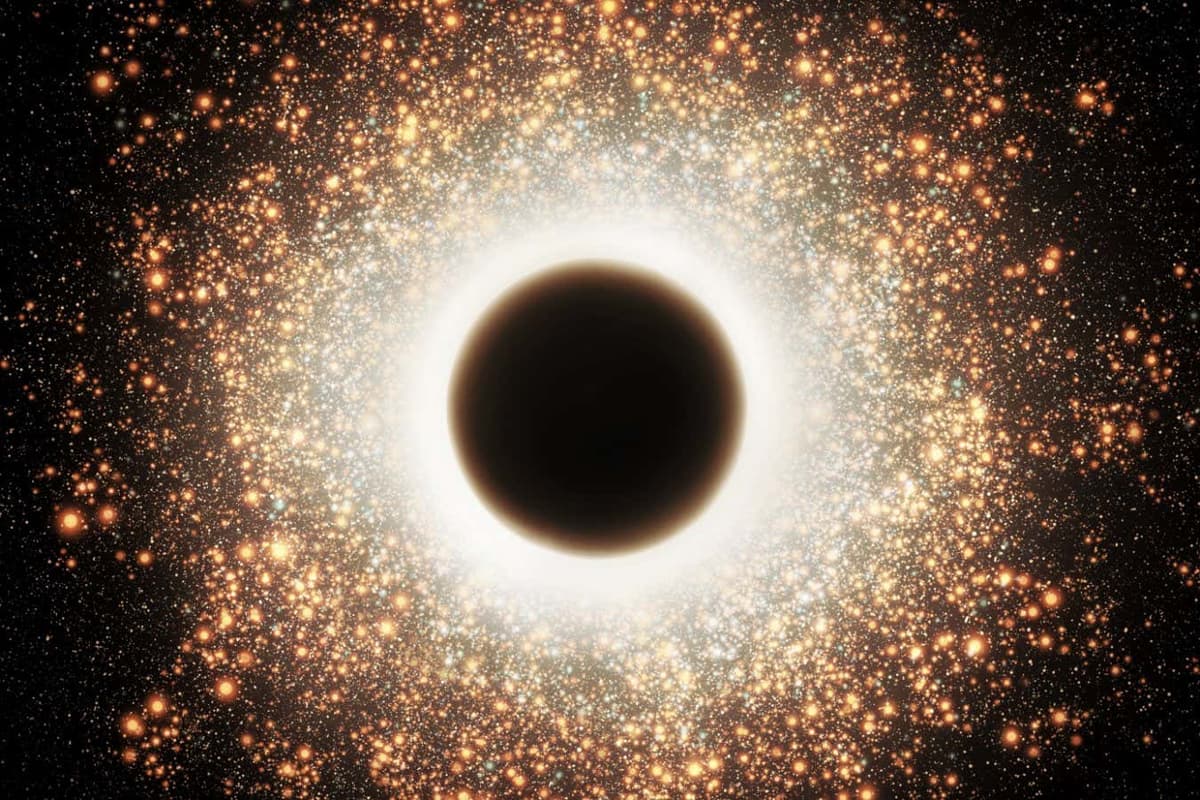
The New Scientist video maps the full spectrum of black‑hole phenomena, from stellar‑mass and intermediate‑mass objects to the gargantuan supermassive varieties at galaxy cores. It also surveys speculative constructs such as wormholes, gravastars and string‑theory fuzzballs, highlighting the latest observational...

By New Scientist - Space
'Knitted' Satellite Launching to Monitor Earth's Surface with Radar
News•Jan 9, 2026

'Knitted' Satellite Launching to Monitor Earth's Surface with Radar

The UK‑based CarbSAR satellite is set to launch this Sunday, featuring a revolutionary mesh radar antenna woven from tungsten wire coated in gold. The antenna is produced on a standard industrial knitting machine that has been adapted for aerospace use....

By New Scientist - Space
Weird Clump in the Early Universe Is Piping Hot and We Don’t Know Why
News•Jan 5, 2026

Weird Clump in the Early Universe Is Piping Hot and We Don’t Know Why

Astronomers using ALMA have identified a young galaxy cluster, SPT2349‑56, whose intracluster gas is five to ten times hotter than theoretical models predict. The cluster, observed just 1.4 billion years after the Big Bang, shows gas temperatures of several tens of...

By New Scientist - Space
Rare Saturn-Sized Rogue Planet Is First to Have Its Mass Measured
News•Jan 1, 2026

Rare Saturn-Sized Rogue Planet Is First to Have Its Mass Measured

Researchers have measured the mass of a free‑floating, Saturn‑sized planet—KMT‑2024‑BLG‑0792/OGLE‑2024‑BLG‑0516—using a rare combination of ground‑based microlensing observations and Gaia space‑telescope data. The planet’s mass, about one‑fifth that of Jupiter, makes it the first rogue exoplanet with a confirmed mass measurement....

By New Scientist - Space
Three Supermassive Black Holes Have Been Spotted Merging Into One
News•Dec 31, 2025

Three Supermassive Black Holes Have Been Spotted Merging Into One

Astronomers have identified a rare system where three supermassive black holes, each actively accreting, are merging as their host galaxies coalesce. The discovery, made through coordinated X‑ray, radio and optical observations, adds a triple configuration to the roughly 150 known...

By New Scientist - Space
The Century-Long Hunt for the Gigantic Meteorite that Vanished
News•Dec 30, 2025

The Century-Long Hunt for the Gigantic Meteorite that Vanished

In 1916 French Captain Gaston Ripert reported a colossal iron meteorite—dubbed the “iron of God”—spanning roughly 100 metres in Mauritania’s Sahara dunes. The claim sparked a century of expeditions, yet none could verify the object's existence. Recently, twin brothers—an astrophysicist...

By New Scientist - Space
Was 2025 the Year We Found Signs of Past Life on Mars?
News•Dec 26, 2025

Was 2025 the Year We Found Signs of Past Life on Mars?

In 2025 NASA’s Perseverance rover uncovered millimeter‑scale “leopard spots” on Martian rocks, patterns that on Earth are linked to fossilized microbes. The rover cached these rock and regolith samples for future retrieval, marking the most compelling geological hint of past...

By New Scientist - Space
The Best Space Pictures of 2025, From Supernovae to Moon Landings
News•Dec 23, 2025

The Best Space Pictures of 2025, From Supernovae to Moon Landings

The 2025 roundup of space photography showcases a rare double‑detonating supernova captured by ESO’s Very Large Telescope, a historic private moon landing, and a striking lunar eclipse. The supernova, a white‑dwarf that siphoned helium from a companion, exploded roughly 300 years...

By New Scientist - Space
The Essential Guide to Proving We’ve Found Alien Life
News•Dec 22, 2025

The Essential Guide to Proving We’ve Found Alien Life

The article outlines a practical framework for confirming extraterrestrial life, ranging from atmospheric biosignatures on exoplanets to fossilized microbes on Mars and technosignatures such as laser pulses. It reviews historical false alarms—like the 1996 Martian meteorite claim and the recent...
By New Scientist - Space
Black Hole Stars Really Do Exist in the Early Universe
News•Dec 22, 2025

Black Hole Stars Really Do Exist in the Early Universe

Astronomers using the James Webb Space Telescope have identified a population of compact, red, star‑like objects in the first billion years of cosmic history. New research shows these “little red dots” are actually black holes surrounded by massive, glowing gas...

By New Scientist - Space
Two Asteroids Crashed Around a Nearby Star, Solving a Cosmic Mystery
News•Dec 18, 2025

Two Asteroids Crashed Around a Nearby Star, Solving a Cosmic Mystery

Astronomers using Hubble have captured two fresh dust clouds around the nearby star Fomalhaut, each created by the collision of ~60‑km asteroids. The new source, designated Fomalhaut cs2, replaces the previously debated Fomalhaut b, which likely was an older dust...

By New Scientist - Space
Chance of a Devastating Asteroid Impact Briefly Spiked in 2025
News•Dec 10, 2025

Chance of a Devastating Asteroid Impact Briefly Spiked in 2025

Astronomers detected asteroid 2024 YR4, a 40‑90 metre object, in late 2024 and initially estimated a 1‑in‑83 chance of striking Earth in 2032. As observations refined its orbit in early 2025, the impact probability rose to a peak of 1‑in‑32 in February. Continued tracking later...

By New Scientist - Space

Page 2 of 2

← Prev12