New Scientist - Space
In-depth reporting on space exploration and emerging space technologies
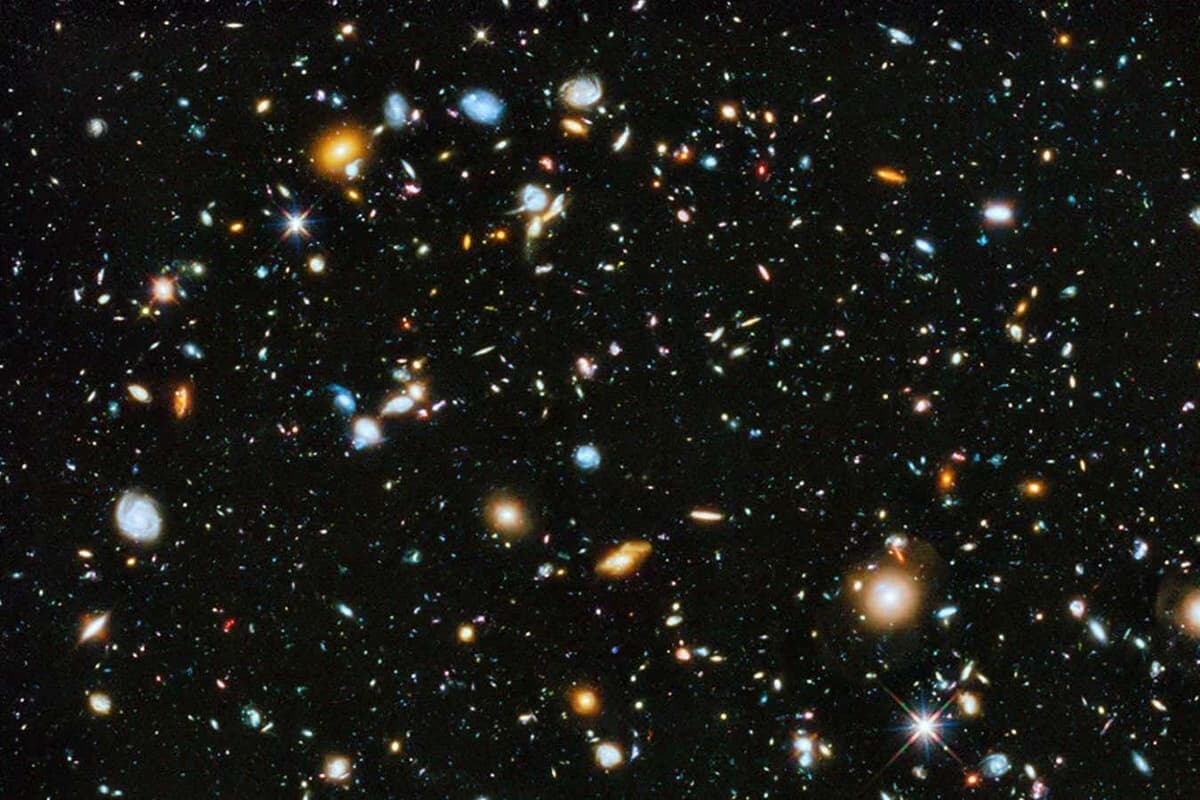
100-Year-Old Assumption About the Universe May Soon Be Overturned
Physicists may soon discard the century‑old cosmological principle that the universe is homogeneous and isotropic on the largest scales. New observations suggest the cosmos is significantly lumpier, with variations that could explain longstanding anomalies in cosmic microwave background data and galaxy distribution. Researchers cite data from deep‑field surveys and gravitational lensing that reveal unexpected density fluctuations. If confirmed, the findings would force a major revision of standard cosmological models.

What to Read This Week: Emma Chapman's Mind-Expanding Radio Universe
Emma Chapman’s new book, *Radio Universe* (U.S. title *The Echoing Universe*), arrives on 19 May 2026. It explains how radio waves act as a cosmic messenger, allowing scientists to map galaxies, study black holes and hunt for alien technosignatures without leaving Earth....

Why the Lack of Water on Mars Is so Mysterious
Planetary scientists have long agreed that Mars once hosted extensive liquid water and a thick, water‑rich atmosphere. A new comprehensive accounting of water inputs and losses reveals a major discrepancy: the expected ocean depth of 150–250 m at the end of...

Private Company to Land on Asteroid Apophis as It Flies Close to Earth
In 2029, asteroid Apophis will skim Earth at just 32,000 kilometres, a once‑in‑millennia event visible to the naked eye. A private U.S. company plans to deploy two landers as part of an international armada that includes spacecraft from Europe, Japan...

Fluorescent Ruby-Like Gems Have Been Found on Mars for the First Time
NASA's Perseverance rover has identified tiny corundum crystals—ruby or sapphire‑like gems—inside a Martian pebble named Hampden River. The rover’s SuperCam instrument used dual‑laser spectroscopy and luminescence imaging to match the spectral signature of the grains to laboratory ruby standards. This...

Can We Ever Know the Shape of the Universe?
The article examines the ongoing quest to determine the universe's overall geometry, weighing gravity’s pull against dark energy’s expansion. It outlines how cosmic microwave background measurements, galaxy surveys, and supernova observations constrain curvature, suggesting a near‑flat cosmos. Yet the possibility...

Why Elon Musk Has Misunderstood the Point of Star Trek
Elon Musk praises Star Trek for inspiring space exploration but overlooks its deeper message. The article argues that Star Trek’s heart lies in social equity, cooperation, and a hopeful future for all humanity. It highlights the current US climate—immigration anxieties...
A New 'Brief History' Of the Universe Paints a Wide Picture
Sarah Alam Malik, a particle physicist, releases *A Brief History of the Universe (and our place in it)*, a modern counterpart to Stephen Hawking’s 1988 bestseller. The book translates the latest discoveries in cosmology—dark energy, gravitational waves, and multiverse theories—into...

Mars Once Had a Vast Sea the Size of the Arctic Ocean
Researchers analyzing data from NASA's Mars Reconnaissance Orbiter, ESA's Mars Express, and the ExoMars Trace Gas Orbiter have identified a distinct ancient coastline on Mars, indicating a once‑vast ocean roughly the size of Earth's Arctic Ocean. The discovery stems from...

Filming the Universe’s Biggest Dramas: Best Ideas of the Century
Astronomers have moved from relying on chance to systematically hunting fleeting cosmic explosions by deploying dedicated time‑domain surveys. The Palomar Transient Factory (2009‑2012) pioneered a coordinated “conveyor‑belt” approach, triggering follow‑up observations across multiple telescopes. Its successors, the Zwicky Transient Facility...
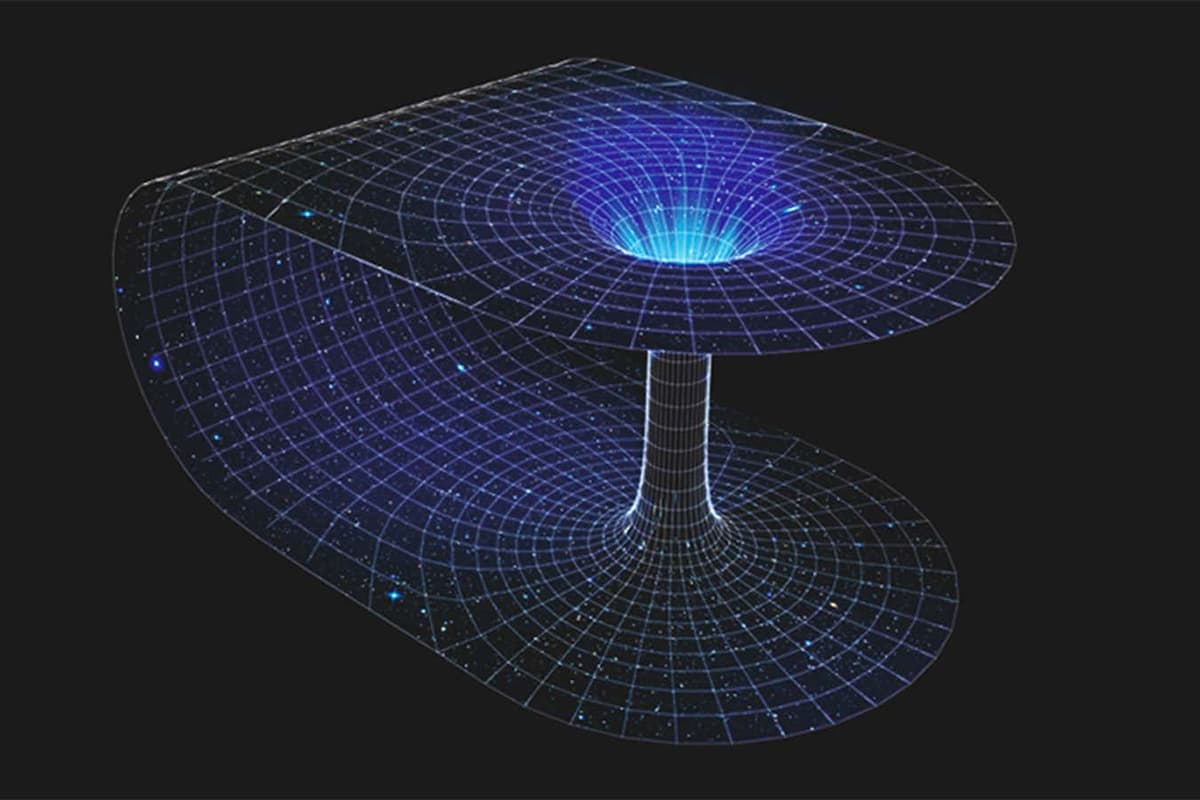
Supermassives to Fuzzballs: Every Black Hole Type Explained
The New Scientist video maps the full spectrum of black‑hole phenomena, from stellar‑mass and intermediate‑mass objects to the gargantuan supermassive varieties at galaxy cores. It also surveys speculative constructs such as wormholes, gravastars and string‑theory fuzzballs, highlighting the latest observational...

'Knitted' Satellite Launching to Monitor Earth's Surface with Radar
The UK‑based CarbSAR satellite is set to launch this Sunday, featuring a revolutionary mesh radar antenna woven from tungsten wire coated in gold. The antenna is produced on a standard industrial knitting machine that has been adapted for aerospace use....

Weird Clump in the Early Universe Is Piping Hot and We Don’t Know Why
Astronomers using ALMA have identified a young galaxy cluster, SPT2349‑56, whose intracluster gas is five to ten times hotter than theoretical models predict. The cluster, observed just 1.4 billion years after the Big Bang, shows gas temperatures of several tens of...

Rare Saturn-Sized Rogue Planet Is First to Have Its Mass Measured
Researchers have measured the mass of a free‑floating, Saturn‑sized planet—KMT‑2024‑BLG‑0792/OGLE‑2024‑BLG‑0516—using a rare combination of ground‑based microlensing observations and Gaia space‑telescope data. The planet’s mass, about one‑fifth that of Jupiter, makes it the first rogue exoplanet with a confirmed mass measurement....

Three Supermassive Black Holes Have Been Spotted Merging Into One
Astronomers have identified a rare system where three supermassive black holes, each actively accreting, are merging as their host galaxies coalesce. The discovery, made through coordinated X‑ray, radio and optical observations, adds a triple configuration to the roughly 150 known...