
U.S. Space Force Admits Space Capabilities ‘Targeted and Destroyed’ in Epic Fury
During the recent Operation Epic Fury exercise, a senior U.S. Space Force officer confirmed that the service’s space capabilities were targeted and destroyed for the first time. Brig. Gen. Christopher Fernengel warned that such losses are likely to recur, underscoring vulnerabilities in the current satellite‑centric posture. The admission is prompting a strategic pivot toward more distributed satellite architectures and expanded electronic‑warfare sites. The shift aims to enhance resilience against advanced anti‑satellite threats.

SPACECOM Explores Offensive Cislunar Space Technologies in Major Policy Shift
U.S. Space Command announced it is actively studying technologies for offensive operations in cislunar space, the region between Earth and the Moon. The disclosure at the State of the Space Industrial Base conference marks a major policy shift from protecting...

NASA Starts New Project Growing Stem Cells Aboard ISS
NASA’s InSPA‑StemCellEX‑H2 project on the International Space Station is testing large‑scale production of blood stem cells in microgravity. Researchers say the weightless environment preserves cell quality and accelerates expansion, potentially reducing immune rejection when transplanted. The initiative aims to generate...

Mach+ Quarterhorse Drone Gets Funding Boost
The U.S. Defense Innovation Unit has boosted funding for Hermeus' Quarterhorse supersonic drone by $159 million, lifting the total contract potential to $219 million. The program will finance flight tests through 2027, focusing on high‑Mach payload delivery and release. On 26 May the...

Space Solar Teams Up With Lonestar For Orbital Data Storage
Space Solar, a UK‑based in‑space power developer, signed a Letter of Intent with U.S. data‑in‑space pioneer Lonlonestar on 27 May 2026. The agreement creates a joint technical team to explore missions, investments and joint ventures for orbital data storage. Lonestar recently...

UK Achieves First Laser Data Download From Satellite with Deployable Ground Station
On 27 May British engineers achieved the United Kingdom’s first optical downlink from space, using a deployable laser communications ground station built by Archangel Lightworks for Dstl. The TERRA‑M system, only 1.1 m tall and 0.7 m in diameter, transferred multiple gigabytes...

NASA Builds AI System to Map Harmful Algal Blooms in Near Real Time
NASA researchers unveiled SIT‑FUSE, an AI system that merges data from five satellite missions to detect harmful algal blooms (HABs) along U.S. coasts in near real time. The self‑supervised model identified toxic events such as Karenia brevis in Florida and...

AI-Driven Grid Resilience and Critical Infrastructure Protection
AI‑driven anomaly detection is reshaping how utilities defend power grids against sophisticated, patient adversaries. Traditional threshold‑based SCADA monitoring misses slow, stealthy intrusions, while AI platforms from Dragos, Claroty and Nozomi build behavioral baselines to flag abnormal device communication. Deployments now...
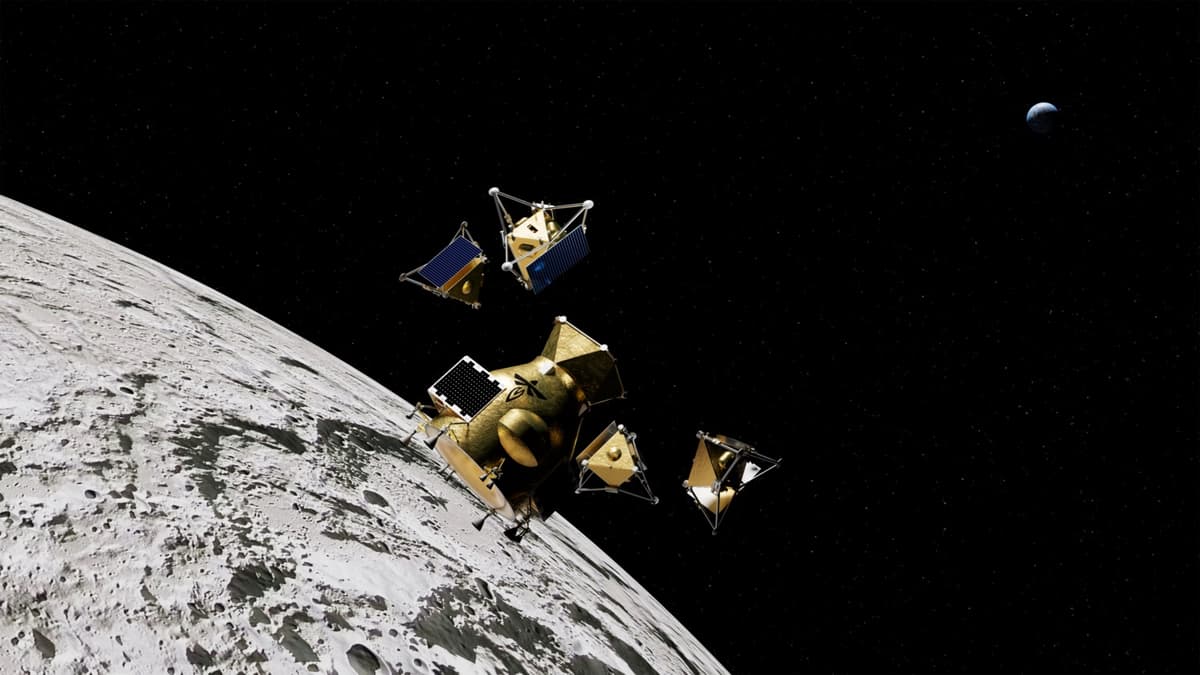
Firefly Aerospace Wins $75M Contract to Deliver Drones to Lunar South Pole
Firefly Aerospace secured a $75 million subcontract from NASA’s Jet Propulsion Laboratory to deliver four autonomous drones to the Moon’s south pole. The drones, built by JPL, will be launched aboard Firefly’s Elytra spacecraft on a 45‑day trajectory, targeting a launch...

27 Space Conferences in June 2026: The Complete List You Can’t Miss (UK, USA & Worldwide)
June 2026 will host an unprecedented 27 space conferences spanning six continents, from defense‑satellite talks in London to the first IAF climate summit in Kigali. The United Nations’ COPUOS session in Vienna will address the next iteration of international space...

China Keeps Adding A Very Specific Type Of Space Debris
China is increasingly leaving entire rocket bodies in high Low Earth Orbit (600‑2000 km), adding roughly 252 metric tons of debris—about five times the mass of U.S. remnants in the same band. The practice contrasts with historic U.S. and Soviet launches, which...

With Shortfall Doc, NASA Tells Industry What Civilian Space Needs Next
NASA released its 2026 Civil Space Shortfall Ranking, consolidating over 450 responses from industry, government and academia. The list pinpoints technology areas lacking development that are essential for upcoming exploration, science and other missions. By mapping these shortfalls, NASA intends...

Starlink Licence Gets Delayed By The Gambia
SpaceX’s Starlink has paid for a VSAT operating permit in The Gambia, but the government refused approval, insisting the company must obtain a full satellite licence. The Ministry of Digital Economy cited insufficient competencies and equipment, and raised concerns about...

US Must Return to Moon to Counter ‘Belligerent’ China, Think Tank Warns
A new Mitchell Institute report warns that without a sustained American presence on the Moon, the United States could lose its strategic edge to a militarily‑driven Chinese space program. Beijing is advancing crewed lunar capabilities and plans an International Lunar...

U.S. Air Force General Labels MQ-9 Reaper ‘Most Valuable Player’ in Iran Operation Despite Losses
U.S. Air Force Chief of Staff Gen. Kenneth S. Wilsbach told the House Armed Services Committee that the MQ‑9 Reaper drone was the "most valuable player" in Operation Epic Fury against Iran, even though roughly 30 aircraft have been lost....