
NASA Tests CryoFILL Technology for Refueling Landers
NASA’s Glenn Research Center is testing CryoFILL, a cryogenic fluid in‑situ liquefaction system that turns extracted lunar oxygen into liquid propellant. The project uses a flight‑like cryocooler capable of operating below –300 °F to condense oxygen, aiming to reduce launch mass and mission costs. Successful tests will inform scalable designs for refueling landers on the Moon, supporting Artemis and future Mars missions. Over the next three months engineers will collect data across varied conditions to validate thermal models and guide hardware development.

For The First Time, Humanity Has Changed A Natural Object’s Orbit Around The Sun
In September 2022 NASA’s DART spacecraft struck Dimorphos, the moonlet of asteroid Didymos, at 6.6 km/s, shortening the binary’s mutual orbit by 33 minutes and nudging its solar trajectory by 0.15 seconds. The kinetic impact proved a viable method to alter an asteroid’s...

Northern Lights Surge Expected Tonight As Solar Wind Slams Into Earth
A fast solar‑wind stream from a coronal hole will hit Earth tonight, prompting NOAA’s Space Weather Prediction Center to forecast a G1 (minor) geomagnetic storm with Kp values approaching five. The disturbance is expected to widen the auroral oval, making...

UK Billionaire Backs Construction of World’s Largest All-Lens Telescope
British billionaire Alex Gerko is financing MOTHRA, a distributed‑aperture telescope built from 1,140 high‑end Canon telephoto lenses that together provide a 4.7 meter effective aperture. The array is being assembled at the Obstech‑El Sauce Observatory in Chile, with construction started in...

Loft Orbital Aims To Launch AI-Processing Satellites Later This Year
Loft Orbital, a San Francisco‑based space startup, announced plans to launch an AI‑processing satellite constellation later this year. The fleet will run a lightweight, low‑power AI model directly on board, sidestepping the energy demands of large terrestrial models. By analyzing...

Airbus and B2Space Team Up for Advanced Stratospheric Missions
Airbus and Spanish HAPS specialist B2Space have signed a strategic partnership to develop end‑to‑end stratospheric missions. B2Space will design, launch and operate high‑altitude balloon platforms, while Airbus will provide payloads, sensors and data‑management capabilities. The collaboration targets applications such as...

New AI Project Aims to Detect and Predict Ocean Plastic Drift From Space
The ADOPT project combines Sentinel‑2 optical imagery with daily high‑resolution PlanetScope data and artificial intelligence to locate floating plastic debris and forecast its short‑term drift. By training a machine‑learning model on GPS drifter records, the system corrects biases in conventional...

ESA Readies Self-Healing Materials For Use On Spacecraft
The European Space Agency (ESA) is advancing Project Cassandra, a collaboration with CompPair, CSEM and Com&Sens to adapt self‑healing carbon‑fibre composites for spacecraft. The HealTech material, originally developed by CompPair, uses embedded fibre‑optic sensors and 3D‑printed aluminium grids to detect...

Leicester Space Nuclear Firm Lands Blue Origin Partnership For Deep Space Power
Perpetual Atomics, a University of Leicester spin‑out, has signed a memorandum of understanding with Blue Origin to explore americium‑241 radioisotope power systems for space missions. The partnership aims to develop nuclear generators that can supply continuous electricity where solar panels...

UK Deftech Firm UForce With Ukrainian Roots Raises $50M at $1B Valuation
UForce, a UK‑based defence tech firm with Ukrainian origins, closed a $50 million financing round led by Lakestar and Shield Capital, pushing its valuation above $1 billion. The company develops autonomous air, sea and land systems, including marine drones, heavy‑bomber UAVs, unmanned...

Metalysis Garners Nearly €1m From ESA For Titanium Processing
Metalysis, a South Yorkshire firm, secured nearly €1 million from the European Space Agency for a two‑year initiative to commercialise a continuous or quasi‑continuous titanium production method using its patented FFC process. The funding reflects ESA’s drive to create a greener,...

GalaxEye Space to Build 300 Kg OptoSAR Satellites. First 2-in-1 Satellite to Be Launched by SpaceX Rocket Soon
Indian startup GalaxEye Space Solutions is preparing to launch the world’s first privately built OptoSAR satellite, a 190 kg platform powered by electric propulsion, aboard a SpaceX Falcon rocket within the next two to two‑and‑a‑half months. The Gen‑1 satellite, part of...

NASA Picks 16 Finalists for LunaRecycle Challenge Phase 2
NASA announced 16 finalists for Phase 2 of the LunaRecycle Challenge, a $3 million competition aimed at creating waste‑recycling technologies for lunar missions. The teams, drawn from 11 U.S. states, will spend the next six months refining prototypes or digital‑twin systems before...

France’s Aldoria Inks Agreement With India’s AXISCADES For Optical Station Based SSA
French space‑tech firm Aldoria has signed a contract with Indian engineering company AXISCADES to deliver optical stations for Space Situational Awareness (SSA) in India. The first station will be deployed in 2026, with a phased rollout targeting more than a...

Israeli Space Startup Remondo Unveils A Unique Cost-Cutting Plan
Israeli startup Remondo unveiled its Partial Aperture Imaging System (PAIS), a novel approach that replaces costly large mirrors and sensors with rings of smaller mirrors, a light modulator and coding to achieve 30‑cm resolution imagery. The design cuts satellite development...

20 Space Summits Incoming March 2026: UK, US, And World
March 2026 will host more than 20 high‑profile space conferences, summits and workshops across the UK, the United States and globally. The calendar features flagship gatherings such as Space‑Comm Europe in London, the Joint Space Operations Summit in Maryland, LPSC in...

HEO And SATLANTIS Sign MoU To Better Provide Sovereign Space Domain Awareness
On 3 March 2026 HEO Space and Spain’s SATLANTIS signed a memorandum of understanding to deliver sovereign space domain awareness (SDA) capabilities to government and defence clients. The deal merges HEO’s non‑Earth imaging software, analytics and operational expertise with SATLANTIS’s high‑performance optical...

SDA And The Outer Space Treaty: Why Worry About Legal Gaps In Space Tech?
The 1967 Outer Space Treaty, drafted when space activity was limited, now faces criticism for its vague language amid exploding low‑Earth‑orbit constellations, AI‑driven satellite services, and emerging directed‑energy weapons. Legal scholar Cybel Ekpa argues that these technological advances create gaps...

U.S. Space Force Pushes to Put Airborne Target Tracking Sensors in Orbit
The U.S. Space Force is advancing the Airborne Moving Target Indicator (AMTI) program to place space‑based sensors that can track aircraft, drones and missiles in orbit. Early prototype demonstrations have delivered detailed on‑orbit data, and the service is leveraging technology...

IRONSTAR Wins British Heat Of The ActInSpace 2026 Hackathon, Enabling New Qualification Of Space Risk Exposures
University College London’s IRONSTAR team won the UK heat of the ActInSpace 2026 hackathon, presenting an early‑stage model that prices space‑debris risk for satellite operators and insurers. The competition, hosted at Surrey Research Park, attracted 75 participants from academia, industry...
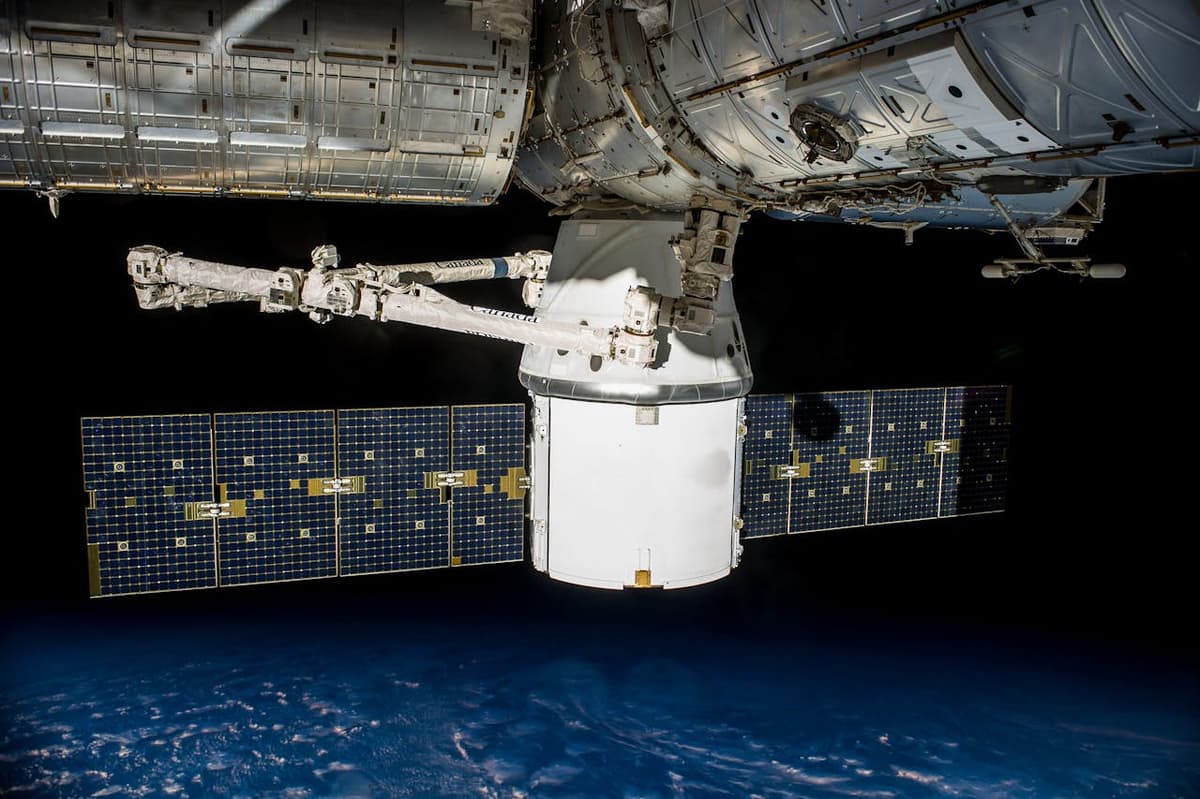
Space Station Experiment Shows Microbes Can Mine Valuable Metals In Orbit
Researchers aboard the International Space Station grew the fungus Penicillium simplicissimum with powdered meteorite and recovered measurable palladium, marking the first successful orbital biomining of a precious metal. The fungal cultures outperformed a bacterial counterpart, extracting 18 of 44 measured...
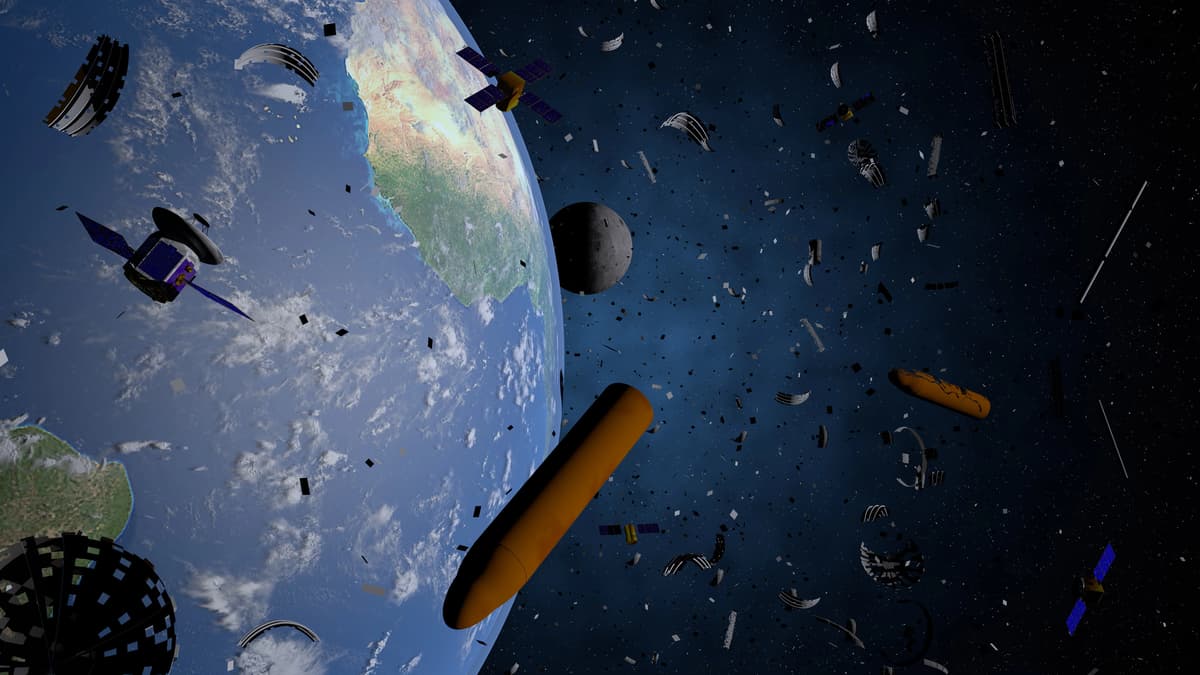
New ESA Contract Targets Small, Fast-Moving Space Junk Beyond Ground Radar Reach
The European Space Agency has signed a data‑procurement contract with Munich‑based Vyoma to receive space‑based observations of small, fast‑moving debris. Vyoma’s Flamingo‑1 satellite, orbiting at 510 km, will deliver bulk traffic data that ESA will use to validate and enhance its...

Rebecca Evernden Takes Helm Of New UK Space Agency Ahead Of April Launch
Rebecca Evernden has been appointed Director of the newly restructured UK Space Agency, which will merge into the Department of Science, Innovation and Technology (DSIT) in April. A decade‑long space policy specialist, she previously led legislation for vertical launches, helped...
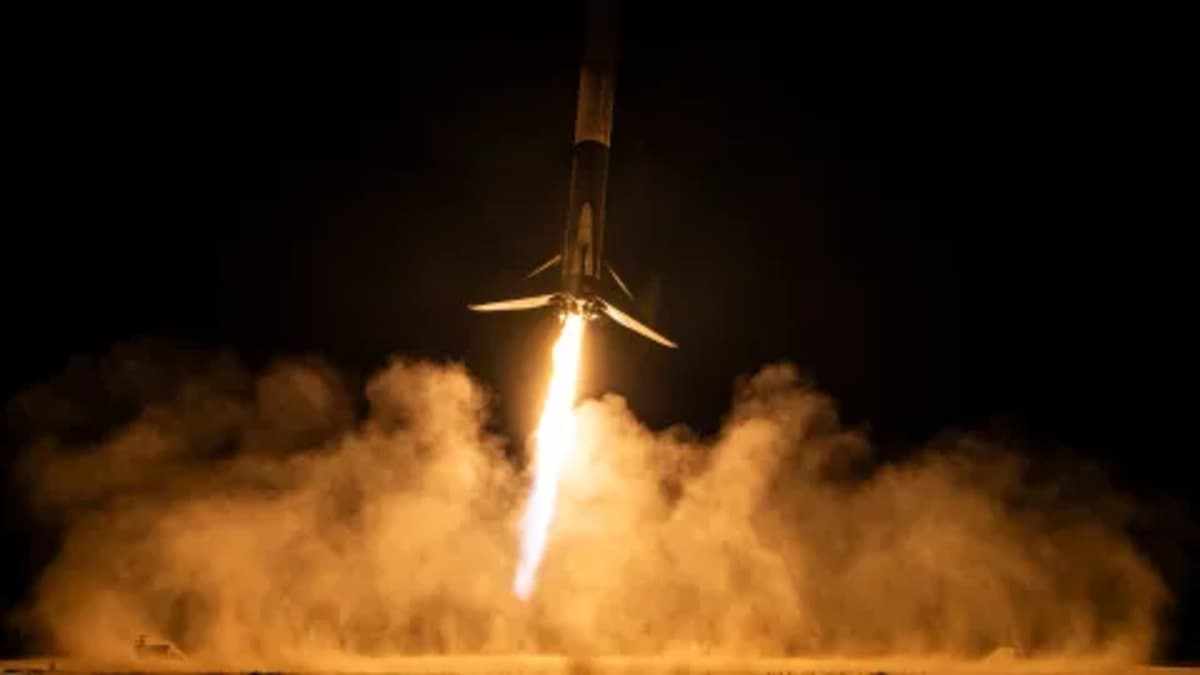
SpaceX Sets A New Reuse Record With The Falcon 9 Rocket
SpaceX on 21 February 2026 set a new reuse milestone as a Falcon 9 first‑stage booster completed its 33rd successful flight, surpassing its own previous record. The dual launch from California and Florida deployed 53 new Starlink satellites, expanding the broadband constellation. Reusing...
![[VIDEO] ESA Unveils OMLET System That Fires High-Power Lasers To Stop Orbital Collisions](/cdn-cgi/image/width=1200,quality=75,format=auto,fit=cover/https://orbitaltoday.com/wp-content/uploads/2026/02/Geostationary_orbit_pillars.jpg)
[VIDEO] ESA Unveils OMLET System That Fires High-Power Lasers To Stop Orbital Collisions
The European Space Agency unveiled OMLET – Orbit Maintenance via Laser Momentum Transfer – a ground‑based laser system designed to nudge low‑Earth‑orbit debris instead of burning satellite fuel. The project has moved from feasibility to Phase A/B1 design, where engineers are...

Hackers Tricked by Fake Satellite in Groundbreaking Cybersecurity Sting
Researchers unveiled HoneySat at NDSS 2026, the first high‑interaction satellite honeypot that mimics an entire CubeSat mission, including ground‑segment software and orbital dynamics. In three public deployments, attackers issued 22 authentic flight‑software commands, attempting to access ground systems, extract telemetry,...

The UAE Successfully Launched Its First Hybrid Rocket
The United Arab Emirates successfully launched its first domestically built hybrid sounding rocket on 13 February 2026, achieving a 3 km altitude and safe recovery. Developed by the Technology Innovation Institute, the vehicle uses a nitrous‑oxide and solid polyethylene propulsion system...

Aitech and Teledyne Power Next-Gen Space Missions with AI-Ready SP1 Computer
AI‑ready Aitech SP1 single‑board computer now incorporates Teledyne e2v’s QLS1046 space‑qualified SoC. The chip features four 64‑bit Arm Cortex‑A72 cores, DDR4 memory with error correction, and radiation tolerance up to 100 krad, enabling reliable operation in LEO, GEO, lunar and deep‑space...

Ukraine Eyes Starlink Replacement, Files for Satellite Constellation
Ukraine has begun the international regulatory process for its own low‑Earth‑orbit communications network, UASAT‑NANO, filing with the ITU in December 2025. The first satellite is scheduled for an October 2026 launch on a SpaceX vehicle, with full deployment starting in...

China’a Ispace Breaks Records As It Raises $730m To Develop Reusable Rocket
Chinese private aerospace firm Ispace announced a $730 million financing round, the largest ever raised by a Chinese aerospace startup. The capital will fund the development of its reusable methalox Hyperbola‑3 launch vehicle and expand launch, sea‑recovery, and testing capabilities. Ispace...

Britain To Fire Solar Power From Orbit To Antarctica In Energy First
Britain’s Space Solar is preparing to beam electricity from orbit to the British Antarctic Survey’s Rothera Research Station, replacing diesel generators with space‑based solar power. The project will use satellites that convert sunlight into microwave beams received by a rectenna...

Europe Plans ‘Space Shield’ to Defend Satellites and Counter Drone Threats
The European Commission announced a European Space Shield slated for launch in mid‑2026, aiming to protect EU satellites and space services from emerging threats. The plan couples civilian and military space assets into a coordinated network and tackles the surge...

China’s AI War Machine Exposed: 9,000 PLA RFPs Reveal Space And Undersea Ambitions
A CSET report analyzing over 9,000 PLA procurement notices from 2023‑24 shows China actively seeking artificial‑intelligence tools for space domain awareness, under‑sea surveillance, data‑fusion decision support, and synthetic media operations. The RFPs call for algorithms that determine satellite orbits, recognize...

Solar Storms and 2,600 Near-Misses: The Alarming January That Tested Britain’s Space Defences
In January 2026 the UK’s National Space Operations Centre kept its warning and protection systems active around the clock to shield licensed satellites from a surge in solar activity and persistent orbital congestion. Geomagnetic storms and solar flares intensified, while...

Starlink Satellite Train Tracker: The Ultimate Guide to Spotting the Sky Train in 2026
SpaceX’s V2‑Mini Starlink launches create a temporary “satellite train” of 20‑23 bright objects that streak across the sky for 24‑48 hours before dispersing. Launch cadence in winter 2025‑2026 reaches one mission every 3‑4 days, giving observers frequent but brief viewing...

US Air Force Proves AI Wingmen Can Fly Across Rival Platforms
The U.S. Air Force has taken ownership of the Autonomy Government Reference Architecture (A‑GRA) and applied it to multiple aircraft, proving AI wingmen can operate on rival platforms such as the YFQ‑42 and YFQ‑44. By decoupling software from any single...

China Lays Out Its Plan To Develop A Space-Based Data Centre
China Aerospace Science and Technology Corp (CASC) unveiled a five‑year roadmap that includes building a space‑based data centre, alongside asteroid mining, debris monitoring and tourism initiatives. The orbital data centre would rely on solar power to deliver computing, storage and...

Tracking the Epidemic – Satellites Watch over the Spread of the Texas Screwworm Outbreak
In early 2026 Texas declared a disaster as the New World screwworm, eradicated in the U.S. since 1966, moved within striking distance of the border, threatening up to $1.8 billion in cattle losses. To counter the risk, satellite‑enabled livestock tags from...

The Space Company in the Grey Zone: How TEC’s Network Blurs Europe’s Sanctions Lines
The Exploration Company (TEC) is building the reusable Nyx capsule while its CEO Hélène Huby chairs the Karman Project, a Berlin‑based fellowship that brings together European space actors and Russian‑linked researchers. The network includes participants from sanctioned entities such as...

Moss That Thrives Under Radiation Signals New Lifeline For Mars Crews
European researchers have demonstrated that aquatic moss, particularly Taxiphyllum barbieri, not only survives but thrives under ionising radiation levels relevant to deep‑space habitats. In controlled tests the moss filtered heavy metals, enhanced photosynthetic activity, and formed denser mats after low‑dose...

Orbital Paradigm: Ill-Fated PSLV’s 4th Stage Ignited. KID Taught Us A Ton
India’s PSLV‑C62 suffered a third‑stage anomaly, yet its fourth stage ignited while the vehicle was already descending. Spanish firm Orbital Paradigm’s KID demonstrator survived the uncontrolled re‑entry, separated, and transmitted telemetry back to Earth. The post‑flight report reveals that intense...

Year In Orbit Physically Shifts The Human Brain, Scientists Warn
New MRI analysis of 26 astronauts shows the brain moves upward and backward inside the skull after spaceflight, with shifts exceeding two millimetres in year‑long missions. Researchers mapped over 100 brain regions, revealing that displacement scales with mission length and...

NASA SPHEREx Mission Sheds More Light On Interstellar Comet 3I/ATLAS
NASA’s SPHEREx infrared survey observed interstellar comet 3I/ATLAS in December 2025, detecting organic molecules such as methanol, cyanide and methane. The mission also recorded a pronounced increase in the comet’s brightness two months after perihelion, attributed to sublimation of carbon‑rich...

Simulation Shows That Nuking Earth-Bound Asteroids Might Be Safe
Researchers from the University of Oxford and deflection startup OuSoCo used the HiRadMat particle accelerator to expose a Campo del Cielo iron meteorite sample to intense radiation, mimicking a nuclear blast. The sample first softened, then flexed and ultimately restrengthened,...

Miliband Targets The Sky With Radical Plan To Beam Energy From Space
Britain’s new net‑zero roadmap, championed by Energy Secretary Ed Miliband, proposes orbiting solar power stations to supply the UK with continuous, large‑scale electricity. The government‑commissioned study outlines ultra‑light satellites that convert sunlight to microwave beams, received by ground rectennas. Early...

China Launches AI-Driven Satellite Constellation to Transform Space Computing
China’s Zhejiang Lab has deployed a 12‑satellite AI‑driven constellation, the first phase of its Three‑Body Computing Constellation. The satellites host two 8‑billion‑parameter AI models for remote sensing and astronomical analysis, and have demonstrated inter‑satellite networking and on‑orbit data processing. In...

$1.5-Billion NISAR Satellite Powers Near-Real-Time Soil Moisture Tracking Across India
The $1.5 billion NASA‑ISRO Synthetic Aperture Radar (NISAR) satellite, launched in July 2025, now delivers 100 m resolution soil‑moisture products across India on a 12‑day repeat cycle. Using dual‑frequency S‑ and L‑band radar, the mission provides near‑real‑time moisture maps for irrigated, rain‑fed...

A “Low-Level” Space Storm Created High-Risk Conditions for European Satellites
On 4 November 2023 a weak geomagnetic storm sparked a rare super plasma bubble that expanded far beyond its usual equatorial zone, reaching latitudes up to 46°N across Europe. The disturbance persisted for several hours, producing pronounced irregularities in total electron content...

Europa’s Ice Shell May Be Surprisingly Thick, Does It Affect the Odds of Alien Life?
New analysis of Juno’s microwave radiometer data indicates Europa’s ice shell may be as thick as 18 to 24 miles, far thicker than many earlier estimates. Such a massive crust would impede the transfer of oxygen and nutrients from the...

Could the Buyer of British Space Company Orbex Have Ties to Russia?
The Exploration Company (TEC), a German‑French space startup, is in advanced negotiations to acquire Orbex, the UK’s promising small‑launch provider. The deal coincides with heightened EU‑Russia tensions after the invasion of Ukraine, and TEC’s CEO Helene Huby also chairs the...