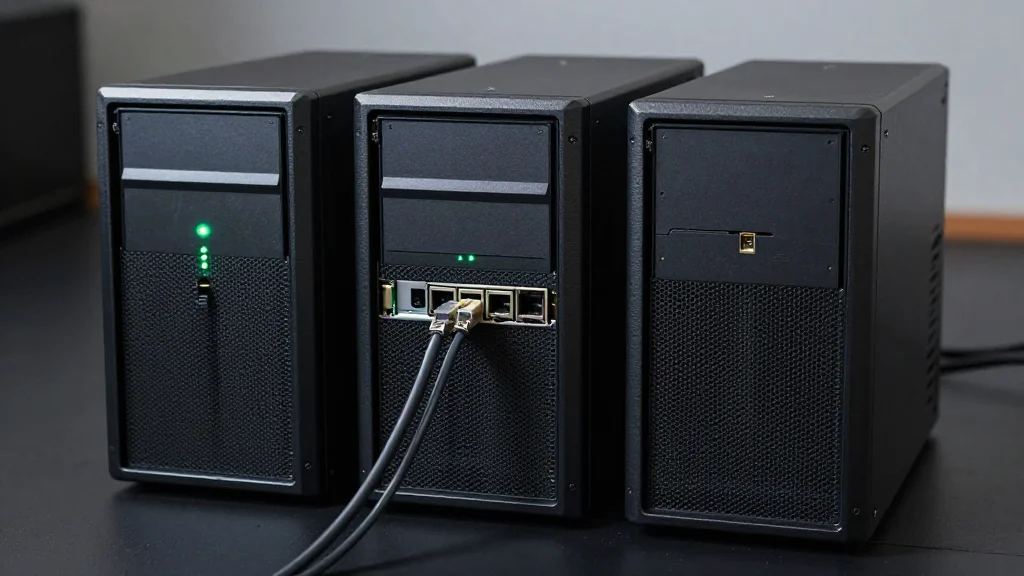
Checklist: How to Reduce Environment Drift without Slowing Devs or AI Agents
Environment drift—misaligned configurations, data, and access across dev, staging, and production—creates hard‑to‑reproduce bugs and misguides AI agents. Most teams keep application code in sync but let infrastructure and permissions evolve manually, allowing drift to accumulate unnoticed. Upsun proposes a four‑step diagnostic checklist covering config, deployment pipelines, access controls, and test data fidelity, each with quick‑win actions that can be implemented within a day. By defining the entire stack in a single declarative file and provisioning environments automatically on each branch push, Upsun eliminates drift without adding process overhead.

How Platform Standardization Will Help You Deliver on Your KPIs
Enterprises are moving from siloed team optimization to organization‑wide platform standardization to hit delivery KPIs. A DORA 2025 survey shows 90% of firms now run internal developer platforms, making platform quality a KPI driver. Fragmented pipelines create a hidden factory...

Cloud Has a Climate Cost. Here's Our Plan to Reduce Ours.
Upsun disclosed its 2025 carbon footprint—2.57 kt CO₂e total, or 11 t per employee—highlighting that cloud services account for roughly half of emissions (about 1,200 t CO₂e, 62% of the footprint). The company measured its impact using the GHG Protocol with Greenly and performed a...

“It Works on My Machine”: Why Environment Parity Is Still a Platform Problem in 2026
Environment parity remains a critical bottleneck in 2026, with many teams still facing the “repro gap” where code works locally but fails in staging or production. The root cause is drift caused by separately maintained environments, leading to version and...

The Zero-Trust Agent: Why Your AI Needs a Sandbox, Not a Blank Check
Upsun introduces a zero‑trust framework that forces AI agents to operate inside isolated, production‑accurate preview environments rather than holding unrestricted cloud credentials. The platform enforces environment‑level scoping and container isolation, letting agents propose changes, test them in a byte‑level clone,...

Infrastructure for AI Agents: What Platform Teams Need to Build Now
AI agents are moving from code‑assistant roles to autonomous platform citizens, demanding infrastructure that operates at machine speed. Traditional cloud platforms built around human‑centric ticketing and manual approvals become bottlenecks, causing delays that AI‑driven workflows cannot tolerate. The article advocates...

The Paved Road to Production: What Good Internal Developer Platforms Look Like
Internal developer platforms (IDPs) often fail because they prioritize platform‑team convenience over developer workflow, leading to shadow IT as developers seek faster alternatives. The article advocates a “paved road” approach where provisioning, environment parity, and governance are automated directly from...

Stop the PCI DSS 4.0 Audit Toil: A Guide to Inherited Controls
PCI DSS 4.0, now mandatory for all payment‑data handlers, moves audits from point‑in‑time checks to continuous, automated evidence. Fintechs that build on raw cloud primitives spend months gathering OS‑hardening, patch‑management and network‑segmentation documentation, a burden known as audit toil. Upsun’s platform...

Your Preview Environment Is Lying to You
The piece reveals that most preview environments duplicate only the code, leaving the data layer untouched, which masks bugs until they reach production. It explains that this data‑path mismatch is structural, not accidental, and that teams spend extra effort maintaining...

What Happens when You Delete Everything? Three Minutes, or Thirty Hours.
An AI‑powered coding agent at PocketOS deleted its production database on Railway in nine seconds, wiping out the volume‑level backups and leaving the company without data for thirty hours until the platform’s CEO intervened. By contrast, a similar mishap at...

The Cloud Optionality Blueprint: Standardizing the Stack to End Vendor Lock-In
Upsun introduces a unified configuration file that abstracts applications from any cloud provider, enabling true cloud optionality. By standardizing services, versions, and deployment pipelines, migration becomes a data‑move task rather than a costly re‑architecture. The platform supports AWS, Azure, GCP,...

Five Questions Your Platform Evaluation Is Missing
Enterprises often evaluate a platform based on a single high‑profile application, overlooking the broader ecosystem of legacy workloads. The article outlines five critical questions—application coverage, preview data fidelity, cloud‑region flexibility, compliance scope, and onboarding complexity—that reveal hidden risks and migration...

The Data Context Gap: Why Agents Fail on Fragmented Stacks
AI agents and Retrieval‑Augmented Generation pipelines often falter because they are built on fragmented cloud stacks that lack production‑grade data. This creates a "repro gap" where agents operate on stale or mocked schemas, wasting over 57% of developers' time on...

Beyond the Frontend: Choosing Between Vercel and Upsun for Full-Stack Applications in 2026
Vercel remains the go‑to platform for Next.js‑centric frontends, offering instant preview URLs and a developer‑first experience. Upsun, by contrast, treats the entire application—frontend, backend services, databases, queues and cron jobs—as a single unit defined in a .upsun/config.yaml file. The article...
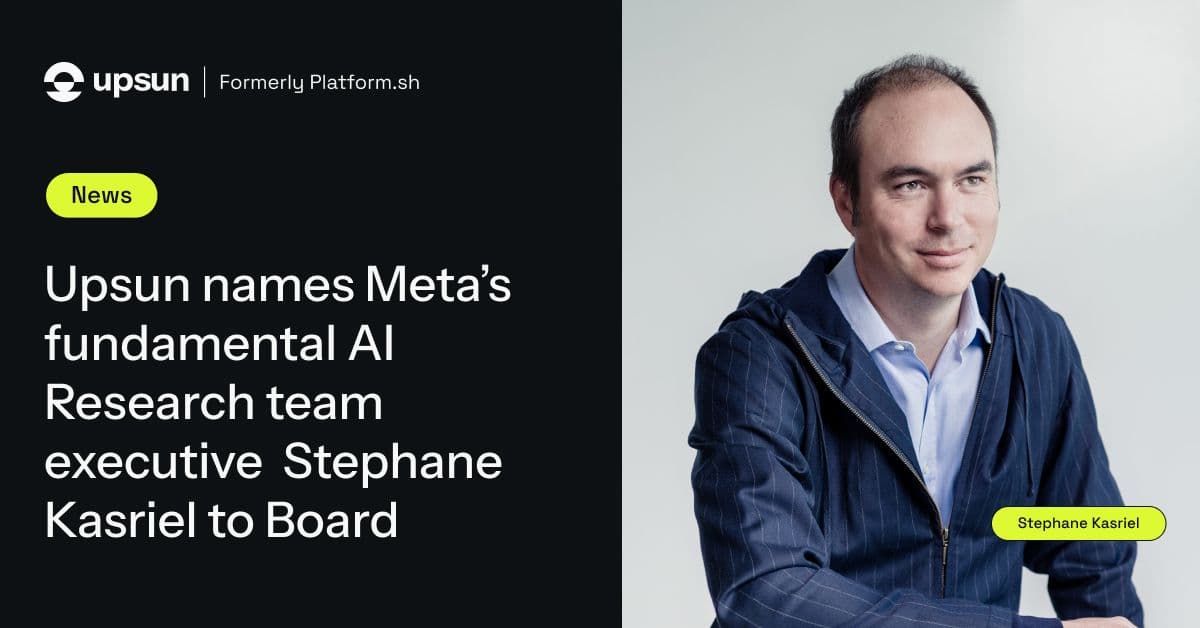
Upsun Names Meta’s Fundamental AI Research Team Executive Stephane Kasriel to Board
Upsun announced the appointment of Stephane Kasriel, Meta’s FAIR Foundations lead and former Upwork CEO, to its Board of Directors. Kasriel brings over two decades of experience scaling global technology platforms and deep AI expertise. The move comes as AI‑assisted...