
Why Your E-Commerce Dev Team Ships Slower than Your Competitors (and How to Fix It)
E‑commerce development teams often ship slower not because of headcount but due to hidden infrastructure friction such as shared staging, manual pipelines, and fragmented compliance. These bottlenecks turn week‑long feature cycles into month‑long projects, causing missed campaign windows. Upsun’s platform moves environment management to a layer that provides isolated, data‑complete preview environments for every branch, turning git pushes into deployments. By eliminating the “infrastructure tax,” teams can focus on revenue‑generating code and accelerate release cadence.

Ecommerce Replatforming without a Revenue Freeze: How Preview Environments Reduce Migration Risk
Upsun’s instant, data‑complete preview environments let ecommerce teams test replatforming on a 1:1 clone of production without halting the live store. By generating a full‑stack preview for every Git branch, developers can validate checkout flows, catalog behavior, and third‑party integrations...

Beyond the Pull Request: Why Code Review Is Not Infrastructure Validation
Upsun argues that AI‑assisted code reviews alone cannot guarantee production‑grade releases because they ignore infrastructure state. The platform introduces a unified .upsun/config.yaml file that version‑controls services, data, and code together. For every branch, Upsun spins up an instant, byte‑level clone...
Modernizing Public Sector Infrastructure: The Ineris Digital Transformation
Ineris, France’s public environmental institute, replaced a cumbersome outsourced VM model with Upsun’s container‑as‑code platform. By adopting Infrastructure as Code and Git‑driven automation, the agency halved the cost of building new environments and cut deployment time dramatically. The new workflow...

The Innovation Budget Audit: Reclaiming the 30% "DevOps Tax"
Upsun warns that up to 30% of enterprise cloud spend leaks through fragmented, manual infrastructure—a phenomenon it dubs the “DevOps tax.” The waste stems from decentralized procurement, over‑provisioning, and redundant storage, especially as AI‑driven code updates double in frequency. Upsun...

Beyond the Horizon: How Adel Jalabi Turned Global Fluency Into Inclusive Leadership
Adel Jalabi, manager of Talent Acquisition and DEIB at Upsun, leverages a life shaped by migration from Syria to Canada and work stints in Qatar and South Korea to champion inclusive hiring. He describes his approach as "global fluency," a...
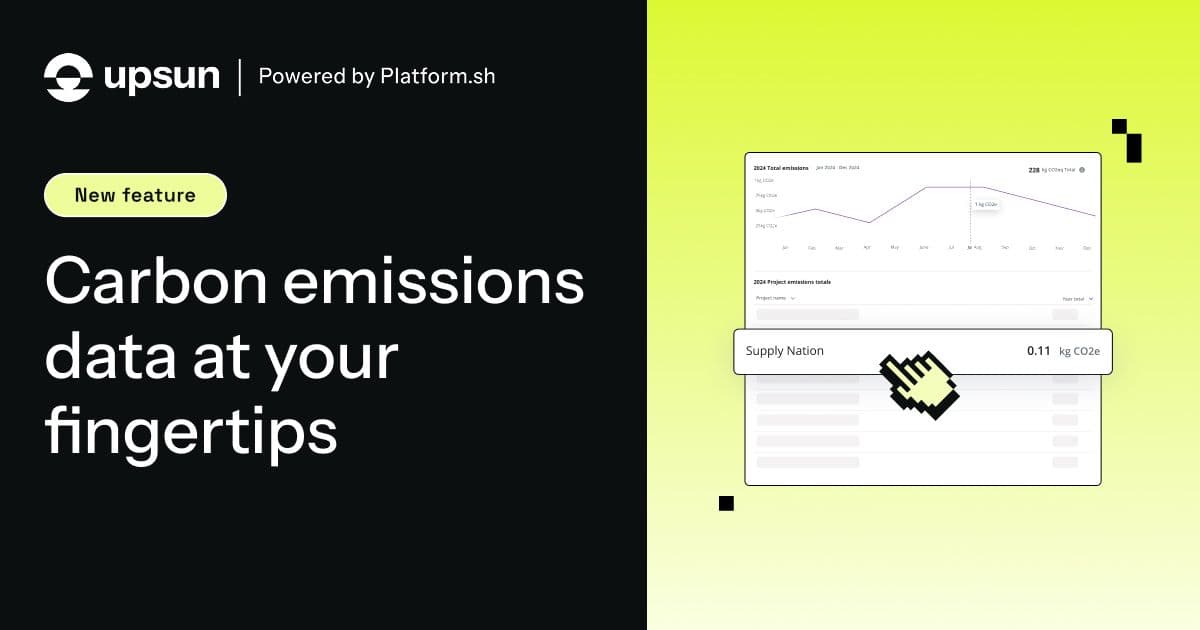
Carbon Emissions Data at Your Fingertips
Upsun has integrated annual carbon‑emissions data directly into its Console’s Billing section, making the 2025 figures instantly available to organizations and project owners. The data, calculated through a partnership with Greenly, adheres to GHG Protocol standards and reflects updated electricity...

Peak Traffic without the Panic: Auto-Scaling Infrastructure for E-Commerce Flash Sales
Upsun introduces a platform‑level auto‑scaling solution that replaces manual, weeks‑long peak‑traffic preparations for e‑commerce sites. By defining CPU and memory thresholds in a simple .upsun/config.yaml file, the system automatically adds or removes application, worker, and database resources in real time....

That Production Incident Cost More than Downtime
Production incidents cost far more than the visible downtime. After a P0 alert, engineers spend hours on manual reconciliation to align environments, creating undocumented toil that stalls the roadmap. The real expense includes the “momentum tax” of context‑switching and the...

Debugging the Black Box: Why LLM Hallucinations Require Production-State Branching
LLM‑powered features such as RAG search or autonomous agents often fail in production with hallucinations that cannot be reproduced in standard dev environments. The root cause is the mismatch between live production data, vector embeddings, and the exact model version...

Architecture Deep Dive: What Makes a Bug Reproducible?
The article argues that the toughest bugs stem from complex state rather than code, and that true reproducibility requires a deterministic, version‑controlled environment. It outlines three pillars—service parity, state consistency, and immutable deployment behavior—to achieve production‑identical clones. Upsun’s platform demonstrates...

What Fast Debugging Actually Looks Like on Upsun
Upsun showcased a real‑world debugging session where an AI‑generated Drupal site failed due to broken Composer scripts and wrong database credentials. Developer Advocate Paul Gilzow walked through the process, starting with log analysis, inspecting the container, comparing to a clean...

The Reality Check: Why Manual Debugging Setups Are a Hidden Factory
Manual debugging setups consume up to 70% of an incident’s resolution time, as engineers spend hours syncing databases, matching service versions, and recreating production states. Upsun proposes a deterministic cloning platform that turns the entire production stack into a version‑controlled...

Developer Guide for Migrating to Reproducible Environments without Rewriting
The guide proposes an incremental, configuration‑first path to reproducible, production‑identical environments without rewriting legacy code. It starts by mapping runtime, OS, and service drift, then introduces a sidecar .upsun/config.yaml that clones production settings on a low‑risk branch. Sanitized production data...

Why Fintechs Are Moving to Automated Compliance
Fintechs are turning to automated compliance platforms to eliminate the manual, time‑consuming audit preparation that slows product delivery. By deploying on Upsun’s PCI‑DSS Level 1, SOC 2 Type 2, ISO 27001 and HIPAA‑certified infrastructure, companies shift core security controls to the provider under a...

DORA Exit Strategy for Financial Services: Portable Cloud Architecture with Upsun
The EU’s Digital Operational Resilience Act (DORA) now obliges banks, insurers and investment firms to maintain a tested, documented exit strategy for each cloud provider. Most financial institutions rely on provider‑specific services, creating lock‑in that makes compliance difficult. Upsun proposes...

Bank Cloud Migration without a Feature Freeze
Banks face costly legacy core systems that force a two‑year feature freeze when using traditional “Big Bang” cloud migrations. The freeze stalls product innovation and heightens compliance risk as regulators like DORA and PSD3 continue evolving. Upsun proposes a preview‑environment...

The Silent Infrastructure Tax: Why AI Agents Will Break Your Legacy Cloud
In 2025 AI‑driven agents surpassed humans, accounting for 51% of web activity and driving a 693% YoY surge in generative‑AI referrals to retail sites. Legacy web stacks, built for human think‑time and CDN caching, crumble under the high‑concurrency, zero‑latency demands...

Developer Workflow Fragmentation and What’s Really Happening Behind the Scenes
Developer workflow fragmentation is causing a hidden factory of rework, draining roughly 12 hours per week per engineer and inflating mean time to recovery. The lack of standardized CI/CD and environment provisioning leads to a 30 % capacity loss and up to...

The Data Context Gap: An Evaluation Guide for Agent-Ready Infrastructure
AI agents often fail in production because they lack environmental parity, a mismatch known as the data context gap. Providing agents with a production‑identical sandbox—including live schema, services, and data—eliminates this blind spot. Modern platforms achieve this through metadata‑level cloning...

Migration Checklist: Moving From Fragmented Workflows to a Unified Platform
Enterprises are shifting from fragmented, tool‑specific workflows to a single, unified platform to eliminate hidden dependencies and production risk. A detailed checklist guides teams through preparation, sequencing, change management, and validation phases, emphasizing low‑risk pilots and clear ownership. The approach...
Substantially Reduce Your PCI DSS Control Burden Through Inherited Infrastructure
Upsun introduces an "Inherited Compliance" model that shifts most PCI DSS infrastructure responsibilities to its secure‑by‑default cloud platform. Automated patch deployment and built‑in change logs keep the environment continuously compliant without manual effort. By defining the entire stack in a...

AI Infrastructure Cost Optimization for Scaling Teams
In 2026 AI leaders face a shift from building models to managing the cost of running them at scale. Fragmented cloud stacks create hidden expenses through data egress, idle compute, and the engineering "glue" needed to keep services synchronized. Upsun...
Beyond the Legacy PaaS: Choosing Between Heroku and Upsun in the 2026 Cloud Ecosystem
Heroku announced an End‑of‑Sale for new enterprise customers and a feature freeze, signalling no further roadmap investment for large‑scale users. Existing accounts can still renew, but growth‑focused teams face stagnation. Upsun positions itself as the next‑generation PaaS, retaining a Git‑centric...
Why Upsun Is the Multi-Cloud PaaS Technical Leaders Are Choosing in 2026
A recent Journal du Net evaluation positions Upsun, formerly Platform.sh, as the leading multi‑cloud PaaS for 2026, highlighting its ability to deploy across AWS, Azure, Google Cloud, IBM and OVHcloud with identical workflows. The platform distinguishes itself with instant byte‑perfect...

Git-Driven Environments: Why Treating Infra as Code Unlocks Consistent Builds Every Time
Git‑driven environments treat infrastructure as code, storing full stack definitions in version‑controlled repositories. This eliminates environment drift by making every branch a deployable, production‑aligned preview environment. Changes to services, routes, or runtime versions are reviewed through pull requests, providing an...