
Workers’ Comp Medical Prices Vary Dramatically by State, With Fee Schedules Proving Key to Cost Control
The Workers Compensation Research Institute’s 2026 Medical Price Index shows stark state‑by‑state variation in workers’ compensation medical fees, with Wisconsin’s prices nearly four times those in Massachusetts. States lacking a fee schedule—Indiana, Iowa, Missouri, New Hampshire, New Jersey and Wisconsin—pay 41% to 188% more than states that regulate rates. From 2008 to 2025, non‑fee‑schedule states experienced 2.1% annual price growth versus 1.0% in fee‑schedule states, and price acceleration peaked between 2021 and 2024 before easing. Florida’s 2025 fee‑schedule overhaul alone lifted its overall professional‑service prices 41%, catapulting the state from the bottom to near‑median rankings.

Financial Institutions Face Selective Underwriting Pressure Despite Broadly Competitive Insurance Market
Gallagher’s Q1 2026 Financial Institutions Market Update shows the insurance market remains broadly competitive, yet loss‑heavy lines such as casualty, crime and catastrophe are prompting underwriters to become more selective. Banks are under pressure from commercial‑real‑estate (CRE) refinancing risk and M&A‑related...

As Construction Booms, Insurers Draw Sharper Lines Between Good Risks and Bad
The Aon 2026 Global Construction Insurance and Surety Market Report projects global construction spend climbing from about $16 trillion in 2025 to nearly $22 trillion by 2030, driven by data‑center expansion, energy‑transition projects, and resilient infrastructure. Insurers are rewarding low‑loss, well‑managed accounts...

From Automation to Augmentation: How AI Reshapes Workers’ Compensation
Artificial intelligence is moving workers’ compensation from basic digitization to strategic augmentation, enabling adjusters to focus on high‑value tasks such as fraud detection and biopsychosocial care. Early‑intervention tools powered by wearables, IoT and computer vision are reshaping safety and claims...

Pennsylvania Supreme Court: Sole Proprietors Need Not Notify Insurers of Work Injuries Within 120 Days
The Pennsylvania Supreme Court ruled that a sole proprietor who is also the sole employee of his business does not have to notify his workers’ compensation insurer within 120 days to receive benefits. The decision in Erie Insurance v. David...

Data Center Insurance Capacity Strained as Average Project Values Surge From $150 Million to $3 Billion
Zurich North America reports that average insured data‑center project values have leapt from roughly $150 million to $3 billion in five years, outpacing insurance capacity. Hyperscalers plan about $710 billion in capex for 2026, with global data‑center investment set to hit $7 trillion by...

AI Risk Is Here — and Insurers Are Learning to Write the Rules
Insurers are rapidly redefining policy language to explicitly cover artificial‑intelligence exposures, launching dedicated AI liability products such as Munich Re’s aiSure™ and HSB’s AI General Liability. The industry is confronting “silent AI” risks, where traditional policies may unintentionally cover AI...

Rural Hospital Closures Disrupt Care Access for Injured Workers but Don’t Worsen Claim Outcomes
A Workers Compensation Research Institute study of more than 12 million claims across 29 states found that rural hospital closures cut same‑day emergency care use by 3.6 percentage points and added an average of 10.5 miles to travel distance. The impact was...

AI Cements Its Grip on Insurtech as Liability Questions Mount
Artificial intelligence now absorbs 95.2% of global insurtech capital, with $1.55 billion of Q1 2026 funding flowing to AI‑focused firms. Early‑stage AI deals surged 36% quarter‑over‑quarter, highlighted by Corgi’s $108 million Series A, one of only six mega‑rounds above $100 million. Meanwhile, insurers are confronting...
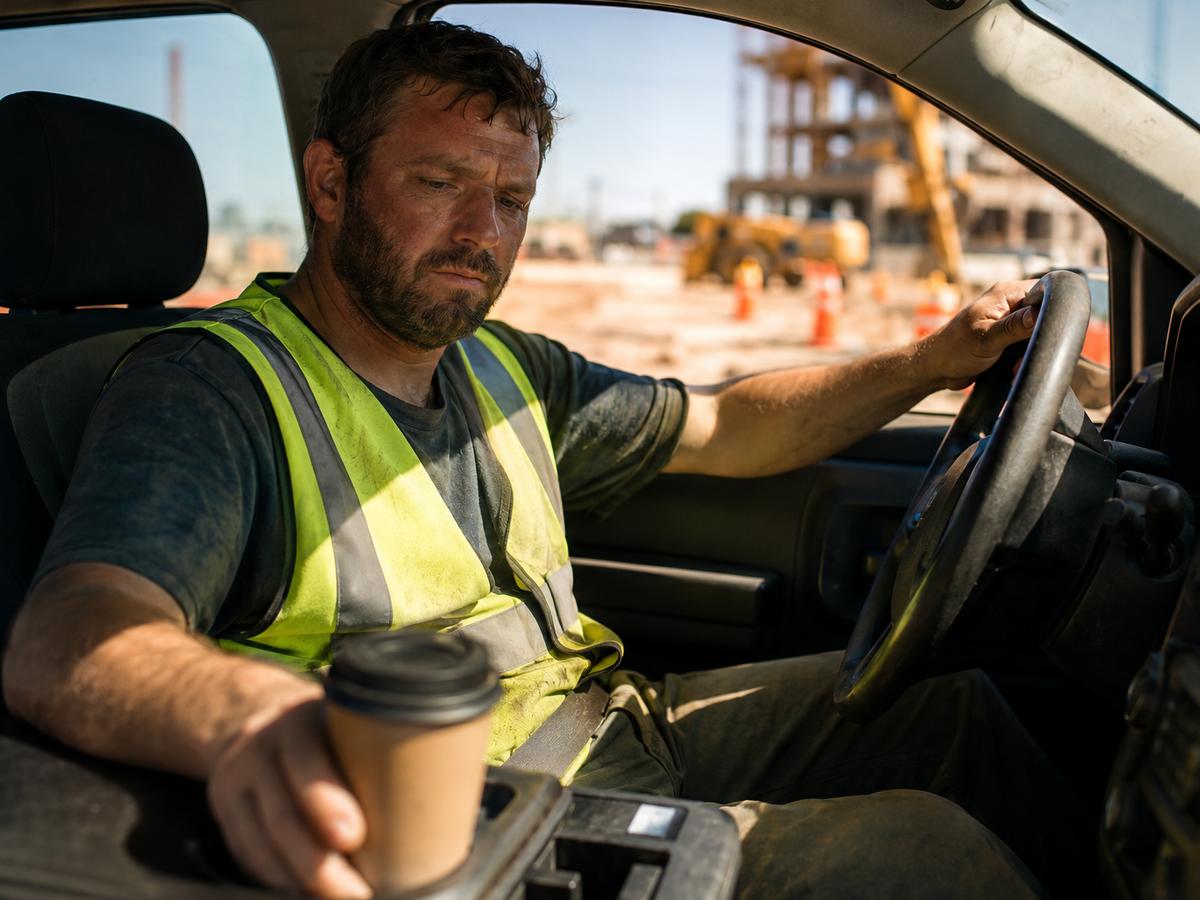
Severe Collisions Decline While Distraction and Midday Risk Rise for Commercial Fleets
Lytx’s 2026 Road Safety Report shows commercial fleet collisions rose 4% in 2025, a sharp slowdown from the 24% surge seen between late 2023 and 2024. While overall crashes increased, high‑severity incidents fell 3%, translating into up to 90% lower...

AI Adoption in EHS Has Moved Beyond Experimentation, but Governance Concerns Loom Large
A 2026 Wolters Kluwer and National Safety Council survey shows AI has moved from pilot projects to mainstream use in environment, health, and safety (EHS), with 82% of leaders reporting at least moderate adoption. Predictive incident prevention and reporting efficiency...

Businesses Losing Grip on Reputational Knowledge as Uncertainty Surges, Survey Finds
A Willis Towers Watson survey of 500 senior executives shows only 49% can accurately gauge their reputation, down from 61% in 2024. Perceived reputational risk appetite has fallen, with 56% reporting low appetite versus 36% previously, while the global reputation...

Why Human-Centered Leadership Matters More Than Ever in Insurance
Insurance firms are recognizing that technical competence alone no longer drives success. At the CPCU Society’s In2Leadership conference in Nashville, industry leaders emphasized human‑centered leadership as a strategic advantage amid talent shortages, digital transformation, and regulatory pressure. Sessions led by...

Most Executives Fear a Single Lawsuit Could End Their Business, Yet Few Rank Litigation as a Top Risk
The 2026 C‑Suite Stress Index, based on a survey of 1,250 U.S. executives, reveals a stark disconnect between the risks leaders fear and those that could instantly destroy a business. While supply‑chain, economic and tariff concerns dominate, only 17% rank...

Joanne Silberberg Appointed Energy & Power Infrastructure Leader at Marsh Risk, US and Canada
Liberty Mutual introduced the Healthcare M&A Protector, a purpose‑built insurance solution that plugs coverage gaps in healthcare mergers and acquisitions. The product complements traditional representations‑and‑warranties policies by adding tail‑coverage, cyber‑privacy, and pre‑closing regulatory liability protection. It is delivered as an...

How to Successfully Integrate AI Into Claims Operations: Best Practices, Pitfalls, and Keys to Lasting Impact
Artificial intelligence is moving from pilot projects to enterprise‑wide use in workers‑comp claims, promising faster interventions and lower costs. Adjusters can now spot risk signals early, shifting the process from reactive to predictive and enabling more informed conversations with injured...

Outdated Policy, Modern Costs: Rethinking Pharmacy Choice in Workers’ Compensation
Workers' compensation statutes still mandate unrestricted pharmacy choice, a rule rooted in a century‑old model of personalized drug dispensing. Over the past decades, independent pharmacies have vanished, giving way to large chains, big‑box retailers, and online providers dominated by Pharmacy...

Brilliance in Focus: Gallagher Captives Power Broker Joshua Clark
Gallagher’s Joshua Clark, a 2025 Power Broker in the captives category, highlights the sector’s record year‑over‑year growth and its ability to turn insurance from a cost into a profit center. He stresses that captives excel at addressing “in‑between” enterprise risks...

RISKWORLD 2026: Chatting with Lucy Pilko, CEO Americas, AXA XL
Lucy Pilko, CEO of AXA XL Americas, highlighted the firm’s shift toward a client‑centric operating model, emphasizing deeper collaboration and tailored solutions. She announced the launch of two new businesses—mid‑market and wholesale—to broaden the carrier’s market reach and diversify revenue....

RISKWORLD 2026: Surety Insights with Nationwide’s Tony Albanese
Nationwide’s executive vice president of surety, Tony Albanese, told RISKWORLD 2026 that the surety market has largely recovered from COVID‑related losses and is now healthy and competitive. He highlighted the rewards and risks of underwriting large infrastructure projects, noting the...

California Workers’ Comp Costs Per Claim Rose 6% in 2025, Driven by Growth Across All Key Components
The Workers Compensation Research Institute reported that total costs per lost‑time workers’ compensation claim in California increased 6% in 2025, extending a multi‑year upward trend. All three cost components—indemnity benefits, medical payments, and benefit‑delivery expenses—contributed, with delivery expenses jumping 9%...

MFA Misconfiguration Is the Costliest Point of Failure in Manufacturing Cyber Claims
Manufacturing has been the world’s most targeted industry for cyberattacks for five straight years, yet its security spending lags behind exposure. Resilience’s five‑year claims analysis shows ransomware accounts for 90% of losses while representing only 12% of claim volume. The...

5 Questions for MSIG USA’s Ron Morrison
Ron Morrison, chief claims officer at MSIG USA, says the insurance‑claims landscape is being reshaped by AI and broader claims transformation. He stresses that change management, trust and thorough training are prerequisites for any AI rollout to succeed. By automating...

Organized Crime Reshapes Cargo Theft as Impersonation Tactics Mature Into Scalable Threat
Verisk CargoNet reported 767 supply‑chain crime events in Q1 2026, a 5.3% decline year‑over‑year, yet confirmed cargo thefts rose to 596 incidents, up 41 cases, with losses steady at $131.58 million. Organized‑crime groups are now targeting high‑value, easily resold goods and using...

How Small Business Insurance Is Evolving: Balancing Speed, Data, and Underwriting Discipline
Small business insurers are shifting toward frictionless, auto‑populated quoting platforms that mimic consumer‑grade software. Carriers like Philadelphia Insurance Companies use prefill technology and external data—credit scores, public records, and property details—to cut agent keystrokes and improve pricing accuracy for policies...

Business Leaders Recast Insurance as Strategic Resilience Tool, Not Just a Cost
A new WBN‑MarshBerry study finds 43% of executives now view commercial insurance as a performance driver, while only 3% treat it as a mere expense. Cybersecurity, AI and economic volatility top the risk agenda, with 48% citing cyber threats as...

North American Worker Safety Confidence Slips as Stress, Lone Worker Accidents Persist
EcoOnline’s 2026 North American Workplace Safety Report shows overall worker confidence in safety slipping to 80%, down one point from 2025, even as employer investment in physical hazard assessments rose 15 percentage points. Stress now tops the list of contributors...

How Workers’ Compensation Can Better Manage the Rising Tide of PTSD Presumption Claims
Workers’ compensation is confronting a surge of PTSD presumption claims as more states adopt statutes that automatically link PTSD diagnoses to high‑risk occupations. Optum’s experts outline three exposure patterns—single‑event, cumulative, and secondary—highlighting diagnostic complexities. The article stresses that formal psychiatric...

WTW Appoints Spike Lipkin as Chief AI Officer and Gordon Wintrob as Head of AI Acceleration
Insurance brokerages are turning to purpose‑built, vertical AI to overcome labor shortages, regulatory complexity, and mounting administrative burdens. Fulcrum, a specialist AI platform, embeds itself directly into brokerage workflows, delivering industry‑specific data extraction, document generation, and system integrations. The company...

Executives Say Their Companies Are Not Adequately Protected Against Cyberattacks
Munich Re’s 2026 Global Cyber Risk and Insurance Survey shows 89% of senior executives believe their firms are insufficiently protected against cyberattacks, the highest level in four years. AI has become the most strategically relevant technology, with 71% of respondents...

Brilliance in Focus: Gallagher’s Michael Zimmerschied
Risk & Insurance’s Brilliance in Focus series profiles Gallagher’s Michael Zimmerschied, a 2025 Power Broker in the Captives category. Zimmerschied credits his father’s mentorship for a client‑partner mindset and highlights captives as flexible tools for tailoring insurance programs. He warns...

Nuclear Verdicts and Rising Claims Costs: How Hospitals Can Navigate an Increasingly Difficult Liability Market
The U.S. hospital liability market is entering a hard‑market phase as nuclear verdicts—cases exceeding $10 million—have surged from 48 in 2022 to 55 in 2025, with total damages climbing from $1.3 billion to $2.5 billion. Insurers cite rising claim frequency and severity, especially...

Why the GLP-1 Boom Has a Litigation Wave Right Behind It
GLP‑1 receptor agonists such as semaglutide and tirzepatide have surged from diabetes treatment to popular weight‑loss drugs, creating a multi‑billion‑dollar market. Their rapid adoption across physician offices, weight‑loss centers, compounding pharmacies, and online platforms has exposed gaps in patient screening,...

Brilliance in Focus: Marsh Risk’s Philippe Dion
Marsh Risk’s Philippe Dion explains that Canada’s construction insurance market is becoming increasingly fragmented, with British Columbia, Alberta, Quebec and parts of Ontario presenting the toughest underwriting environments. Regional hazards—wildfires, seismic risk, hailstorms and historic flooding—have driven higher deductibles, sub‑limits and...

How Convective Storms Are Rewriting the Risk Landscape — and What Property Owners Can Do About It
MSIG USA is redefining property‑and‑casualty claims by pairing AI‑driven offer generation with a culture that treats the claims team as an extension of the insured’s organization. Chief Claims Officer Ron Morrison stresses that technology accelerates efficiency, but skilled adjusters and...

Workers’ Compensation Medical Inflation Holds Steady in Q1 2026 as Broader Price Pressures Build
The National Council on Compensation Insurance (NCCI) reported that workers’ compensation medical prices rose 1.8% year‑over‑year in March 2026, well below the 4.0% increase in consumer‑paid medical costs and the 2.4% rise in the health‑care services producer price index. Headline...

Three Critical Factors Insurance Companies Must Address Before Integrating AI
Musculoskeletal disorders remain a leading occupational health issue in the U.S., driving high medical costs and productivity losses. The Hartford is promoting AI‑driven computer‑vision tools that analyze short workplace videos to generate risk scores and visual heat maps of body...

Insurance Distribution M&A Activity Hits Decade Low as Three-Year Slide Shows Signs of Bottoming Out
Insurance distribution M&A fell to a decade low in Q1 2026, with 148 deals—a 6% drop from a year earlier and 16% below the five‑year average. The total 12‑month count slipped to 686, far from the 2021 peak of 1,108....

Rising Hail Risk Poses Growing Threat to Solar Farm Insurability
A new white paper from Gallagher Re and AXIS warns that rapidly expanding solar photovoltaic farms are increasingly vulnerable to hail damage, which now accounts for 27% of global solar PV catastrophe losses. In 2025, severe convective storms generated $60 billion...

The Cyber Insurance Conundrum
Cyber insurance premiums have slipped 5‑7% over the last 11 quarters, with some policies 22% cheaper than their 2022 peak, even as ransomware attacks surged 34% in 2025, accounting for 44% of breaches. The average cost of a data breach...

AI Isn’t the Strategy. Outcomes Are.
The insurance claims sector is moving beyond the question of whether to use AI and is now concentrating on how AI can improve outcomes. AI has shifted from a visibility‑only tool to one that delivers actionable insight directly within adjusters'...

Medical Malpractice Claim Severity Escalating as Social Inflation Drives Casualty Costs Higher
Medical professional liability now leads casualty lines in claim severity, with unpaid severity per open claim hitting $151,768 in 2018—the highest across the sector. The rise is driven by social inflation, litigation financing, and an uptick in "nuclear" verdicts, rather...

U.S. Storms and European Flooding Drive Below-Average Q1 Catastrophe Losses
Global economic losses from natural disasters in Q1 2026 fell to about $37 billion, roughly 43% below the long‑term average. Insurers covered roughly $20 billion, matching the 21st‑century Q1 norm, while the U.S. alone accounted for more than three‑quarters of insured losses at...

Social Media Addiction’s Liability Potential
An California jury awarded $6 million in damages to a plaintiff who blamed Facebook, Instagram and YouTube for addiction, anxiety and depression, marking the first major verdict that treats social‑media platforms as potentially liable for health harms. The decision has drawn...

SterlingRisk Promotes Marci Waterman to Deputy Chief Executive Officer and Names John S. Beres as Chief Operating Officer
MSIG USA’s claims team is leveraging artificial intelligence to match the plaintiff bar’s rapid, data‑driven demand generation, but it stresses that technology is an enhancer, not a substitute for human judgment. Chief Claims Officer Ron Morrison highlights a culture‑first approach...

Rob Marsh Named President of Global Risk Solutions North America Specialty at Liberty Mutual Insurance
Musculoskeletal disorders remain a costly occupational hazard, prompting firms to seek data‑driven ergonomic assessments. AI‑powered computer‑vision tools now analyze short workplace videos, delivering a numeric risk score and color‑coded visual map of strain. Providers offer tiered service models—from self‑serve video...

Janelle Griffith Named Global Logistics Practice Leader at Marsh Risk
HCS Network Solutions, a MedRisk subsidiary, is highlighting the business value of rapid medical access in workers’ compensation claims. Industry data shows the interval from injury to first conservative treatment fell roughly 50% between 2021 and 2025, reflecting a more...

Insurers Face the Same Cyber Threats They Underwrite — and Gaps Remain
Insurance carriers, which underwrite cyber risk, are themselves prime cyber‑attack targets. A new report by the Insurance Information Institute and Fenix24 shows insurers generally follow strong security practices but still lag in credential management, backup definitions, and patch deployment cycles....

Psychological Safety on Jobsites Directly Reduces Incidents and Turnover, Analysis Shows
A new Gallagher Bassett analysis links psychological safety on construction sites to measurable drops in incidents and employee turnover. The National Safety Council attributes nearly 70% of workplace accidents to poor communication, underscoring the risk of a culture where workers...

Workplace Assaults Rose 5.3% Annually Over the Past Decade, With Health Care Bearing the Brunt
Nonfatal workplace assaults rose at a 5.3% annual rate from 2011 to 2021‑22, pushing the assault rate per 10,000 full‑time equivalents up 62%. Health care and social assistance dominated the trend, reporting roughly 18,860 assaults in 2023‑24—about ten times more...