
Scientists Just Found a Way to Control Electrons without Magnets
Scientists have demonstrated that chiral phonons can transfer orbital angular momentum to electrons in non‑magnetic quartz, establishing a magnet‑free route to orbitronics. The study, published in Nature Physics, shows that aligning chiral phonons produces an orbital Seebeck effect, generating a measurable electrical signal without external voltage. This breakthrough removes the reliance on heavy, expensive magnetic materials traditionally required for orbital‑current generation. The technique is expected to extend to other chiral crystals such as tellurium, selenium and perovskites, opening a path toward lighter, more scalable quantum‑information devices.

This Chain of Atoms Can Detect Electric Fields with Stunning Precision
Researchers at Nanyang Technological University have demonstrated a new quantum‑metrology technique that uses a chain of interacting Rydberg atoms to sense low‑frequency electric fields. By monitoring how the chain’s dipolar interactions shift under an external field, the method extracts both...

“Giant Superatoms” Could Finally Solve Quantum Computing’s Biggest Problem
Researchers at Sweden’s Chalmers University have proposed “giant superatoms,” a hybrid quantum architecture that fuses giant atoms with superatoms. The design leverages multi‑point coupling to create a quantum‑echo effect, dramatically lowering decoherence while allowing multiple qubits to act as a...

These Cheap Solar Cells Work Better because They’re Flawed
Lead‑halide perovskite solar cells, despite impurities, now achieve efficiencies comparable to silicon. Researchers at the Institute of Science and Technology Austria identified a three‑dimensional network of domain walls that act as internal charge‑highways, explaining the material’s high performance. They visualized...

Physicists Just Solved a Strange Fusion Mystery that Stumped Experts
Physicists have identified toroidal plasma rotation as the missing factor behind the long‑standing asymmetry of particle strikes on tokamak divertor plates. By adding measured core rotation of 88.4 km s⁻¹ to SOLPS‑ITER simulations, researchers reproduced the experimentally observed bias toward the inner...

Scientists Turn MXene Into Tiny Nanoscrolls that Supercharge Batteries and Sensors
Researchers at Drexel University have introduced a scalable process to convert two‑dimensional MXene sheets into one‑dimensional nanoscrolls, producing up to 10 grams of material with controlled chemistry. The tubular nanostructures exhibit higher electrical conductivity and reduced ion‑transport resistance compared with flat...

First Ever Atomic Movie Reveals Hidden Driver of Radiation Damage
Researchers have produced the first real‑time atomic movie of electron‑transfer‑mediated decay (ETMD), tracking a neon‑krypton trimer for up to a picosecond before it fragments. Using a COLTRIMS reaction microscope at BESSY II and PETRA III, they captured atoms roaming and reshaping the...

Supercomputers Just Solved a 50-Year-Old Mystery About Giant Stars
Researchers at the University of Victoria and the University of Minnesota used high‑resolution 3D simulations on cutting‑edge supercomputers to pinpoint stellar rotation as the missing mechanism that transports deep‑interior material to the surface of red giant stars. The simulations show...

New Light Trap Design Supercharges Atom-Thin Semiconductors
Researchers have introduced an inverted‑confinement design that places a monolayer of tungsten disulfide (WS₂) on nanoscale air cavities—Mie voids—etched into high‑index bismuth telluride. The air‑filled resonators concentrate optical fields at the surface, boosting WS₂ photoluminescence by roughly 20 times and second‑harmonic...

Scientists Turn CO2 Into Fuel Using Breakthrough Single-Atom Catalyst
Researchers at ETH Zurich have engineered a single‑atom indium catalyst anchored on hafnium oxide that dramatically lowers the energy required to convert carbon dioxide and hydrogen into methanol. The design maximizes metal utilization by making each indium atom an independent...

MIT Scientists Finally See Hidden Quantum “Jiggling” Inside Superconductors
MIT researchers have built a terahertz microscope that compresses long‑wavelength radiation into a sub‑micron spot, overcoming the diffraction limit. Using spintronic emitters and a Bragg mirror, they imaged quantum‑scale vibrations of superconducting electrons in the high‑temperature cuprate BSCCO. The observation...

A Strange New Quantum State Appears when Atoms Get “Frustrated”
Researchers at UC Santa Barbara have discovered a new quantum state that emerges when magnetic and bond frustration coexist in a triangular‑lattice antiferromagnet. The interleaved frustration creates a quantum‑disordered ground state capable of long‑range spin entanglement. By applying strain or...

Scientists Unlock a Powerful New Way to Turn Sunlight Into Fuel
Researchers at Helmholtz‑Zentrum Dresden‑Rossendorf introduced a reproducible theoretical framework for designing polyheptazine imide photocatalysts. Using many‑body perturbation theory, they modeled the effect of 53 different metal ions on charge separation and visible‑light absorption. Experimental synthesis of eight ion‑doped materials confirmed...

A Lab Mistake at Cambridge Reveals a Powerful New Way to Modify Drug Molecules
Cambridge chemists have unveiled a light‑driven “anti‑Friedel‑Crafts” reaction that forms carbon‑carbon bonds using only LED illumination at ambient temperature. The metal‑free method allows precise, late‑stage modifications of complex drug molecules, cutting months of multistep synthesis. Tested on a broad set...

Scientists Just Found a Way to 3D Print One of the Hardest Metals on Earth
Researchers at Hiroshima University and Mitsubishi Materials have demonstrated a laser‑based additive manufacturing process that can 3D‑print tungsten‑carbide‑cobalt (WC‑Co) cemented carbide with industrial‑grade hardness above 1400 HV. By using hot‑wire laser irradiation, the method softens rather than fully melts the material,...

Scientists Create Slippery Nanopores that Supercharge Blue Energy
Scientists at EPFL have coated silicon‑nitride nanopores with lipid bilayers, creating a hydration‑lubricated channel that dramatically reduces ion friction. The lipid‑coated membrane, arranged in a hexagonal array of 1,000 pores, achieved a power density of about 15 W m⁻²—2 to 3 times...
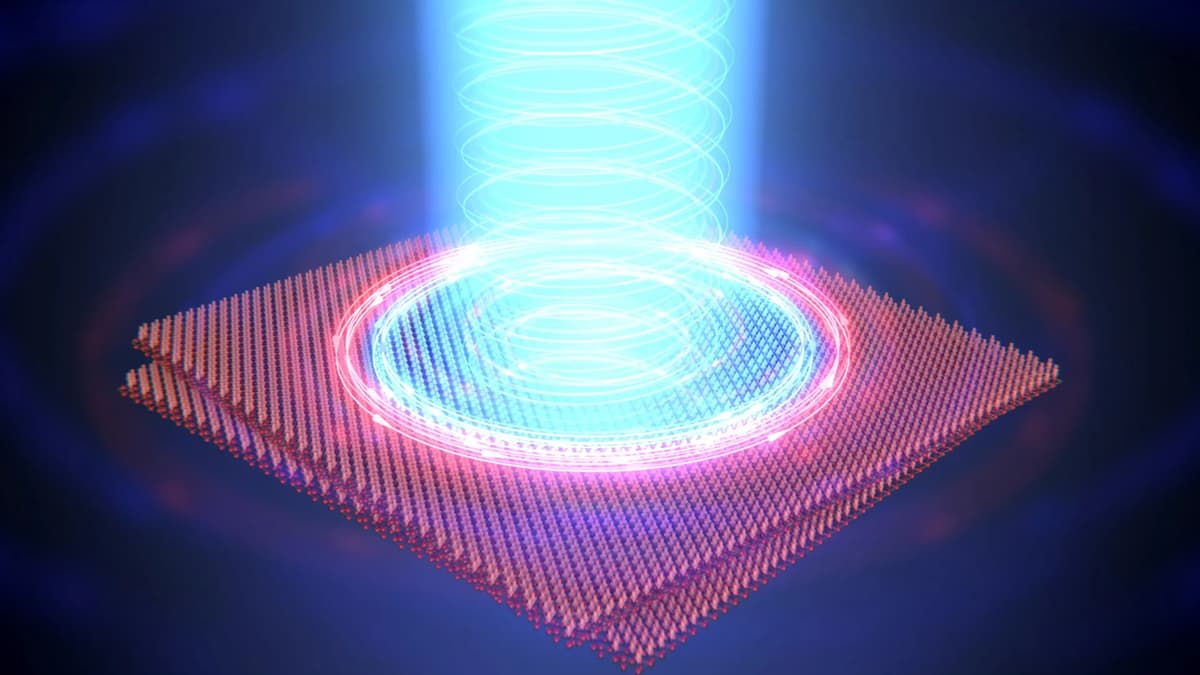
A Flash of Laser Light Flips a Magnet in Major Light-Control Breakthrough
Researchers at the University of Basel and ETH Zurich used a focused laser pulse to reverse the polarity of a specialized ferromagnet made from twisted bilayer molybdenum ditelluride, achieving the switch without any temperature rise. The experiment, published in Nature,...

A Tiny Twist Creates Giant Magnetic Skyrmions in 2D Crystals
Researchers reported that a slight twist between atom‑thin antiferromagnetic layers generates giant Néel‑type skyrmions spanning hundreds of nanometers. The skyrmion size peaks around a 1.1° twist and vanishes above ~2°, contrary to the linear growth of the moiré wavelength. Simulations...

Scientists Just Turned Light Into a Remote Control for Crystals
Scientists at NYU have demonstrated a reversible, light‑driven method to direct the self‑assembly of colloidal particles into crystals. By adding photoacid molecules that become acidic under illumination, they can modulate particle charge and trigger either aggregation or dispersion on demand....

This Plastic Is Made From Milk and It Vanishes in 13 Weeks
Scientists at Flinders University have created a thin, flexible film from calcium caseinate – the main protein in milk – blended with modified starch, bentonite nanoclay, glycerol and polyvinyl alcohol. Laboratory tests show the material breaks down completely in ordinary...
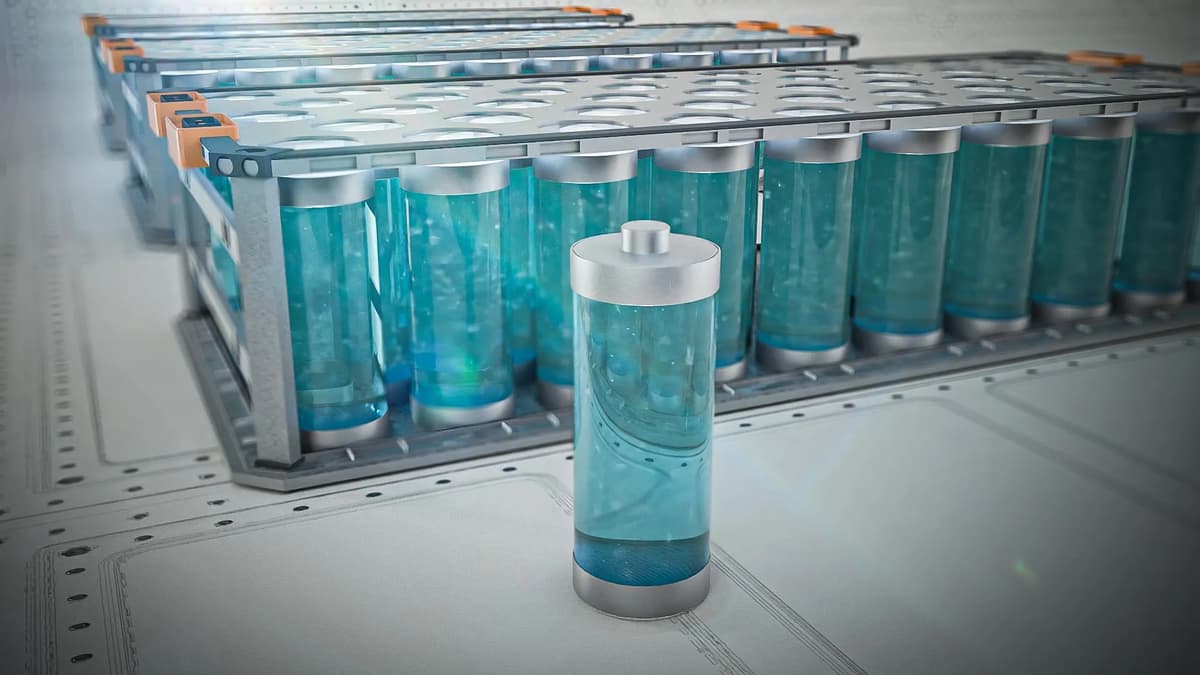
New Sodium Ion Battery Stores Twice the Energy and Desalinates Seawater
University of Surrey researchers discovered that retaining water in sodium vanadium oxide dramatically boosts sodium‑ion battery performance. The hydrated nanostructured sodium vanadate (NVOH) stores nearly twice the energy of conventional cathodes, charges faster, and remains stable for over 400 cycles....

Scientists Confirm One-Dimensional Electron Behavior in Phosphorus Chains
Researchers at BESSY II have experimentally confirmed that phosphorus atom chains on a silver substrate exhibit genuine one‑dimensional electronic behavior. Using cryogenic STM and angle‑resolved photoelectron spectroscopy, the team isolated the electronic signatures of chains oriented in three 120‑degree directions, revealing...

Scientists Finally Solve a 100-Year-Old Mystery in the Air We Breathe
University of Warwick researchers have introduced a simple, predictive method to calculate the motion of irregularly shaped nanoparticles in air, reviving a century‑old Cunningham correction factor. The new framework replaces spherical assumptions with a shape‑agnostic correction tensor, eliminating the need...

This Tiny Molecular Trick Makes Spider Silk Almost Unbreakable
Researchers have identified a specific arginine‑tyrosine interaction that acts as a molecular “sticker” during spider silk formation, explaining how the fiber achieves its legendary strength and elasticity. Using AlphaFold3 modeling, molecular dynamics and NMR spectroscopy, the team showed these interactions...

This Paper-Thin Chip Turns Invisible Light Into a Steerable Beam
Researchers at CUNY’s Advanced Science Research Center have created an ultra‑thin metasurface chip that converts infrared light into visible light while steering the output beam. The device shifts 1530 nm infrared to 510 nm green via third‑harmonic generation and directs the beam...

Weak Magnetism Causes Big Changes in a Strange State of Matter
Physicists at Auburn University have shown that even weak magnetic fields dramatically alter the behavior of dusty plasmas, a hybrid state of matter found in space and labs. By magnetizing electrons, the fields change how dust grains acquire charge, speeding...

A Breakthrough that Turns Exhaust CO2 Into Useful Materials
Scientists have created a three‑layer electrode that simultaneously captures carbon dioxide from exhaust streams and converts it into formic acid. The device outperforms existing technologies, delivering about 40 % higher efficiency with pure CO₂ and maintaining strong output in simulated flue...

A Hidden Magnetic Order Could Unlock Superconductivity
Physicists have uncovered a subtle magnetic order that persists in the pseudogap phase of quantum materials, linking it directly to the emergence of superconductivity. The discovery was made using an ultracold‑atom quantum simulator that mimics the Fermi‑Hubbard model, allowing researchers...

The Magnetic Secret Inside Steel Finally Explained
Researchers at Illinois’ Grainger College have identified the first physical mechanism by which magnetic fields impede carbon diffusion in iron. Using spin‑space averaging simulations, they showed that aligned iron spins increase the energy barrier for carbon atoms moving between octahedral...
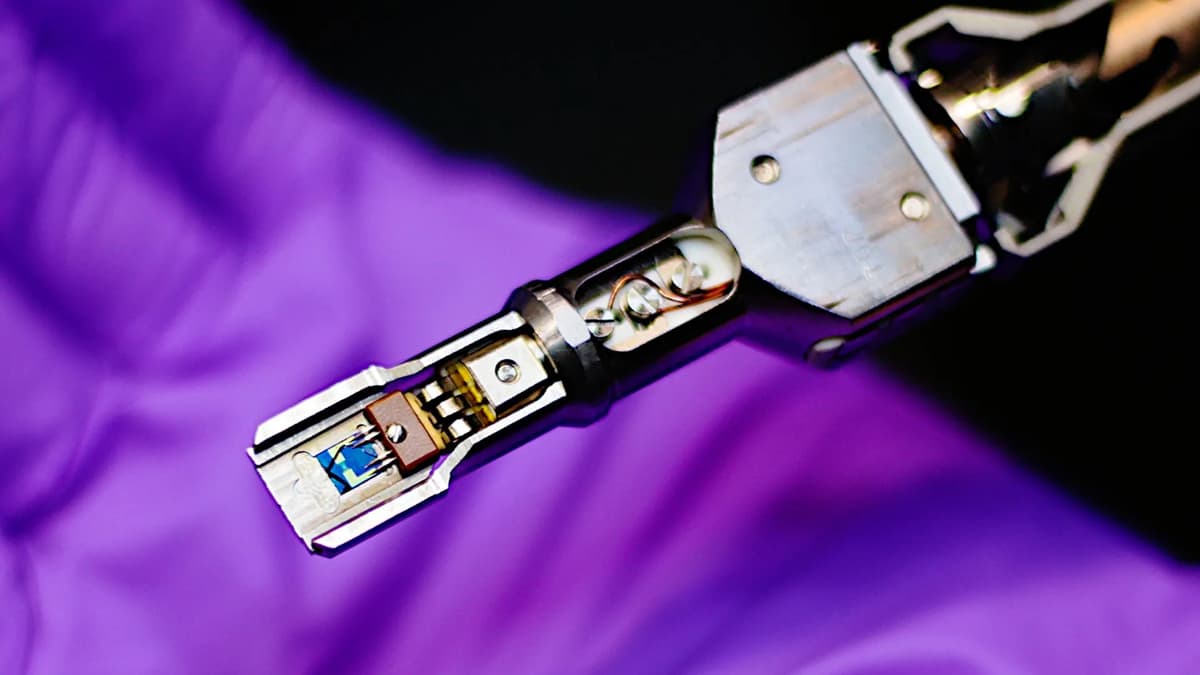
A Strange In-Between State of Matter Is Finally Observed
Scientists at the University of Vienna have directly observed the elusive hexatic phase in an atomically thin silver iodide crystal, confirming that a true intermediate state between solid and liquid can exist in real two‑dimensional materials. The experiment used a...

Scientists Just Overturned a 100-Year-Old Rule of Chemistry, and the Results Are “Impossible”
UCLA chemists led by Neil Garg have overturned Bredt’s rule by synthesizing bridgehead carbon‑carbon double bonds in cage‑shaped molecules such as cubene and quadricyclene. The study shows these strained alkenes adopt a hyperpyramidalized, three‑dimensional geometry with bond orders around 1.5...
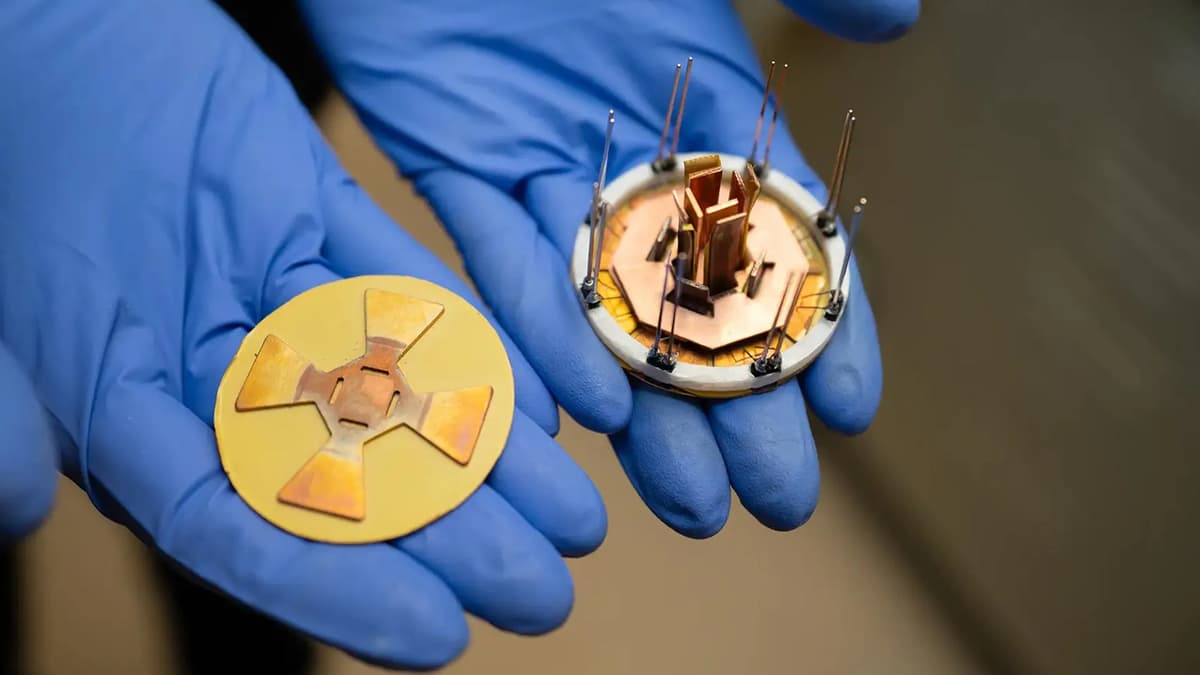
This Tiny Power Module Could Change How the World Uses Energy
Researchers at the National Renewable Energy Laboratory have unveiled ULIS, an ultra‑low inductance smart power module built on silicon‑carbide that delivers record‑breaking efficiency and five‑fold higher energy density. The 1,200‑volt, 400‑amp device cuts parasitic inductance by 7‑9×, enabling ultra‑fast switching,...
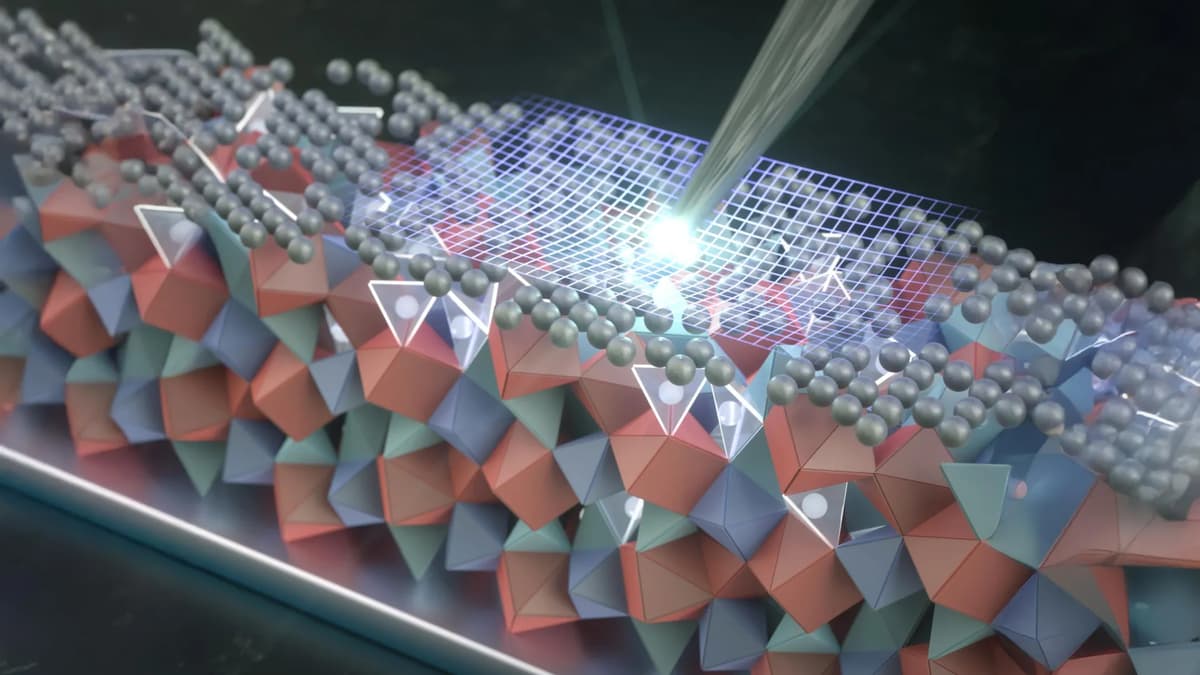
Silver Just Solved a Major Solid-State Battery Problem
Stanford researchers have demonstrated that a 3 nm silver ion coating on the LLZO solid electrolyte can dramatically improve its mechanical resilience, making it five times more resistant to cracking. The heat‑treated Ag⁺ layer infiltrates the ceramic surface, replacing lithium atoms...

Engineers Just Created a “Phonon Laser” That Could Shrink Your Next Smartphone
Engineers at the University of Colorado Boulder, the University of Arizona and Sandia National Laboratories have demonstrated a surface‑acoustic‑wave (SAW) phonon laser that generates coherent vibrations on a single chip. The device combines silicon, lithium niobate and indium‑gallium‑arsenide layers to...
Electrons Stop Acting Like Particles—And Physics Still Works
Researchers at TU Wien showed that electrons in the heavy‑fermion compound CeRu₄Sn₆ cease to behave as well‑defined particles near absolute zero, yet the material still exhibits robust topological characteristics. By probing the quantum‑critical regime, they detected an anomalous Hall effect...

A New Crystal Makes Magnetism Twist in Surprising Ways
Scientists at Florida State University have engineered a hybrid crystal by merging chemically similar manganese‑cobalt‑germanium and manganese‑cobalt‑arsenic compounds with mismatched symmetries. The resulting material exhibits skyrmion‑like cycloidal spin textures, a magnetic frustration that does not appear in either parent compound....

Physicists Built a Perfect Conductor From Ultracold Atoms
Physicists at TU Wien have created a one‑dimensional ultracold rubidium gas that transports mass and energy without any measurable resistance. By confining thousands of atoms to a single line with magnetic and optical fields, they observed that collisions merely exchange...
Beyond Silicon: These Shape-Shifting Molecules Could Be the Future of AI Hardware
Researchers at the Indian Institute of Science have created molecular devices that can switch between memory, logic, selector, analog processing, and synaptic functions by tweaking ruthenium‑based complexes. Seventeen tailored complexes were synthesized, and subtle changes in ligands and ionic surroundings...
A Gold Catalyst Just Broke a Decade Old Green Chemistry Record
Researchers have introduced a gold‑based perovskite catalyst, Au/LaMn0.75Cu0.25O3, that achieves 95% acetaldehyde yield from bioethanol at 225 °C, surpassing the decade‑old Au/MgCuCr2O4 benchmark. The catalyst combines gold nanoparticles with a copper‑doped LaMnO3 perovskite, creating cooperative active sites that lower reaction barriers....

This Hidden Flaw Has Been Breaking EV Batteries
Researchers at Argonne National Laboratory and the University of Chicago identified internal‑stress cracking as the hidden flaw that drives capacity fade, shortened lifespans, and fire risk in advanced lithium‑ion batteries. The study shows that design rules borrowed from polycrystalline nickel‑rich...

A New Superconductor Breaks Rules Physicists Thought Were Fixed
Researchers at IFW Dresden and the ct.qmat cluster have identified platinum‑bismuth‑two (PtBi₂) as a genuine topological superconductor, where only the top and bottom surfaces become superconducting while the bulk remains metallic. The material exhibits an unprecedented six‑fold symmetric electron‑pairing pattern...