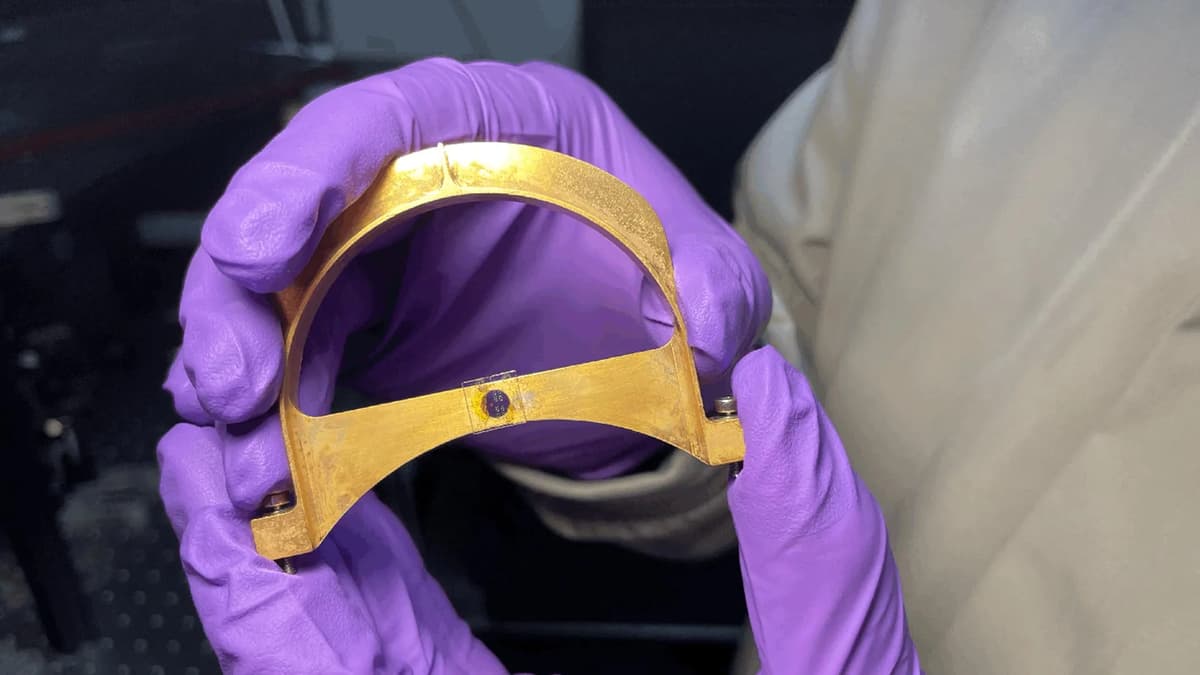
Stanford Quantum Computing Breakthrough Uses Twisted Light to Work without Extreme Cooling
Stanford researchers have created a nanoscale optical device that links photon spin to electron spin at room temperature, eliminating the need for cryogenic cooling in quantum systems. The platform combines a monolayer of molybdenum diselenide (MoSe₂) with a nanopatterned silicon substrate that generates twisted light, enabling stable photon‑electron entanglement. This breakthrough promises smaller, lower‑cost quantum components that could be integrated into future communication networks and computing hardware. The team aims to scale the technology for larger quantum networks within the next decade.
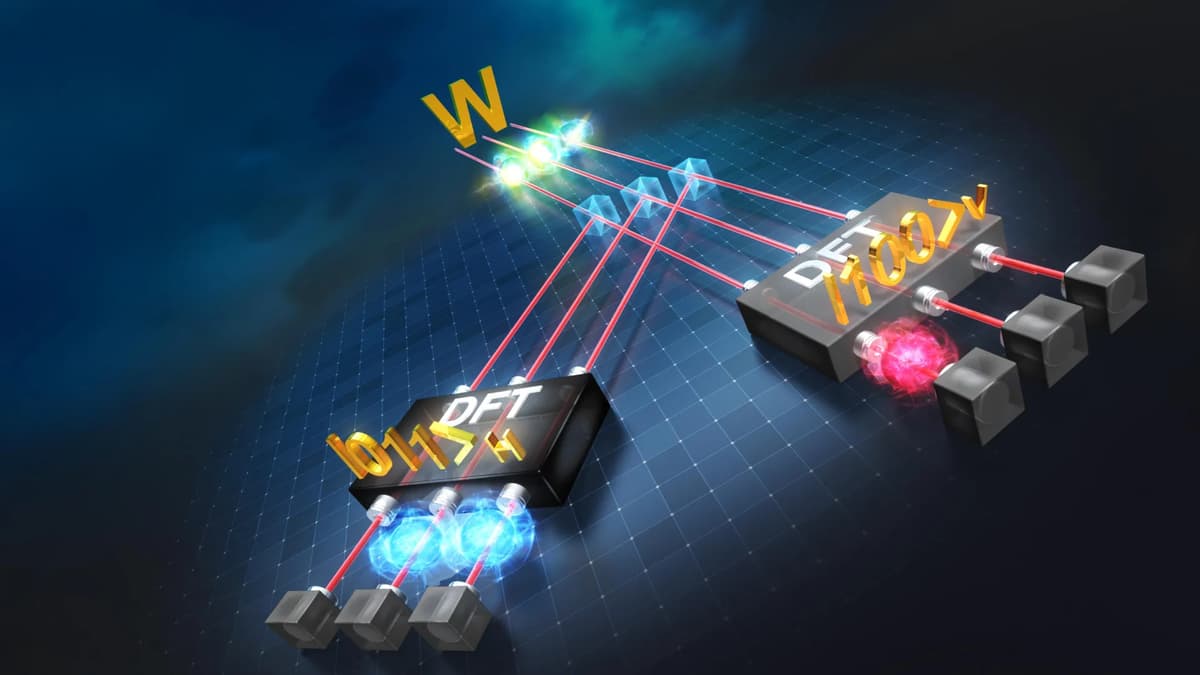
Quantum Breakthrough Could Revolutionize Teleportation and Computing
Researchers at Kyoto and Hiroshima Universities have achieved the first experimental entangled measurement of the elusive three‑photon W state. By leveraging the cyclic‑shift symmetry of W states, they built a photonic quantum circuit that performs a quantum Fourier transform, allowing...
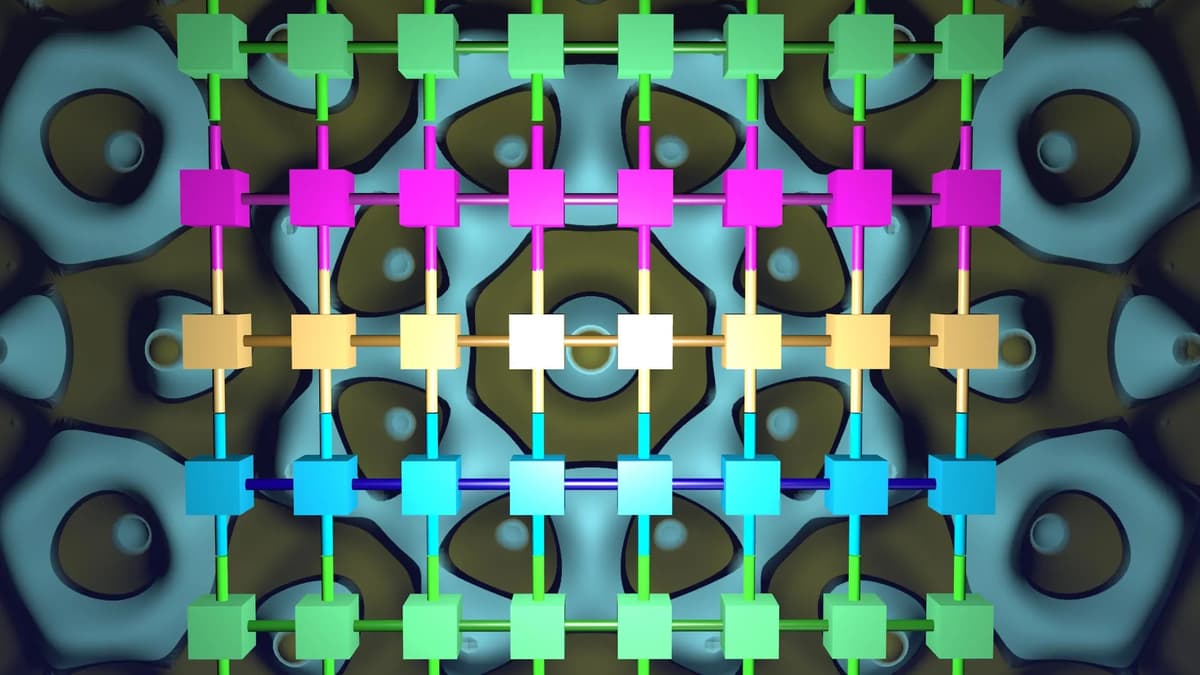
New Quantum Algorithm Solves “Impossible” Materials Problem in Seconds
Researchers at Aalto University unveiled a quantum‑inspired algorithm that can simulate a topological quasicrystal with over 268 million sites in seconds, a task that would overwhelm today’s supercomputers. By encoding the problem with tensor‑network techniques, the method achieves exponential speed‑up comparable...
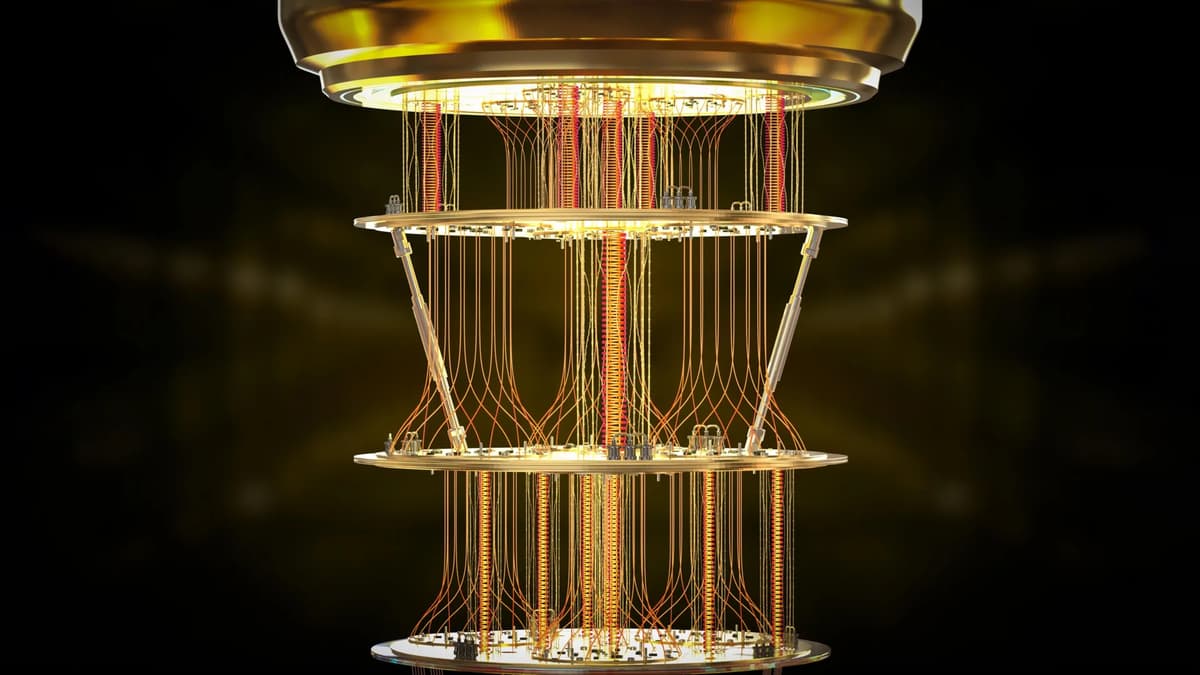
JUPITER Supercomputer Breaks World Record with 50-Qubit Quantum Simulation
Researchers at Germany's Jülich Supercomputing Centre, in partnership with NVIDIA, used the exascale JUPITER supercomputer to fully simulate a universal quantum computer with 50 qubits, breaking the previous 48‑qubit record. The simulation required roughly 2 petabytes of memory and leveraged NVIDIA's...

Scientists Just Sent Unhackable Quantum Keys Across 120 Kilometers
An international team from Germany and China demonstrated the first true time‑bin quantum key distribution (QKD) system powered by an on‑demand telecom‑band semiconductor quantum dot. The setup transmitted single‑photon qubits over more than 120 km of optical fiber and operated continuously...

Quantum Computers Keep Losing Data. This Breakthrough Finally Tracks It
Researchers at Norway's NTNU and the Niels Bohr Institute unveiled an ultra‑fast measurement method that tracks qubit relaxation in about 10 milliseconds—over 100 times quicker than prior techniques. The real‑time capability reveals random fluctuations in superconducting qubits that were previously hidden, offering...

A 200-Year-Old Light Trick Just Transformed Quantum Encryption
Researchers at the University of Warsaw have built a quantum key distribution (QKD) system that leverages the temporal Talbot effect to encode information in two‑ and four‑dimensional photon states. The design uses only a single photon detector, eliminating the complex...

Scientists Used 7,000 GPUs to Simulate a Tiny Quantum Chip in Extreme Detail
Berkeley Lab researchers used the ARTEMIS exascale tool on the Perlmutter supercomputer, employing nearly 7,000 NVIDIA GPUs to simulate a 10 mm quantum chip with 11 billion grid cells. The full‑wave, time‑domain electromagnetic model captured material properties, wiring, and resonator geometry, allowing...

A Clever Quantum Trick Brings Practical Quantum Computers Closer
Quantum decoherence causes bit‑flip and phase‑flip errors that jeopardize calculations, prompting researchers to encode logical qubits across many physical devices using surface‑code stabilizers. A team led by Andreas Wallraff demonstrated lattice surgery on superconducting qubits, splitting a 17‑qubit patch into two...

Quantum Structured Light Could Transform Secure Communication and Computing
A November 2025 cover review in *Nature Photonics* details the rapid rise of quantum structured light, where photons are engineered across polarization, spatial modes, and frequency to form high‑dimensional qudits. By packing more information per particle, this approach promises stronger, higher‑capacity...

Tiny 3D-Printed Light Cages Could Unlock the Quantum Internet
Researchers at Humboldt‑Universität, Leibniz Institute and University of Stuttgart have unveiled a 3D‑nanoprinted quantum memory called a light cage, integrating hollow‑core waveguides with cesium vapor on a silicon chip. The open‑core design reduces vapor filling time from months to days...
“Purifying” Photons: Scientists Found a Way to Clean Light Itself
Researchers at the University of Iowa have devised a theoretical method to "purify" single photons by using laser scatter to cancel unwanted multi‑photon emissions. The approach hinges on matching the spectrum and waveform of stray laser light with that of...