
2026 Safer Skies Act Paves the Way for Drone Defense in the U.S.
Congress enacted the Safer Skies Act as part of the FY 2026 NDAA, granting state, local, tribal and territorial (SLTT) law‑enforcement agencies explicit authority to detect and mitigate credible unmanned aircraft threats. The law is paired with a $500 million FEMA funding stream—$250 million already awarded in 2026 and another $250 million slated for 2027—plus a $115 million DHS investment for counter‑UAS at the 2026 FIFA World Cup. With the FAA reporting 837,513 registered drones and daily air traffic of over 44,000 flights, the legislation creates a sizable market for system integrators to supply radar, RF and sensor‑fusion solutions. Early adoption will be critical as federal guidance on approved technologies and training standards is expected soon.

Critical Infrastructure Under Siege
A joint advisory from six U.S. federal agencies on April 7, 2026 warns that Iranian‑linked actors, operating as CyberAv3ngers, are actively exploiting internet‑connected Rockwell Automation/Allen‑Bradley PLCs across water, energy and government facilities. The advisory cites real‑world disruptions and financial losses, tracing the...

Why 62% of Organizations Still Cannot Scale AI Safely
A Stanford AI Index report shows 62% of organizations view security and risk as the primary obstacle to scaling agentic AI, outpacing technical or regulatory concerns. The same data reveals AI‑related incidents jumped from 30% to 50% of firms between...

What Security Industry Earnings Season Is Telling Us
Q1 2026 earnings across the security industry reveal a dual narrative of opportunity and headwinds. Electromechanical access‑control products are accelerating, with ASSA ABLOY and Allegion posting double‑digit growth, while commercial construction demand stays robust. Data‑center projects emerge as the primary growth...

Why Point-in-Time Assessments Fail and What Must Replace Them
Point‑in‑time security assessments such as annual SOC 2 reports are increasingly out of sync with the rapid code deployments, AI integrations, and configuration changes that characterize modern SaaS environments. The article explains that static questionnaires capture a snapshot, not the continuous...

Apollo Sells Out of ADT, Ending Nearly Decade-Long Investment
Apollo Global Management is exiting its nearly decade‑long stake in ADT, selling its remaining 102 million shares in a secondary offering valued up to $770 million. ADT will repurchase about 29 million of those shares through its $1.5 billion buyback program, receiving no cash...

Physical Access Is the Gap in Cybersecurity Strategy
The Trump administration’s new Cyber Strategy emphasizes zero‑trust, AI defenses and post‑quantum cryptography, but it omits the physical front door. Security leaders recognize that digital safeguards alone leave a blind spot when attackers exploit trusted appearances in buildings. Ownership of...

Drone Detection: The Technology, The Limits, and What's Coming
Drone detection technology has matured, offering three‑layered sensing—detection, classification, and trajectory tracking—through radar, RF, EO/IR, LiDAR and acoustic sensors. Costs have fallen, making solutions viable for data centers, corporate campuses and other verticals. However, U.S. law still prohibits active countermeasures,...

Industry Leaders See Tailwinds, Tariff Uncertainty, and a Talent Imperative at PSA-TEC 2026
The PSA‑TEC State of the Industry panel highlighted a security integration market awash with capital, with Raymond James reporting nearly 100 transactions since 2021 and valuations rising about 1.5×. North American total addressable market, roughly $20 billion today, is projected to more...

Convergence Is a Leadership Issue, Not a Technology Problem
Security leaders have long advocated convergence of cyber, physical, and enterprise risk, yet most initiatives stall at the execution stage. Organizations pour money into unified platforms and dashboards, only to see fragmented information and slow decision‑making during incidents. The article...

At ISC West, Aliro Proved It's Real
Aliro’s 1.0 access‑control standard received certification and debuted with hardware on the ISC West floor after two years of development and more than 650 working‑group hours. The Connectivity Standards Alliance’s Convergence Room attracted 54 senior leaders, including CEOs of SIA and...

SALTO WECOSYSTEM Launches Salto Americas, Taps Bill Wood to Lead
Salto WECOSYSTEM has reorganized its Western Hemisphere operations into a single Salto Americas region, consolidating the United States, Canada, Mexico, the Caribbean and Latin America under one framework. Bill Wood, who has led Salto North America since 2016, was appointed...

Suprema Introduces XPass Q2 QR and RFID Reader for High-Volume Access Environments
Suprema launched the XPass Q2, an intelligent access reader that combines QR, barcode, RFID card and BLE/NFC mobile credential scanning in a single device. Designed for high‑volume environments such as visitor centers, membership clubs and ticketed venues, the reader features...
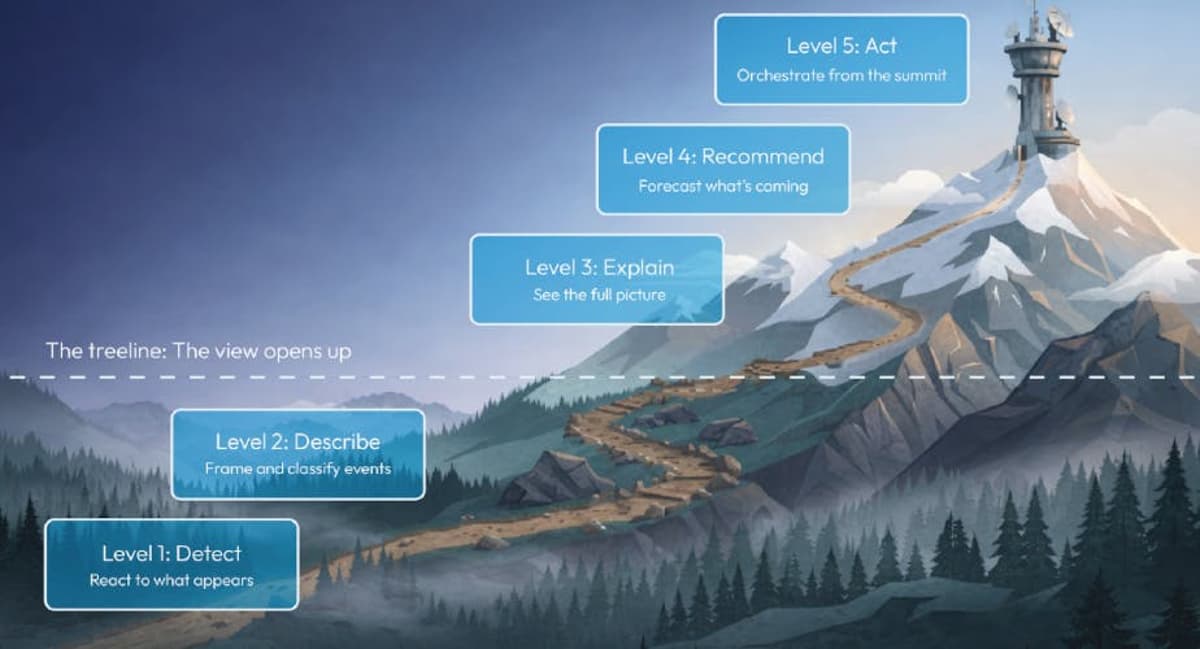
Convergint Calls Out Siloed Systems as Barrier to AI Progress
Convergint unveiled a five‑level framework, "The Path to Intelligent Security," to help enterprises assess and mature AI‑enabled physical security operations. The model moves organizations from basic detection (Level 1) through description, explanation, recommendation, and finally autonomous action (Level 5). Yunag warned that...

The Walls Are Coming Down Between Open and Closed Systems
The security industry is witnessing a convergence of open and closed platforms as cloud‑based APIs enable formerly siloed systems to interoperate. Manufacturers that expose open, channel‑friendly cloud APIs are unlocking new partnership opportunities and expanding market reach. Integrators, once feared...