
Beumer Group Highlights Scalable Sortation Strategies
MIT researchers led by Dr. Miguel Rodríguez García released new findings on the vulnerabilities of highly automated warehouses. The study highlights cyberattacks and power or network outages as the two most critical threats, citing a 24‑hour blackout in Spain and a 2024 cyber breach at Blue Yonder and Morrisons. MIT proposes a three‑phase risk‑management framework—prevention, mitigation, and recovery—to protect operations. The research also explores AI‑driven smart‑warehouse models that treat automation ecosystems as integrated wholes.

Tariff Strategies: Avoiding Both Panic and Paralysis
Tariffs have shifted from occasional shocks to a persistent variable shaping supply‑chain strategy in 2026. Companies that react impulsively—by swapping suppliers or hoarding inventory—risk longer lead times, quality issues, and tied‑up capital. Conversely, indecision amplifies cost spikes and disrupts operations....
A Silver Lining in the Stormy Digital Cloud
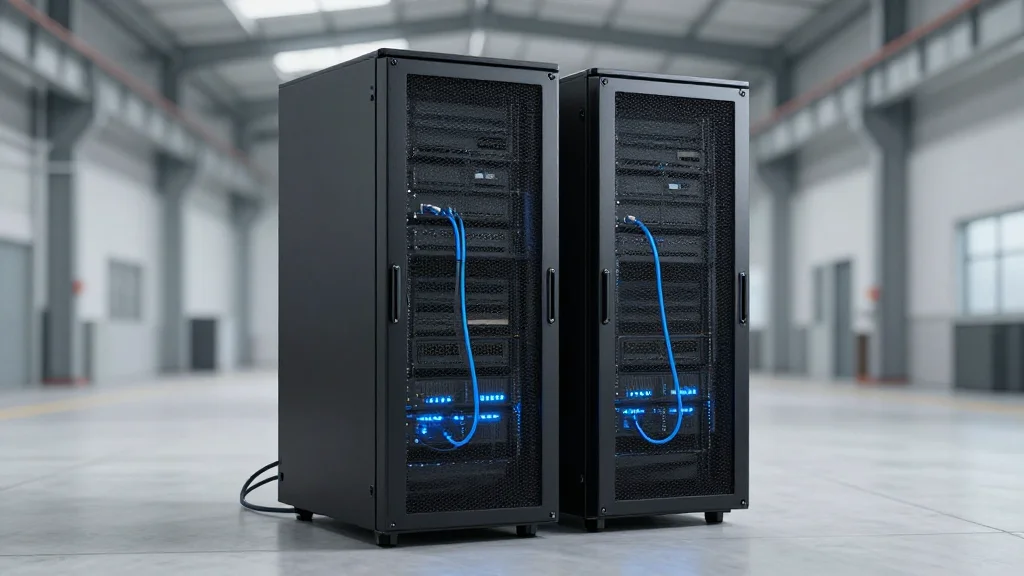
The October AWS outage and November Cloudflare disruption highlighted how cloud failures can instantly erode revenue, customer trust, and brand reputation. The article argues that these incidents are a procurement wake‑up call, urging firms to embed redundancy, clear recovery metrics,...

Survey: Manufacturing Workers Are Skeptical of Adopting AI
The panel of automation leaders highlighted rapid advances—autonomous mobile robots, AI‑driven vision, digital twins, and predictive maintenance—yet manufacturing workers remain skeptical of AI adoption. Companies are prioritizing quick ROI, data accuracy, and interoperable solutions over technology for its own sake,...

Smaller “Shallow-Bay” Warehouse Space Sees Rising Demand
Demand for shallow‑bay industrial space—buildings under 50,000 square feet with 14‑28 foot clear heights—is accelerating as service‑oriented users and last‑mile distributors seek smaller formats. Vacancy rates for these properties fell 2.5 percentage points below the overall industrial average by early...

Lineage: Food and Beverage Companies Are Prioritizing Resilience
Food and beverage companies are prioritizing supply‑chain resilience, boosting investments in data, AI and automation, and deepening collaboration with third‑party logistics providers. A Lineage cold‑chain survey of 1,000 North‑American decision‑makers cites tariffs, regulation and geopolitical shifts as the top volatility...

USPS to Hike Prices 8% on April 26 to Cope with Rising Gas Prices
Warehouse robotics, especially autonomous mobile robots (AMRs), are seeing sustained growth, with 2025 shipments up 18.5% and revenue rising 24%. While hardware draws most attention, the article argues that software—specifically integration, synchronization, orchestration, AI‑driven optimization, and simulation—is the true differentiator...

Report: 65% of Pharma Supply Chain Leaders Have Limited Confidence in AI
A new WBR Insights LogiPharma Playbook surveyed 100 European pharma supply‑chain heads and found that while AI is being piloted, confidence remains low. Sixty‑five percent of leaders doubt AI can reliably predict or mitigate disruptions, and only 36% have moved...

Addressing Lithium Supply Risks for U.S. Battery Resilience
The United States relies on foreign sources for more than 90% of the lithium used in its batteries, exposing warehouses, manufacturers and logistics networks to geopolitical risk and price volatility. With global demand projected to quintuple by 2040, policymakers and...

Focusing on Human-Centered Innovation: A Conversation with Karli Sage
Karli Sage, VP of Supply Chain Management, Technology and Engineering at Southern Glazer’s Wine & Spirits, is championing "human‑centered innovation" by deploying warehouse automation, drones, collaborative robots, and decision‑intelligence software that serve employees first. She emphasizes that technology should simplify...

Warehouse Leasers Seek Cheaper Properties Away From Ports
Industrial tenants are moving large‑scale distribution from coastal port markets to cheaper inland logistics hubs, according to Cushman & Wakefield. Port‑proximate markets captured only 19% of U.S. industrial net absorption in 2025, the lowest share in 15 years, while overall...

The Robotics-Powered Retail Revolution and How It Is Taking Us From Scale to Agility
Big‑box retailers built on scale are losing ground as e‑commerce drives demand for faster, more flexible fulfillment. Labor shortages and recurring supply‑chain disruptions expose the fragility of cost‑focused, static operations. Robotics—autonomous mobile robots, AI‑driven picking arms, and integrated software—offers a...

What ChatGPT Has to Do with Robots
Robotics is entering a new era as artificial intelligence, especially large neural networks, merges with physical machines to create embodied AI capable of handling novelty. Traditional robots excel at repetitive, well‑defined tasks, but recent breakthroughs allow them to perceive, decide,...

CSCMP Edge Show to Feature Keynote Address by Marini
The 2026 30th Annual Third‑Party Logistics Study reveals that only 55 % of outsourced logistics spend is classified as strategic partnerships, highlighting a gap between rhetoric and reality. Shippers cite supply‑chain disruption, cost optimisation and digital transformation as primary drivers, while 3PLs...

Witron Breaks Company Order Intake Record
WITRON announced a record-breaking order intake, fueled by new contracts with major food retailers such as REWE, Tesco, Walmart and Ahold Delhaize. The company also completed a transition to a dual‑foundation governance model, reinforcing its independence and long‑term stability. Parallel to...

Study Finds Gaps in Visibility and Execution for Supply Chain Operators
Sage’s 2026 State of Supply Chain Report, based on a survey of over 200 retail and wholesale operators, reveals that many small and mid‑size businesses lack the visibility and execution capabilities needed to handle ongoing disruptions. Only half of the...

5 Ways to Make Trusted Data the Backbone of Your Sustainable Supply Chains
Companies face mounting sustainability regulations and consumer scrutiny, yet their legacy supply‑chain systems hold fragmented, inconsistent product data. The article outlines five actions—gaining product visibility, feeding tools with clean inputs, extending traceability beyond distribution, building compliance‑ready data infrastructure, and treating...

E-Com Survey: Growth Is Inseparable From Operational Maturity
The 2026 State of Commerce Ops Report by Linnworks shows that mid‑market e‑commerce retailers in the U.K. and U.S. are experiencing robust year‑over‑year growth, with nearly 90% reporting moderate to significant expansion. However, the survey highlights that scalability hinges on...

Report: Agentic AI to Reduce Entry-Level Hiring Needs
Gartner’s 2025‑2026 survey of 509 global supply‑chain leaders finds that 55% expect agentic AI to shrink entry‑level hiring, while 51% anticipate broader workforce reductions. The majority (86%) agree AI adoption will force new talent‑pipeline processes, especially among high‑performing firms that...
Unlock the ROI of Mobile Robots: Roboteon Launches New Complimentary Robotics Investment Impact Analysis
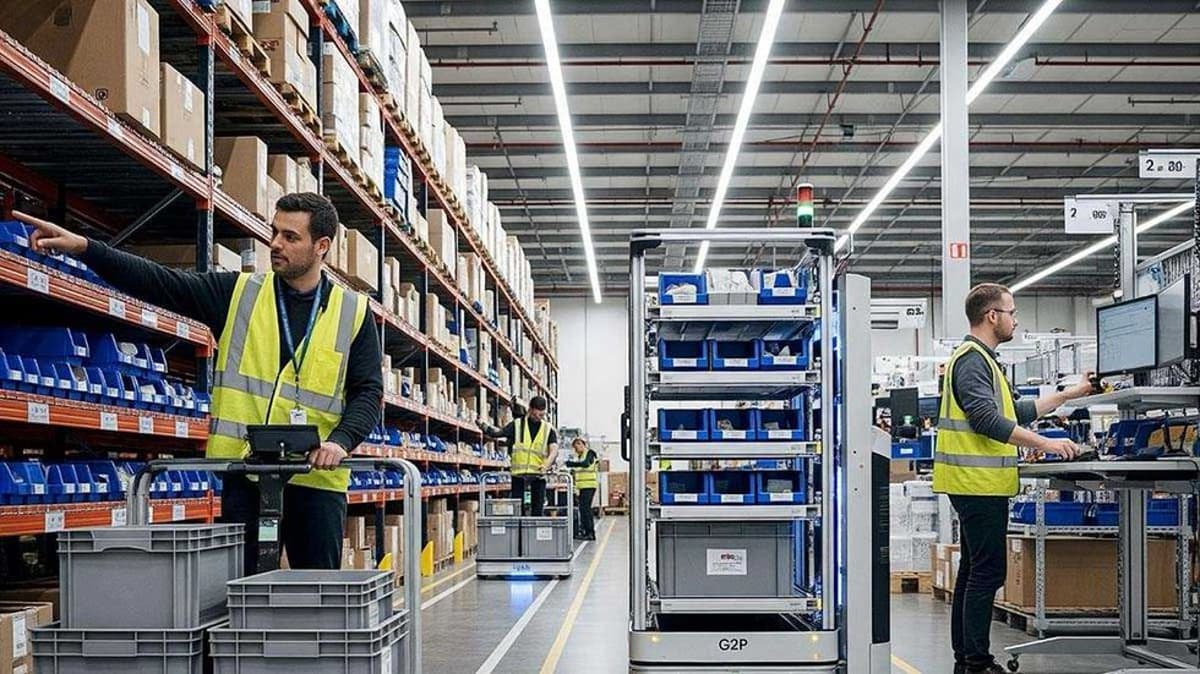
Roboteon has introduced a free Robotics Investment Impact Analysis that leverages its vendor‑independent simulation platform to model warehouse automation scenarios. The service promises detailed insights into robot‑human staffing, cost per pick, throughput, and ROI within a 2‑3 week timeframe. It...

U.S. Businesses Line up for Tariff Refunds After Supreme Court Decision
The U.S. Supreme Court struck down the Trump administration’s “Liberation Day” tariffs, opening the door for refunds of roughly $130 billion collected by the Treasury. Importers, retailers and apparel groups are already petitioning for clear guidance on how to reclaim these...

AI in Fulfillment: Separating the Hype From the Operational Reality
Artificial intelligence is rapidly entering warehouse fulfillment, but its impact is often overstated. Fidelity Fulfilment’s pilots show AI can increase picker efficiency, reduce errors, and improve exception handling when paired with human oversight. Modern AI solutions are modular, cloud‑based, and...

Forecast: Tariff Policies Will Weaken Container Imports in First Half of 2026
The NRF and Hackett Associates’ Global Port Tracker predicts U.S. container imports will fall in the first half of 2026, with a 2 percent year‑over‑year decline to 12.27 million TEUs. Full‑year volume is projected at 25.4 million TEUs, a 0.4 percent drop from 2024....

The Seven Elements of a Successful Backhaul Program
Successful backhaul programs capture freight on a truck’s return leg, turning empty miles into revenue. By leveraging real‑time data, optimization algorithms and cross‑company collaboration, carriers can cut costs, reduce risk and lower carbon emissions. Penske Logistics outlines seven essential elements—network...

Product Returns Jumped Twice as Fast as Purchases, Narvar Says
Narvar’s February 2026 report shows holiday return volume surged 11% year‑over‑year, nearly double the 6% rise in purchase orders. The spike coincides with a 12‑year low in consumer confidence, prompting shoppers to treat returns as a final budget filter. Retailers...