
Tech Xplore Robotics
Publication
0 followers
Covers the latest news on robotics science and technology
Recent Posts
News•Feb 27, 2026
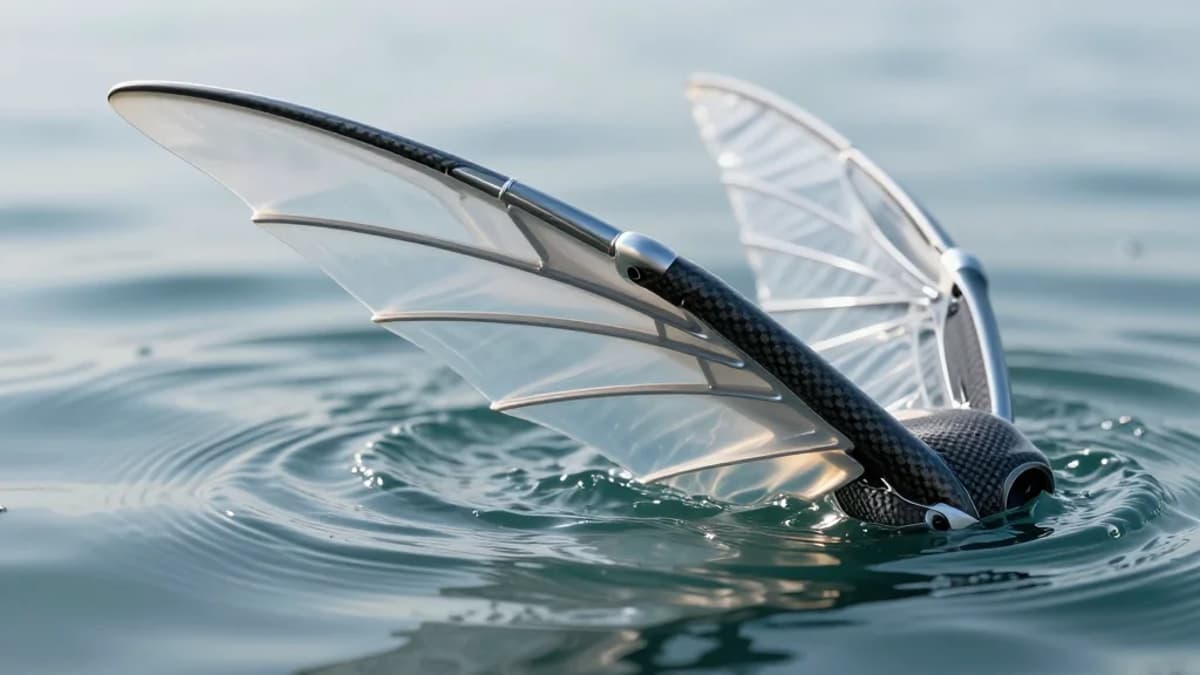
Robotic Wing Inspired by Nature Delivers Leap in Underwater Stability
Researchers at the University of Southampton have created a soft‑robotic wing with a liquid‑metal e‑skin that senses water flow and reshapes itself automatically. In lab tests the wing cut unwanted uplift impulse by 87% versus rigid AUV wings, responded up to four times faster than comparable soft wings, and used five times less energy than thermal‑actuated alternatives. The design exploits proprioception—mirroring birds’ feathers and fish’s lateral‑line—to achieve hybrid passive‑active disturbance rejection. While the results promise more agile, energy‑efficient autonomous underwater vehicles, scaling and integration with existing hulls remain open challenges.
By Tech Xplore Robotics
News•Feb 26, 2026
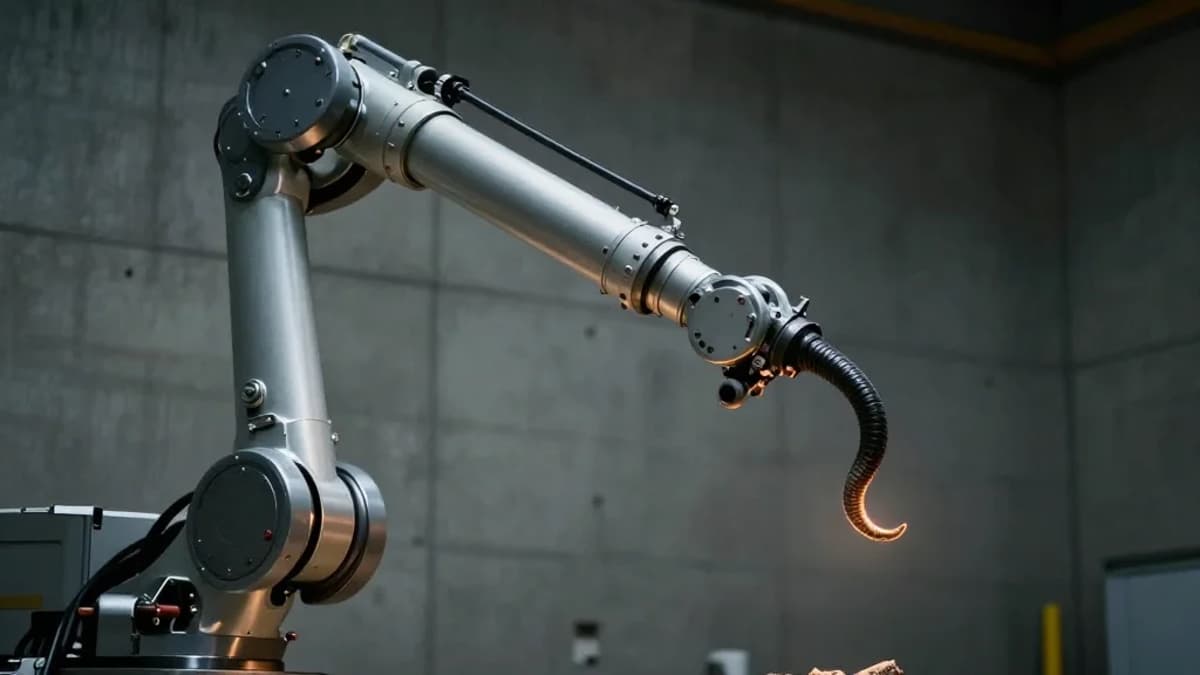
Snake-Like Robot Unveiled for Fukushima Debris Removal
TEPCO unveiled a 22‑metre, 4.6‑tonne snake‑like robot arm designed to retrieve radioactive debris from Fukushima Daiichi. The device can crawl through narrow tunnels, capture visual data, and is slated for a third trial removal later this year. Fukushima still houses...
By Tech Xplore Robotics

News•Feb 25, 2026
Soft-Robotic Glove Uses 37 Actuators to Cut Hand Swelling by up to 25%
Cornell researchers unveiled EdemaFlex, a soft‑robotic glove equipped with 37 shape‑memory‑alloy actuators that apply sequential pressure across all five fingers and the palm. In a small home‑use study of seven edema patients, a single 30‑minute session reduced hand volume by...
By Tech Xplore Robotics

News•Feb 25, 2026
Researchers Expose Critical Security Vulnerability in Autonomous Drones
UC Irvine computer scientists have uncovered a critical flaw in camera‑based autonomous target‑tracking drones, dubbed the FlyTrap attack. By attaching a specially designed visual pattern to an ordinary umbrella, attackers can trick drones into believing the target is receding, causing...
By Tech Xplore Robotics

News•Feb 24, 2026
Rise of the Rice Robots—Creating Active Smart Materials
Researchers at the University of Birmingham discovered that packed rice grains weaken when compressed rapidly—a phenomenon called rate softening. By combining rice‑based granular units with sand, they engineered a speed‑sensitive metamaterial that stiffens or bends depending on loading speed, all...
By Tech Xplore Robotics

News•Feb 24, 2026
Engineers Demonstrate Lightweight 'Exoskeleton' That Helps Stroke Survivors Walk
Engineers at the University of Utah unveiled a 5.5‑pound portable hip exoskeleton that reduces the metabolic cost of walking for stroke survivors with hemiparesis by roughly 18%. The device delivers side‑specific motor assistance synchronized in real time, allowing users to...
By Tech Xplore Robotics

News•Feb 21, 2026
How Eyes Affect Our Perception of a Humanoid Robot's Mind
Researchers at Tampere University and the University of Bremen used AI‑generated images to compare humanoid robots with and without eyes. Participants consistently rated the eye‑equipped robots as possessing higher agency and experience, regardless of age‑like appearance or eye placement. The...
By Tech Xplore Robotics

News•Feb 20, 2026
Humanoid Home Robots Are on the Market—But Do We Really Want Them?
Norwegian‑US startup 1X launched Neo, a $20,000 consumer‑ready humanoid robot that can fold laundry and load dishwashers, but it relies on remote operators wearing VR headsets to handle complex tasks. The robot records video of its actions for future AI...
By Tech Xplore Robotics

News•Feb 20, 2026
Humanoid Robots that 'Catch Themselves' Instead of Falling: What a New Walking Algorithm Changes
Georgia Tech researchers unveiled a real‑time planning and control framework that lets bipedal robots recover from instability without human input. Implemented on the Cassie robot, the algorithm uses signal‑temporal‑logic‑guided model predictive control to adjust upcoming steps when perturbations are detected....
By Tech Xplore Robotics

News•Feb 18, 2026
How Can You Rescue a 'Kidnapped' Robot? New AI System Helps Robots Regain Their Sense of Location
Researchers unveiled an AI‑driven localization system that lets mobile robots recover their position when GPS signals are lost or degraded. The system fuses data from onboard cameras, LiDAR, and inertial sensors to create a dynamic map and re‑localize the robot...
By Tech Xplore Robotics

News•Feb 17, 2026
Robot Hand Approaches Human-Like Dexterity with New Visual-Tactile Training
Researchers in China introduced a visual‑tactile pretraining framework that teaches a low‑cost four‑fingered LEAP Hand to manipulate objects with human‑like dexterity. By first watching extensive videos of human hand actions and then training in simulation using only a webcam and...
By Tech Xplore Robotics

News•Feb 16, 2026
AI Robot Vehicles Learn to Team up and Extinguish Fires in Early Trial
A team of AI‑powered robot vehicles successfully completed a soft trial in which they autonomously located and extinguished simulated fires. The robots coordinated their actions, sharing sensor data to optimize water deployment and movement. Remote operators oversaw the mission, eliminating...
By Tech Xplore Robotics

News•Feb 15, 2026
Buzz of the Olympics: How Drone Cams Deliver High-Pace Visuals and Add a New Dynamic for TV Viewers
The Winter Olympics are deploying drone‑mounted cameras to film high‑speed ski events from unprecedented angles. Broadcasters place operators on towers overlooking courses like Cortina, allowing drones to follow athletes in real time. The technology delivers dynamic, immersive visuals that enhance...
By Tech Xplore Robotics

News•Feb 12, 2026
The Insect-Inspired Bionic Eye that Sees, Smells and Guides Robots
Researchers at the Chinese Academy of Sciences have engineered an insect‑scale bionic eye that replicates the fruit fly's compound vision and adds a micro‑olfactory sensor. The device captures wide‑angle visuals and detects chemical cues, enabling drones and robots to navigate...
By Tech Xplore Robotics

News•Feb 12, 2026
Power of the Collective: Modular Robot Boosts Resilience by Sharing Resources
EPFL researchers have demonstrated a modular robot that boosts resilience by sharing power, sensing, and communication resources among its units. Using a hyper‑redundancy framework, the four‑module Mori3 robot kept moving even when its central module lost battery, sensors, and wireless...
By Tech Xplore Robotics