
Berchem School Hit by Cyberattack as Hackers Target Parents With €50 Ransom Demand
A ransomware group breached the servers of secondary school Onze‑Lieve‑Vrouwinstituut Pulhof in Berchem, forcing a shutdown of internal systems. The school refused to pay the initial ransom and the attackers escalated by demanding €50 per child from parents, threatening to release personal data. Law enforcement, including the Federal Judicial Police and the regional Computer Crime Unit, were engaged while the school set up a temporary secure network. Classes continued despite the disruption, highlighting the growing vulnerability of educational institutions.

Britain and Japan Join Forces on Cybersecurity and Strategic Minerals
Britain and Japan announced a new cyber strategic partnership during Prime Minister Keir Starmer's Tokyo visit, following his stop in Beijing. The agreement pairs cybersecurity cooperation with joint efforts to secure critical mineral supply chains essential for advanced manufacturing and...

Ad Fraud Is Exploding — Dhiraj Gupta of mFilterIt Explains How Brands Can Respond
Ad fraud is escalating into a systemic threat that undermines the digital economy’s trust. In 2024 mobile ad fraud rose 21% and programmatic scams siphoned nearly $50 billion, while the ad‑fraud detection market is set to exceed $2 billion by 2034. Dhiraj...

Cyble Research Discovers ShadowHS, an In-Memory Linux Framework for Long-Term Access
Cyble Research & Intelligence Labs uncovered ShadowHS, a Linux post‑exploitation framework that operates entirely in memory. The tool leverages a weaponized version of hackshell with an AES‑256‑CBC encrypted loader, enabling fileless execution via /proc//fd/. ShadowHS provides an operator‑controlled environment for...

Bumble, Panera Bread, Match Group, and CrunchBase Hit by New Wave of Cyberattacks
A coordinated cyber‑attack wave hit Bumble, Panera Bread, Match Group and CrunchBase, with the hacker group ShinyHunters claiming responsibility. The intrusions stemmed from phishing and vishing tactics that compromised contractor or employee credentials, granting brief, limited access to internal networks....

AHA Releases New Guides to Strengthen Hospital Emergency and Cyber Preparedness
The American Hospital Association unveiled two new guides—Strategies for Medical Surge Management During Public Emergencies and Strategies for Cyber Preparedness in Health Care—to help hospitals navigate both public health crises and cyber threats. Both resources adopt the “four S’s” framework—staffing,...

US Charges 87 in Major ATM Jackpotting Scheme Linked to Tren De Aragua
A Nebraska federal grand jury has indicted a total of 87 defendants in a sprawling ATM jackpotting conspiracy tied to the Venezuelan gang Tren de Aragua. The scheme used a variant of the Ploutus malware to hack ATMs nationwide, stealing...
Hackers Exploit React2Shell Vulnerability to Deploy Miners and Botnets Worldwide
A critical insecure‑deserialization flaw in React Server Components, identified as CVE‑2025‑55182 or “React2Shell,” is being actively exploited worldwide. The vulnerability affects react‑server‑dom‑webpack, –parcel and –turbopack versions 19.0‑19.2, allowing attackers to execute arbitrary code and deploy a range of malware, including...

Major Cyberattack Cripples Russia’s Alarm and Vehicle Security Provider Delta
Russian security firm Delta suffered a large‑scale external cyberattack on Jan 26, crippling its alarm, home, and vehicle security platforms. The breach disabled online services, phone lines, and the mobile app, leaving thousands of customers unable to control alarms or unlock...

Canada Marks Data Privacy Week 2026 as Commissioner Pushes for Privacy by Design
Canada’s Privacy Commissioner Philippe Dufresne launched Data Privacy Week 2026 (Jan 26‑30) with a focus on privacy‑by‑design, urging organizations to embed data protection from the outset. He highlighted recent high‑profile breaches—including Aylo, 23andMe, TikTok, and an investigation into X’s Grok chatbot—to...

Data Privacy Week 2026: Why Secure Access Is the New Data Protection Perimeter
The CyberExpress article argues that the traditional network perimeter is no longer sufficient for data privacy, and that the true protection now lies at the moment of access. It highlights the rise of the “Identity‑Data Gap” and the shift toward...

ShinyHunters, CL0P Return with New Claimed Victims
ShinyHunters has resurfaced with an onion‑based data leak site, claiming breaches of SoundCloud, Betterment and Crunchbase tied to a new vishing campaign targeting SSO credentials at Okta, Microsoft and Google. The group warns that more victims will follow. In parallel,...

Manage My Health Data Breach Sparks Warnings Over Impersonation and Phishing Attempts
Manage My Health, a New Zealand digital health portal, confirmed a breach that accessed documents in its My Health Documents feature, affecting over 120,000 patients. While live clinical systems remained untouched, fraudsters are now impersonating the service to send phishing and...

One in Ten UK Businesses Fear They Would Not Survive a Major Cyberattack
A Vodafone Business survey of 1,000 UK senior leaders reveals that one in ten believe their company would not survive a major cyberattack. While 63% say the risk of attack has risen over the past year, only 45% have ensured...

How to Remove Saved Passwords From Google Chrome (And Why You Should)
Google Chrome’s built‑in password manager offers convenience but accumulates credentials across devices, creating a hidden security liability. The article details how to delete individual, multiple, or all saved passwords on desktop, Android, and iOS, and explains how Chrome sync propagates...

Threat Hunting in 2026: Why Proactive Defence Is the Only Way Forward
Threat hunting is shifting from reactive incident response to proactive, pattern‑based defense as attackers repeatedly exploit known vulnerabilities. Experts at Qualys argue that focusing on adversary telemetry—such as weaponization, ransomware links, and dark‑web chatter—enables teams to anticipate exploitation cycles. Automation...

APD Investigates Third-Party Cybersecurity Incident, Says No Evidence of Data Compromise
The Anchorage Police Department (APD) disclosed a cybersecurity incident on Jan 7, 2026 involving its third‑party data‑migration vendor, Whitebox Technologies. APD reported no evidence that its systems or data were compromised and immediately shut down affected servers while revoking vendor access....

Nicole Ozer Joins CPPA to Drive Privacy and Digital Security Initiatives
California Privacy Protection Agency appointed Nicole Ozer to its board, reinforcing the state’s privacy agenda. Ozer, former ACLU tech director and executive at UC Law San Francisco, brings extensive experience in privacy law, AI, and digital civil liberties. Her appointment...

What Is a DNS Attack? Understanding the Risks and Threats
The Domain Name System (DNS) remains a critical yet vulnerable internet backbone, with 88% of organizations reporting at least one DNS attack in 2023. Attacks such as hijacking, cache poisoning, and DDoS floods can redirect users, cause service outages, and...

Kyowon Group Confirms Cyberattack as Multiple Systems Go Offline
Kyowon Group disclosed a cyberattack that began on the morning of Jan 10, prompting the company to isolate affected systems and shut down parts of its internal network. The breach forced the main website and several affiliate sites offline, with service...
The Cyber Express Weekly Roundup: Schools, Hacktivists, and National Cyber Overhauls
The first week of 2026 saw a wave of cyber incidents spanning education, activism, corporate, and government sectors. Higham Lane School in England shut down after ransomware crippled systems for 1,500 students, while Australian insurer Prosura faced unauthorized access exposing...

CISA Warns of Attacks on PowerPoint and HPE Vulnerabilities
CISA has added two high‑severity flaws to its 2026 Known Exploited Vulnerabilities (KEV) catalog: CVE‑2025‑37164, a code‑injection bug in Hewlett Packard Enterprise OneView rated 10.0, and CVE‑2009‑0556, a 9.3‑severity remote‑code‑execution issue in legacy Microsoft PowerPoint 2000‑2004. Rapid7 published a proof‑of‑concept...

Trump Orders US Exit From Global Cyber and Hybrid Threat Coalitions
President Donald Trump signed a memorandum ordering the United States to withdraw immediately from three major cyber‑security coalitions: the European Centre of Excellence for Countering Hybrid Threats, the Global Forum on Cyber Expertise, and the Freedom Online Coalition. The exits...

Australian Insurer Prosura Confirms Cyber Incident, Takes Online Services Offline Amid Investigation
Australian insurer Prosura confirmed a cyber incident on Jan 3, 2026 after detecting unauthorized access to internal systems. The breach led the company to temporarily disable its self‑service portal, halting online policy purchases, claims and account management. Fraudulent phishing emails were sent...

Unpatched TOTOLINK EX200 Flaw Enables Root-Level Telnet Access, CERT/CC Warns
On Jan 6 2026, CERT/CC disclosed CVE‑2025‑65606 affecting the TOTOLINK EX200 range extender. An authenticated attacker can upload a malformed firmware file that forces the device into an error state, automatically launching an unauthenticated root‑level telnet service. The telnet console provides full...
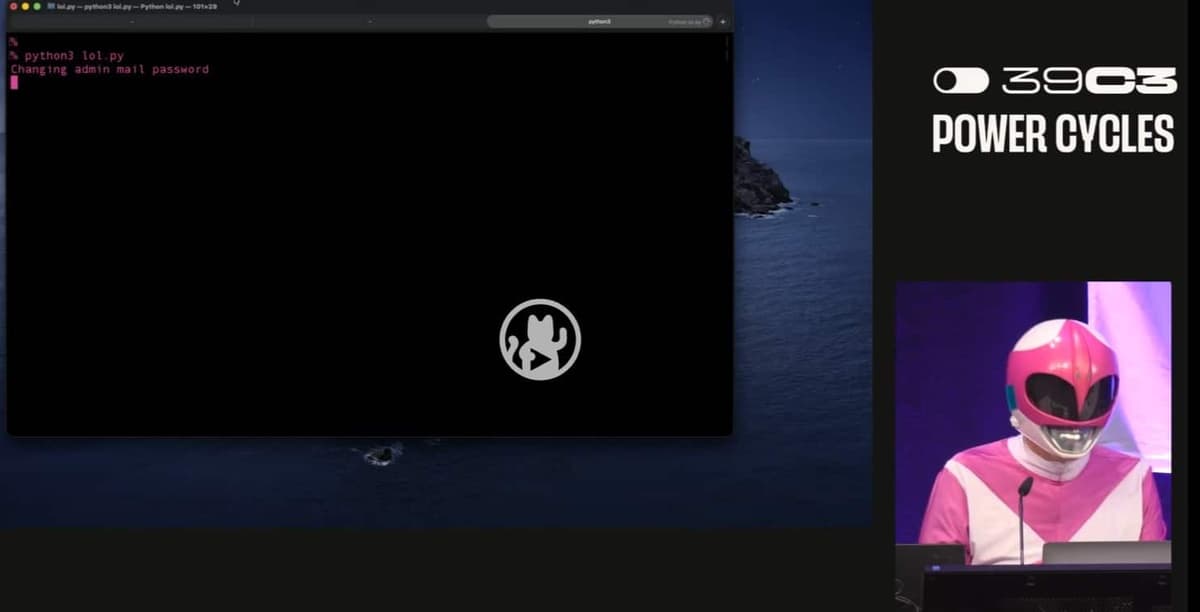
Hacktivist Exposes and Deletes White Supremacist Websites Live at Conference
At the Chaos Communication Congress in Hamburg, hacktivist Martha Root publicly deleted three white‑supremacist sites—WhiteDate, WhiteChild and WhiteDeal—while the audience cheered. The live takedown was accompanied by the release of data on more than 6,000 users from the dating platform,...

What Is a Proxy Server? A Complete Guide to Types, Uses, and Benefits
A proxy server acts as an intermediary between client devices and the Internet, forwarding requests, filtering data, and returning responses. The guide distinguishes forward proxies, which protect users by masking IPs, enforcing policies, caching content, and inspecting traffic, from reverse...

Critical N8n Vulnerability Allows Arbitrary Command Execution (CVE-2025-68668)
A critical vulnerability (CVE‑2025‑68668) in n8n’s Python Code Node lets authenticated users bypass the sandbox and execute arbitrary system commands. The flaw affects all n8n versions from 1.0.0 up to, but not including, 2.0.0 and carries a CVSS score of...