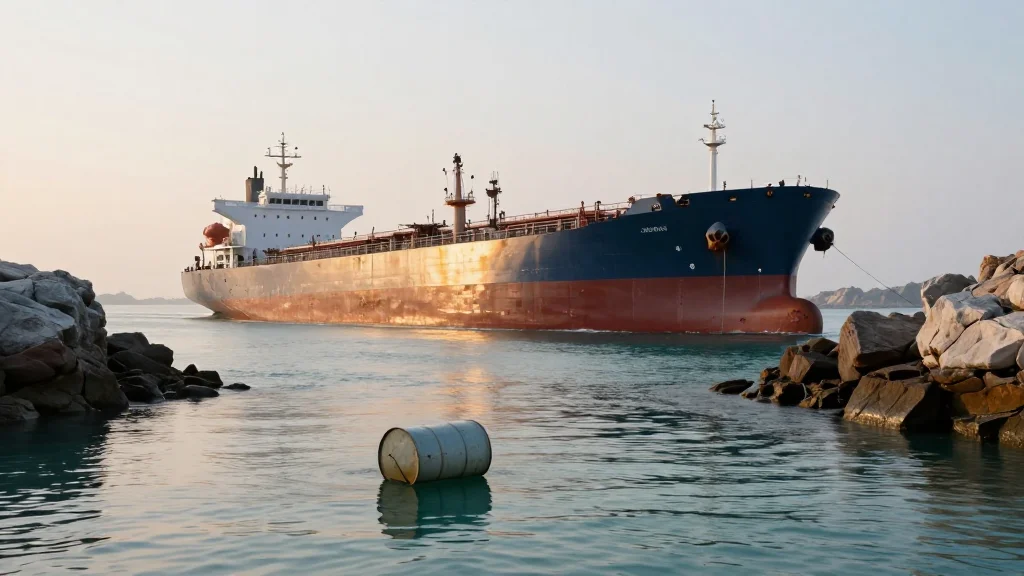
Reeves Urges G7 to Reject Protectionism as Hormuz Crisis Escalates
The Strait of Hormuz blockade, now in its second month, has halted the flow of roughly 21 million barrels of oil per day—about 20% of global consumption—and disrupted 30% of the world’s nitrogen‑based fertilizer trade, sending Brent crude sharply higher. British Chancellor Rachel Reeves used a pre‑G7 finance summit appearance to warn against protectionist measures, promoting her "securonomics" doctrine that favours coordinated resilience over unilateral trade barriers. She also signalled new anti‑profiteering powers for the Competition and Markets Authority and government‑backed indemnities for offshore wind and nuclear projects. The UK Treasury’s fiscal headroom, roughly £23 bn (≈ $29 bn), is under pressure as gilt yields rise amid the crisis.
The Great Easing Pause: Treasury Strategy in a Wartime Economy
The Federal Reserve paused its easing cycle in March, keeping the federal funds rate at 3.50‑3.75% after three consecutive quarter‑point cuts. This “hawkish hold” arrives amid a wartime‑style energy shock that could lift headline inflation by 0.8 percentage points and...

Why Treasurers Must Prepare for the BNPL “Regulatory Cliff-Edge”
The FCA will bring the £13 billion UK BNPL market under full regulatory oversight starting 15 July 2026, requiring lenders to conduct mandatory affordability assessments and provide standardized pre‑contract disclosures. A Temporary Permissions Regime opens from 15 May to 1 July 2026, after which firms must...

Why Global Treasurers Are Realigning Financing with RMB Exposure
Global corporates are confronting a pronounced mismatch between their Renminbi (RMB) operating exposure and the currency composition of their debt. While roughly a quarter of revenues and costs are RMB‑denominated, only 14% of corporate debt is issued in the currency,...

Rethinking Risk in the P2P Cycle
Treasury departments now treat the Purchase‑to‑Pay (P2P) Risk Index as a core KPI. The index measures data integrity, fraud/compliance pressure, and working‑capital efficiency, exposing hidden leakage and regulatory exposure. AI‑driven forensic tools and automated segregation of duties are being deployed...

Agentic AI and the New Governance Challenge for Treasurers
Agentic AI is moving from experimental chatbots to autonomous digital deputies that execute trade‑finance workflows without human prompting. In 2026 treasurers see agents handling document orchestration, real‑time payment interventions, and cross‑system data writes, dramatically speeding up back‑office operations. The technology...

Navigating Liquidity Traps in a Fragmented World
The episode examines how "trapped cash" has evolved from a balance‑sheet inefficiency into a geopolitical risk as capital controls, ESG mandates, and tax treaty changes fragment global liquidity. It outlines the macro drivers—FX shortages, regulatory black‑lists, and new cross‑border pooling...

Why Static Hedging No Longer Works
In this episode the host examines why traditional static hedging strategies have lost their effectiveness in today’s volatile macro environment. The discussion covers the rise of rapid interest‑rate shifts, heightened currency volatility, and the proliferation of algorithmic trading that erode...