
Indira Jaising: ‘Now Is the Time to Reclaim the Constitution’
Indira Jaising, India’s first female Additional Solicitor General (2009), releases her memoir "The Constitution Is My Home" co‑written with Ritu Menon. The book intertwines her five‑decade legal career—spanning gender‑rights, state‑violence, and institutional apathy—with a personal narrative of a Partition‑displaced family. In a New Delhi interview, the octogenarian stresses that India must repeatedly return to its Constitution during moments of crisis. The memoir positions the personal as political, urging a renewed public commitment to constitutional ideals.

R.K. Raghavan: I Am Disillusioned with the Declining Standards of Integrity in the IPS
Former CBI chief R.K. Raghavan used the launch of his autobiography, *A Road Well Travelled*, to lament the erosion of integrity within the Indian Police Service. He recounted his involvement in landmark cases such as Bofors, the 2000 match‑fixing scandal,...
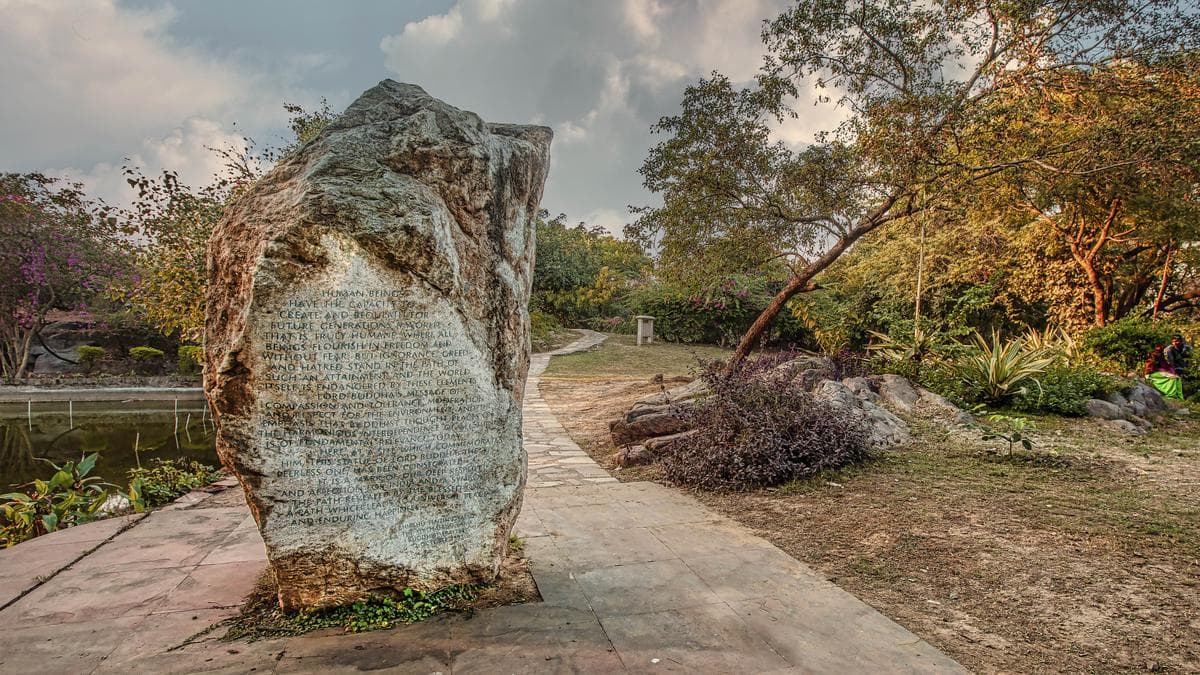
‘Gardens of Delhi’ Gives Us a Glimpse Into the Hidden Green Treasures of the Capital
‘Gardens of Delhi’, a new Niyogi Books title by siblings Swapna and Madhulika Liddle with photographer Prabhas Roy, surveys more than 18,000 public parks across India’s capital. The book spotlights obscure natural features such as the “Tree of Owls” in...

Review | The Witch by Marie NDiaye Is a Darkly Absurd Tale of Motherhood and Magic
Marie NDiaye’s novella *The Witch*, originally published in French in 1996, has been shortlisted for the International Booker Prize and released in English for the first time, translated by Jordan Stump. The story follows Lucie, a suburban mother with modest...

Review | Rene Karabash’s She Who Remains Reimagines Gender and Freedom Through Albania’s Sworn Virgins
Rene Karabash’s International Booker‑shortlisted novel *She Who Remains* dramatizes the Albanian tradition of sworn virgins—women who take a lifelong chastity oath to live as men under the centuries‑old Kanun law. The story follows Bekija’s transformation into Matija, using a punctuation‑free, lyrical...

Karadi Tales at 30: How India’s Iconic Children’s Publisher Transformed Storytelling
Karadi Tales celebrates its 30th anniversary, marking three decades of reshaping Indian children’s publishing through audio‑driven storytelling, music‑rich picture books, and inclusive formats. Founded in 1996 by CP Viswanath, Shobha Viswanath and Narayan Parasuram, the Chennai‑based house introduced audiobooks featuring celebrated voices such...

Against the Velocity of Modern Life | Review of Slow Living by Vandana Shiva, Shreya Jani
Vandana Shiva and Shreya Jani’s *Slow Living: What You Can Do About Climate Change* argues that the climate crisis is embedded in the pace of daily life, urging readers to adopt slower, more intentional habits. The book reframes food, work,...

Review | Earthbound–Climate Stories From South Asia: The Unequal Race to Survive
Earthbound: Climate Stories from South Asia is a 12‑story anthology edited by writer‑filmmaker Alina Gufran, released on May 13 2026. The collection imagines a near‑future South Asia ravaged by disease, relentless floods, and sinking cities, while exposing how caste and class hierarchies...

Review of The Kerala Club, Edited by K.M. Chandrasekhar, T.P. Sreenivasan
The review examines *The Kerala Club: Keepers of the Flame*, a collection of 29 essays by current and former civil servants that explore Kerala’s distinctive development model, democratic decentralisation, and social challenges. The editors K.M. Chandrasekhar and T.P. Sreenivasan assemble narratives ranging...

Desmond Morris: Controversial Thinker Who Redefined Human Evolution with The Naked Ape
Desmond Morris, the controversial zoologist and author of The Naked Ape, reshaped public perception of human evolution by treating Homo sapiens as a “naked ape” whose behavior mirrors that of other primates. His 1967 bestseller combined scientific ethology with vivid...

Interview | Karan Mahajan on His New Novel, The Complex: A Post-Partition Punjabi Family’s Tale
Karan Mahajan’s latest novel, *The Complex*, was released by HarperCollins in 2026, revisiting a post‑Partition Punjabi joint family in Delhi. The story spans the 1980s‑90s, covering events such as the Mandal Commission protests and the rise of Hindutva politics. Mahajan...

Review | The Correspondent Is Both a Slow-Burn Mystery and a Warm, Witty Novel
Virginia Evans’ debut novel, The Correspondent, is written entirely as letters and has been shortlisted for the 2026 Women’s Prize for Fiction. The story follows 73‑year‑old Sybil Van Antwerp, a former lawyer, as she navigates loneliness, memory, and modern communication...

Review | Women’s Prize-Shortlisted Dominion Is a Portrait of Family Life Shaped by Faith, Desire and Violence
Addie E. Citchens’s debut novel *Dominion* has been shortlisted for the 2026 Women’s Prize for Fiction. Set in the fictional Mississippi town of Dominion, the story follows pastor’s wife Priscilla and orphan Diamond as they navigate a family torn by faith, desire...

Lights, Camera, Kongu Nadu | Review of Perumal Murugan’s The Land and the Shadows
Perumal Murugan’s new volume, *The Land and the Shadows*, merges memoir with ethnographic study to chart the magnetic pull of Tamil cinema in the Kongu Nadu region. Drawing from his childhood in a touring talkies soda shop, Murugan recounts the M.G. Ramachandran...

Understanding the BJP’s Rise in Bengal | Review of Sayantan Ghosh’s Battleground Bengal
Sayantan Ghosh’s *Battleground Bengal* examines how the BJP transformed from a marginal player into West Bengal’s chief opposition, culminating in its recent electoral win. The book traces the party’s early 1998 alliance with the Trinamool Congress, the 2014‑16 pivot toward...