The New Stack
DevOps, open source, and cloud native news with resources and insights for developers

MCP Maintainers From Anthropic, AWS, Microsoft, and OpenAI Lay Out Enterprise Security Roadmap at Dev Summit
At the MCP Dev Summit in New York, maintainers from Anthropic, AWS, Microsoft and OpenAI announced an enterprise‑focused security roadmap under the Agentic AI Foundation (AAIF). The AAIF, now 170 members strong, will steer the Model Context Protocol (MCP) toward stricter security, reliability and governance while keeping the project open‑source. MCP’s rapid adoption—reaching industry‑standard status in just 13 weeks—has highlighted gaps in authentication, authorization and sandboxing that the foundation aims to close. Collaborations with firms like Okta and the development of complementary standards such as Agent2Agent were also discussed.
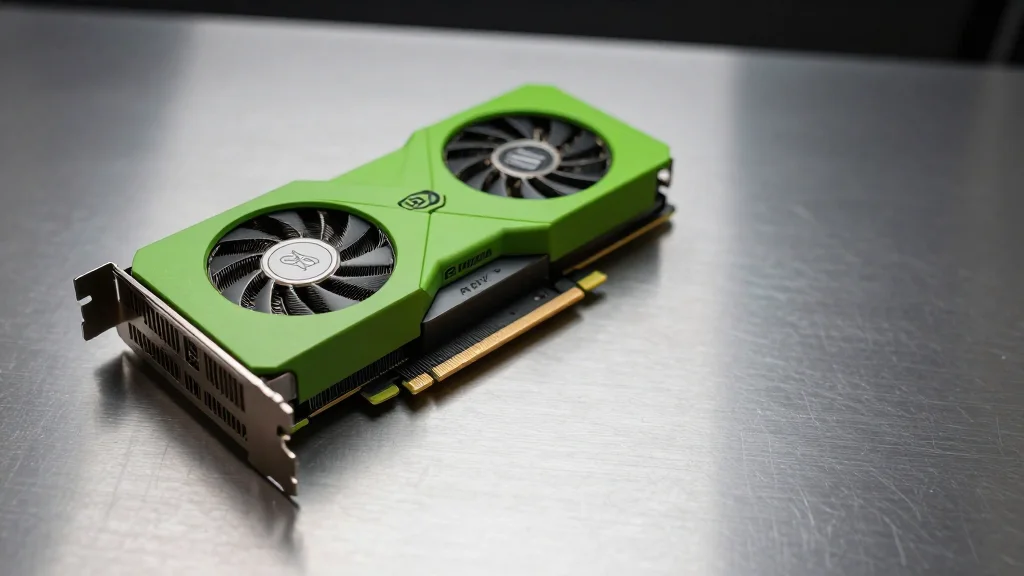
Vultr Says Its Nvidia-Powered AI Infrastructure Costs 50% to 90% Less than Hyperscalers
Vultr announced an Nvidia‑powered AI infrastructure that it says costs 50% to 90% less than comparable offerings from major hyperscalers. The service lets platform engineering teams train AI agents on internal security, networking and compliance policies, then expose those as...

Digital Experience Monitoring Belongs in the Modern Developer Workflow
Digital Experience Monitoring (DEM) is reshaping observability by tying frontend performance and real‑user outcomes to backend telemetry. The article explains how DEM integrates synthetic testing, Core Web Vitals, and crash data into developers' daily workflow, from CI/CD pipelines to incremental...
The Hidden Reason Your AI Assistant Feels so Sluggish
AI assistants feel sluggish because agent‑driven workloads overload traditional data platforms. Large language models fire dozens of concurrent short SQL queries per prompt, demanding sub‑second response times that batch‑oriented warehouses can’t meet. This mismatch drives latency and rising costs, prompting...

Why Broadcom Gave Velero to the CNCF Sandbox — and What It Means for Kubernetes Data Protection
Broadcom has transferred ownership of the Velero backup and recovery project to the CNCF Sandbox, moving governance away from its VMware unit. The donation aims to eliminate perceived proprietary control and encourage broader community contributions. Broadcom positions this move as...

OpenClaw Vs. Hermes Agent: The Race to Build AI Assistants that Never Forget
Developers are frustrated by AI coding assistants that lose context after each session, prompting a split in the AI agent market between short‑lived tools and always‑on agents. OpenClaw and Hermes Agent represent the latter, offering persistent runtimes that remember past...

Edge-Forward: Akamai Eyes Sweet Spot Between Centralized & Decentralized AI Inference
Akamai is shifting from a pure CDN to a developer‑centric cloud platform that blends centralized data centers with a massive edge network for AI inference. The company leverages 41 core datacenters and roughly 4,400 smaller edge locations to run managed...

Why Cursor Is Bringing Self-Hosted AI Agents to the Fortune 500
Cursor is launching self‑hosted cloud agents that let Fortune 500 firms run its AI coding assistants inside their own infrastructure, keeping source code, tests and build artifacts on‑premise. The move tackles security, compliance and latency concerns that have limited enterprise...
Portkey Open-Sources Its AI Gateway After Processing 2 Trillion Tokens a Day
Portkey has released its unified Portkey Gateway as an open‑source project after the service began processing two trillion tokens per day and handling more than 120 million AI requests. The platform currently supports $180 million of annualized AI spend across roughly 24,000...

Claude Code Users Say They’re Hitting Usage Limits Faster than Normal
Anthropic has confirmed that Claude Code users are exhausting their usage limits far faster than before, with some prompts consuming up to 10% of a monthly quota and simple greetings using 2% of a session. Users on the $100‑per‑month plan...
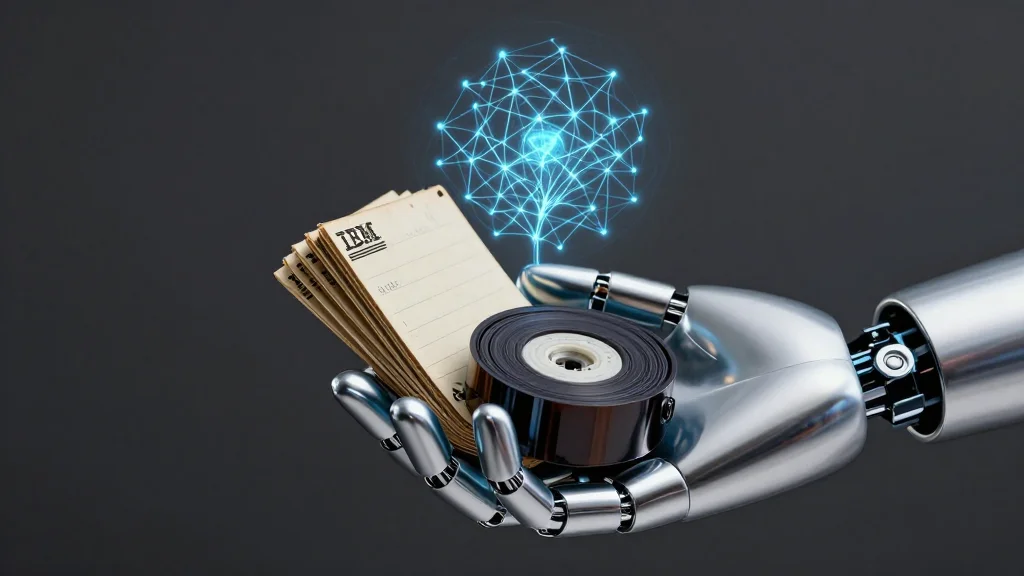
AI Accelerates Modernization, but Don’t Leave Human Devs Behind
AI-driven tools are reshaping application modernization by scanning, summarizing, and refactoring legacy code far faster than human‑only teams. The market reacted when Anthropic announced Claude Code could modernize COBOL, prompting a sharp IBM stock dip. While AI accelerates repetitive tasks,...

Microsoft’s Copilot Makes Anthropic’s Claude and OpenAI’s GPT Team Up
Microsoft has integrated Anthropic’s Claude and OpenAI’s GPT into Copilot’s Researcher agent, adding a ‘critique’ step where GPT drafts content and Claude reviews it for accuracy and citation integrity. The combined workflow achieved a 57.4 score on Perplexity’s DRACO benchmark,...

WebAssembly Is Now Outperforming Containers at the Edge
WebAssembly’s emerging Component Model 1.0 is poised to eclipse containers for edge and serverless workloads by delivering millisecond‑level code deployment and superior isolation. Recent talks at Wasm I/O highlighted Preview 3, which adds async functions, lazy APIs, and concurrency primitives, moving...

How Platform Teams Are Eliminating a $43,800 “Hidden Tax” On Kubernetes Infrastructure
Platform teams are tackling a hidden $43,800 annual tax caused by provisioning separate managed Kubernetes control planes for each tenant. A single Amazon EKS control plane costs about $0.10 per hour, which scales linearly with the number of clusters. Virtual‑cluster...

Build It Yourself: A Data Pipeline that Trains a Real Model
The article explains what a data pipeline is, why it’s essential for AI, and provides a step‑by‑step tutorial to build a simple pipeline that simulates temperature data, trains a linear regression model with scikit‑learn, and generates predictions. It outlines the...

Gitleaks Creator Returns with Betterleaks, an Open Source Secrets Scanner for the Agentic Era
The creator of the popular secret‑scanning tool Gitleaks has launched Betterleaks, an open‑source scanner designed as a drop‑in replacement with faster performance and more flexible validation. Backed by AI‑focused security startup Aikido, Betterleaks swaps hard‑coded entropy checks for CEL‑based rules...

AI Can Write Your Infrastructure Code. There’s a Reason Most Teams Won’t Let It.
Spacelift co‑founder Marcin Wyszynski says AI is now writing infrastructure‑as‑code in HCL, eliminating the need for developers to hand‑craft Terraform or OpenTofu configurations. While this speeds provisioning, it creates a comprehension gap that can lead to dangerous production changes. Spacelift’s...

Why Flat Kubernetes Networks Fail at Scale
Flat Kubernetes networking models work for small clusters but break at scale. As policies proliferate, the lack of hierarchy leads to unpredictable rule precedence and debugging challenges. Introducing security hierarchies—platform, security, and application tiers—adds explicit ordering and aligns with Zero...

Linux Kernel Scale Is Swamping an Already-Flawed CVE System
The Linux kernel became a CVE Numbering Authority in 2024, prompting a policy shift that assigns identifiers to virtually every defect. In 2025 the kernel topped vulnerability lists with over 48,000 CVEs, flooding security feeds with low‑impact and theoretical issues...

Jellyfish AI Development Study: The Real Sting Has yet to Land
Jellyfish’s AI Engineering Trends study, covering 700+ companies, 200,000 engineers and 20 million pull requests, shows that more than half of firms now use AI coding tools daily and 64 % generate the majority of their code with AI assistance. Teams in...

The AI Revolution Will Be Open-Sourced
At CES 2026 NVIDIA CEO Jensen Huang argued that AI will only scale when open innovation extends to infrastructure. Kubernetes, long used for AI, is gaining first‑class support through Dynamic Resource Allocation (DRA) that reached GA in version 1.34. New...

Capital One Deprecated an AI Tool It Once Championed. Its DevEx Chief Says That’s the Point.
Capital One’s developer experience (DevEx) team, led by SVP Catherine McGarvey, recently retired an AI‑driven ticket‑assignment tool after engineers expressed dissatisfaction. The group emphasizes "enablement"—providing the right tools, knowledge, and feedback—to boost productivity across its 14,000 technologists. AI tooling is...
Why Your Observability Bill Keeps Growing (and It’s Not Your Vendor’s Fault)
Observability spend is exploding across large engineering orgs, not because of vendor pricing but due to unchecked telemetry generation. Companies report monthly bills exceeding $200,000 while most data lacks proper service attribution and often contains leaked credentials. Auto‑instrumentation and high‑cardinality...
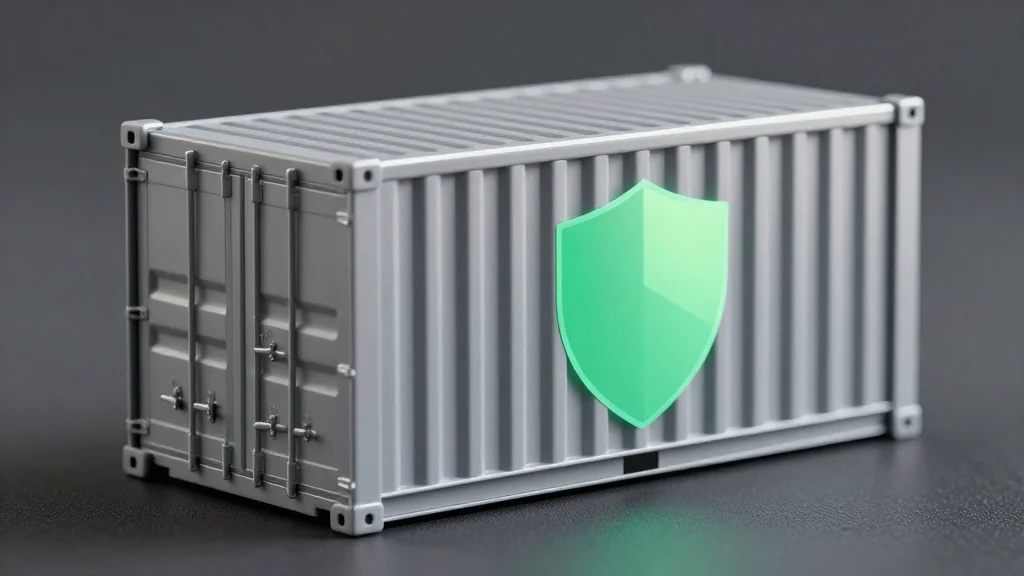
Chainguard Thinks Most DevOps Teams Are Solving Container Security the Hard Way
Chainguard unveiled OS Packages, a beta service that lets DevOps teams assemble custom container images from zero‑CVE, source‑built packages. The offering leverages Chainguard’s Factory 2.0 pipeline to continuously rebuild over 30,000 enterprise‑grade packages and generate SBOMs automatically. Teams can use...

SurePath AI Advances MCP Policy Controls to Tighten the Cable on AI’s USB-C
SurePath AI unveiled MCP Policy Controls, a real‑time governance layer for Model Context Protocol (MCP) interactions. The service monitors and restricts which MCP servers and tools a codebase may use, automatically blocking or allowing payloads based on policy. In a...

Runpod Report: Qwen Has Overtaken Meta’s Llama as the Most-Deployed Self-Hosted LLM
Runpod’s State of AI report, built on anonymized serverless deployment logs, shows Alibaba Cloud’s Qwen family has become the most‑deployed self‑hosted large language model, overtaking Meta’s Llama. Despite heavy marketing, Llama 4 registers near‑zero adoption, indicating developers prioritize performance per dollar,...

Galileo Releases Agent Control, a Centralized Guardrails Platform for Enterprise AI Agents
Galileo unveiled Agent Control, an open‑source Apache‑2.0 control plane that lets enterprises enforce unified guardrails across AI agents. The platform lets developers write policies once and apply them in real time without downtime, and it ships with SDKs for easy...
Tetrate Launches Open Source Marketplace to Simplify Envoy Adoption
Tetrate has introduced Built on Envoy, a free, open‑source marketplace that bundles ready‑to‑use Envoy extensions. The platform addresses common adoption hurdles such as security integration, authentication, and AI governance by providing pre‑built modules for WAF, OAuth2, SAML, and content‑safety checks....
Publish Your Data, AI Techniques, and Agentic Engineering Work on Towards Data Science
The New Stack is inviting its readers to publish on Towards Data Science, one of the largest AI‑focused publications. Submissions are free, and accepted pieces receive editorial support, rapid two‑day turnaround, and promotion across TDS’s channels. Authors can earn money...

How to Deploy an AI Server on Your Debian/Ubuntu Server
The article walks through deploying a private AI server on Debian or Ubuntu using Ollama and Docker. It starts by adding the user to the sudo and Docker groups, then installs Ollama, pulls the llama3.2 model, and configures it for...

How Context Rot Drags Down AI and LLM Results for Enterprises, and How to Fix It
Enterprises deploying AI agents and large language models are increasingly hampered by “context rot,” where stale or conflicting data floods the model’s limited attention window, degrading accuracy and causing hallucinations. As token volumes swell, LLMs exhaust their context budgets, leading...

Moving AI Apps From Prototype to Production Requires Enterprise-Grade Postgres Infrastructure
AI adoption surged to 78% of organizations in 2024, yet most initiatives remain prototypes. A new Apptio survey shows 90% of tech leaders can’t measure AI ROI, highlighting the gap between experimentation and production. Traditional databases lack vector search and...

AI Coding Agents Can Write Code, Crafting Wants to Help Them Ship It
AI coding agents can generate code, but enterprise teams need testing and deployment in production-like environments. Crafting, a San Francisco startup founded by ex‑Google, Meta, Uber and Discord leaders, announced the general availability of Crafting for Agents, a platform that...

Snowflake Cortex Code CLI Adds Dbt and Apache Airflow Support for AI-Powered Data Pipelines
Snowflake has expanded its Cortex Code CLI, an AI‑driven coding agent, to support the open‑source data‑pipeline frameworks dbt and Apache Airflow. The extension leverages Anthropic’s Agent Skills to automate debugging, testing, and optimization of pipelines, and is offered through a new...

Claude’s Free Plan Can Now Remember You
Anthropic has extended Claude's memory feature to its free tier, allowing users to import conversation histories from other AI services. The memory tool automatically captures context, can be edited manually, and can be disabled for privacy. Free‑plan adoption has surged...

Most Platform Teams Build Products, but They Don’t Know It
Platform teams often treat internal platforms as pure infrastructure, overlooking their product nature. By failing to define specific user personas, they ship technically complete features that see low adoption. The article stresses that rollout activities differ from genuine adoption, which...

Cloudflare’s Markdown for Agents Automatically Make Websites Agent-Ready
Cloudflare introduced “Markdown for Agents,” an edge service that converts HTML pages to Markdown when an AI agent requests them via an Accept: text/markdown header. The conversion can slash token consumption by up to 80%, turning a 16,180‑token HTML page...

Why the Era of Relying on Dozens of “Purpose-Built” Databases Is Finally Coming to an End
Enterprises are shifting from fragmented, purpose‑built databases to unified operational data platforms that prioritize memory‑first architectures and AI‑ready features. The new platforms deliver sub‑millisecond response times, reduce infrastructure complexity, and cut total cost of ownership by up to 60%. By...

GitLab CEO on Why AI Isn’t Helping Enterprise Ship Code Faster
GitLab CEO Bill Staples says AI coding assistants haven’t accelerated enterprise software delivery because developers spend only 10‑20% of their day writing code. The remaining 80‑90% involves reviews, pipeline runs, security and compliance checks that remain untouched by AI. GitLab’s...

Is the SaaSpocalypse Nigh? The Era of Paying for Software Seats May Be Ending.
Anthropic’s Cowork plugins, an AI‑agent extension suite, sparked a sharp market sell‑off in legacy SaaS firms, with legal‑tech stocks falling 10‑16%. The reaction validates Satya Nadella’s 2024 warning that SaaS applications could collapse as AI agents absorb business logic. By...

Focus on ‘Don’ts’ to Build Systems that Know when to Say ‘No’
The article argues that AI knowledge bases must go beyond listing policies and include explicit "don’ts" to prevent harmful behavior. By integrating negative examples, decision‑logic trees, and relational knowledge graphs, organizations can give agents contextual guardrails and judgment akin to...

AI Agents or Skills? Why the Answer Is ‘Both’
Anthropic’s new Agent Skills introduce modular, declarative bundles of expertise that agents can load on demand, addressing prompt bloat and context‑window limits. By separating decision‑making logic (agents) from reusable procedural knowledge (skills), developers can extend capabilities without rewriting core agents....

How To Build Production-Ready AI Agents With RAG and FastAPI
The New Stack tutorial outlines a production‑ready stack for building agentic AI using Retrieval‑Augmented Generation (RAG) and FastAPI. It combines a LangChain‑style reasoning loop, FAISS vector search, schema‑based guardrails, and token‑metered cost controls. The guide adds async execution, retries, semantic...

Astro Redesigns Its Development Server
Astro, now under Cloudflare, released the first beta of Astro 6, introducing a redesigned development server built on Vite’s Environment API. The server runs web applications in the same JavaScript engine used in production, delivering true runtime parity across Node and...
The Future of AI in SRE: Preventing Failures, Not Fixing Them
The article outlines how site reliability engineering (SRE) is evolving from reactive alerting toward AI‑driven preventative reliability. Early AI stages improved triage and auto‑remediation, but still required a failure to occur. By mining years of incident post‑mortems, logs, and topology...

Orchestration: The Key to Integrating AI with Legacy Systems
Enterprises are racing to embed AI while still relying on legacy applications that run core operations. A recent MIT‑NANDA study shows only 5% of AI pilots transition to production with measurable value, largely because they sit on top of disconnected...

Solving the Problems That Accompany API Sprawl With AI
Enterprises facing API sprawl risk security breaches and missed revenue opportunities. IBM’s Neeraj Nargund highlights that AI‑infused “smart APIs” can provide automated discovery, observability, and context‑aware governance across thousands of endpoints. The latest IBM API Connect 12.1 embeds AI throughout...

ScyllaDB’s New Cloud Challenges DynamoDB Cost, Performance
ScyllaDB has launched X Cloud, a managed NoSQL service that claims to match or exceed DynamoDB’s performance at roughly half the cost. The platform can scale from 100 k to 2 million operations per second while keeping P99 latency in the single‑digit...

Stop Wasting AI Investment on a Broken Change Approval Process
The article argues that AI investments in developer productivity are wasted when change approval processes remain heavyweight and batch sizes stay large. It promotes working in small batches and lightweight, automated approvals as the antidote to slow pipelines and compliance...

How To Choose the Right Tool for Your Google ADK Agent
Google’s Agent Development Kit (ADK) introduces a structured tool framework that lets AI agents invoke external functions, turning them from pure text generators into autonomous actors. ADK categorizes tools into four types—function, built-in, third‑party, and Model Context Protocol (MCP) tools—each...