The New Stack
DevOps, open source, and cloud native news with resources and insights for developers

AWS Lands OpenAI on Bedrock, but Trainium Is the Real Story
AWS unveiled three new Bedrock integrations, including the preview of OpenAI's GPT‑5.4 and upcoming GPT‑5.5, plus Codex and Bedrock Managed Agents, all running on Amazon infrastructure. The rollout follows parallel multi‑year commitments from Anthropic and OpenAI to consume several gigawatts of AWS Trainium custom silicon. These deals lock both leading AI labs into Amazon’s chip roadmap, giving AWS a stronger claim to cloud‑native inference. The move aims to eliminate the need for developers to choose between cloud providers when accessing top‑tier models.

How HPE Is Closing the Loop on Cloud and AI Sprawl with Agentic AI
Hewlett Packard Enterprise unveiled the GA release of its OpsRamp agentic operations copilot, a AI‑driven platform that turns high‑level intents into detailed deployment plans across data‑center, networking, and storage layers. The solution is part of HPE’s broader CloudOps suite, which...
Why Broadcom Is Betting on a Private Cloud Comeback
Broadcom is doubling down on private‑cloud resurgence by evolving VMware Cloud Foundation (VCF) into a Kubernetes‑native, on‑prem platform. At KubeCon Europe 2026, executives highlighted how VCF now serves platform‑engineering teams with a single declarative pipeline for containers and VMs. The...

The Disappearing AI Middle Class
In a 24‑hour span, OpenAI launched GPT‑5.5 with token prices of $5 for input and $30 for output, doubling the cost of its previous model. The day after, Chinese startup DeepSeek released V4‑Pro and V4‑Flash under an MIT license, pricing...

The One Slack Message that Proved Our Elite Engineering Team Was Flying Blind
A Slack question asking "What are we actually running across both cloud environments?" revealed that the engineering team lacked a unified view of its multi‑cloud footprint. The organization was spread across AWS, GCP, Azure, and Cloudflare after years of ad‑hoc...

The Debugging Wars: Cursor 3 Takes Aim at Claude Code’s Agentic Edge
On April 2, 2026 Cursor launched version 3 with a new Agents Window that lets users describe tasks to an AI agent which can edit code directly. In head‑to‑head tests using the open‑source HTTPie repository, Cursor fixed a security escape‑sequence bug...

The Real Story From OpenAI’s Big Week Is Workspace Agents, Not GPT-5.5
OpenAI unveiled Workspace Agents, an enterprise‑focused AI management layer that lets organizations build an agent once, share it across teams, and enforce granular governance. The feature, currently in research preview for select ChatGPT Business accounts, integrates with Slack, Salesforce, Gmail...

Mistral’s Leanstral Wants to Kill Off Human-in-the-Loop Code Checks, but Is It Blowing in the Wind?
Mistral AI unveiled Leanstral, an open‑source code‑generation agent that couples large‑language‑model output with Lean 4 formal verification to produce mathematically proven code. The system employs a 119‑billion‑parameter mixture‑of‑experts model, activating only 6.5 billion parameters for efficiency, and is offered via a free...

Vectors Gave Us AI Search, Tensors Are Going to Make It Smarter
The article explains that while vectors—single‑dimensional tensors—have powered today’s AI search, their flat structure limits contextual understanding. Tensors, with multiple axes, enrich embeddings, enabling smarter ranking, multimodal queries, and handling of longer documents. Vespa.ai will host a webinar on May 5...

Cursor and Chainguard Partner to Lock Down the AI Agent Supply Chain
Cursor and Chainguard announced a partnership that embeds Chainguard’s catalog of hardened container images and vetted language libraries directly into Cursor’s AI‑driven coding agents. The integration lets agents pull dependencies from Chainguard’s signed artifact store instead of public registries, reducing...

Jim Bugwadia on Why Finding a Kubernetes Problem Is only Half the Battle for Kyverno Users
Kyverno, the leading open‑source policy engine for Kubernetes, officially graduated from the Cloud Native Computing Foundation (CNCF) at KubeCon + CloudNativeCon in Amsterdam, becoming only the 35th project to achieve this milestone. The graduation marks a transition from incubation to a governance‑focused,...

Only 5% of Firms Are Seeing AI ROI. Our May 7 Live Event Will Explain How to Change Those...
Only 5% of organizations claim any return on AI investments, and just 1% consider themselves mature in AI deployment. The New Stack highlights an upcoming live event on May 7, featuring Octopus Deploy’s Charlotte Fleming and Steve Fenton, to dissect...

AI Shrinkflation: Why Anthropic’s Claude Opus 4.7 May Be Less Capable than the Model It Replaced
Anthropic rolled out Claude Opus 4.7 last week, touting stronger reasoning, longer‑context handling, and self‑verification of outputs. Early adopters quickly noticed the model becomes overly literal, frequently second‑guessing its answers and inserting multiple “try again” loops. Users describe the experience...

Roo Code Pivots to Cloud-Based Agent, Says IDEs Aren’t the Future of Coding
Roo Code announced it will shut down its VS Code extension, Cloud, and Router services on May 15, 2026, pivoting to a standalone cloud‑based coding agent called Roomote. Roomote runs end‑to‑end tasks across Slack, GitHub and Linear, generating, testing and delivering pull‑requests without...

Google Wants AI Defense to Be as Fast as AI Offense
Google Cloud announced at Next ’26 that it will deploy three new AI‑driven security agents—Threat Hunting, Detection Engineering, and Third‑Party Context—within its Security Operations platform, extending its existing Triage and Investigation agent that has already processed over 5 million alerts. The...

Groundcover Eyes Visibility Gap in Agentic AI Monitoring by Targeting Multi-Step Workflows
Groundcover announced an expansion of its AI Observability service, adding native support for Google Vertex AI and targeting multi‑step agentic workflows. The platform uses a patented eBPF sensor to automatically capture every LLM interaction, token usage, and tool call without...

Why Microsoft Is Betting on Temporary Identities to Stop Autonomous Agents From Going Rogue
Microsoft is introducing temporary, scoped identities for AI agents running on Azure Kubernetes Service, ensuring agents receive only the permissions needed for a specific task before automatic revocation. At KubeCon Europe 2026, the company demoed an agent that diagnosed and...

Why only 37% of Developers Trust AI for Incident Response
A PagerDuty study finds 68% of organizations lose more than $300,000 per hour during IT incidents, yet only 37% of developers trust AI for incident response. While 59% of IT leaders expect AI to cut downtime by over 20%, developers...

Anthropic, OpenAI, Google, and Microsoft Agree that the Harness Is the Product. They Disagree on the Price.
In mid‑April the AI frontier labs crystallized a new market: the agent harness, the control layer that runs autonomous AI agents. Anthropic launched Managed Agents with a transparent $0.08 per session‑hour fee, while OpenAI released an open‑source SDK that adds...

How to Prepare Your Company for the Era of Agentic ITops
Traditional rules‑based IT operations cost enterprises hundreds of billions annually, relying on manual work to bridge automation gaps. Agentic AI promises to automate incident detection and response, but it requires unified, contextual data to be effective. BigPanda’s IT Knowledge Graph...

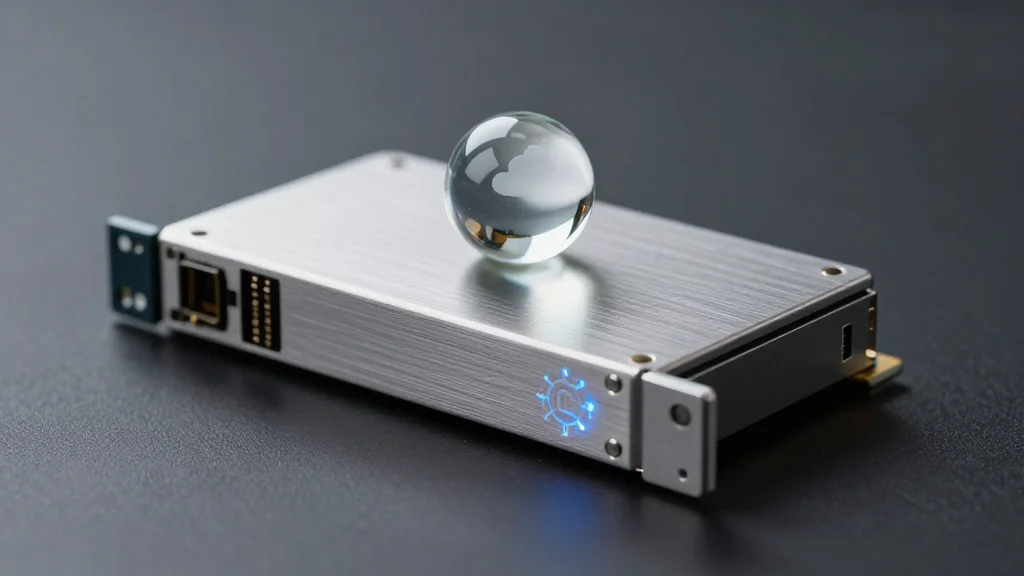
Why Postgres Wants NVMe on the Hot Path, and S3 Everywhere Else
PostgreSQL’s transaction commit path depends on ultra‑low‑latency storage, making enterprise‑grade NVMe drives essential for microsecond‑scale WAL flushes. By contrast, object storage such as Amazon S3, while cheap and durable, adds millisecond‑level delays that cripple hot‑path performance. Modern managed Postgres offerings...

As Agentic AI Explodes, Amazon Doubles Down on MCP
Amazon Web Services is deepening its involvement with the Model Context Protocol (MCP), the open‑source standard that links AI agents to tools and data. MCP, launched by Anthropic in late 2024 and now governed by the Linux Foundation, has become...

Hugging Face Pushes Into “Computer Use” With HoloTab Agent that Works Through Your Browser
Hugging Face unveiled HoloTab, a Chrome extension that embeds its new Holo3-35B-A3B model to perform “computer use” tasks directly in the browser. The agent can click, type and navigate web pages, handling multi-step workflows without any site-specific integration. HoloTab’s performance...

Is Your Internal Platform Ready to Keep Up With AI-Accelerated Development?
AI‑powered coding assistants are pushing developers to ship code faster than traditional Continuous Delivery pipelines can reliably serve. As a result, platform engineers are inundated with ad‑hoc requests, manual handoffs, and inconsistent delivery across teams. The New Stack promotes an upcoming...

OpenAI’s Agents SDK Separates the Harness From the Compute
OpenAI unveiled a major upgrade to its Agents SDK, introducing sandboxed workspaces that separate the agent harness from the compute layer. The new toolbox lets developers run agents in containers or virtual machines from providers such as Cloudflare, Modal, Vercel,...

Claude Code and the Rise of Personal Software
Anthropic’s Claude Code, an agentic AI coding assistant, has surged to $2.5 billion in annualized revenue by February 2026, more than doubling its November‑2025 figure. The tool lets non‑technical staff in marketing, finance and other functions describe desired functionality and receive fully...

What Engineering Leaders Get Wrong About Data Stack Consolidation
IBM's $11 billion acquisition of Confluent underscores a growing trend of open‑source data tools being folded into large vendor platforms. The article warns that such consolidation creates hidden architectural debt, eroding engineering autonomy and long‑term portability. It urges leaders to evaluate...

Why Observability Platforms Are Becoming AI Auditing Tools
Enterprises are moving AI workloads from labs to production, exposing gaps in traditional monitoring. Observability platforms are evolving into AI auditing tools that trace prompts, LLM reasoning, token usage, and final decisions. HPE OpsRamp exemplifies this shift, offering an "AI...

Anthropic’s Redesigned Claude Code Desktop App Lets You Burn Through Tokens Even Faster
Anthropic unveiled a major redesign of its Claude Code desktop app, adding a built‑in terminal and a flexible pane system for managing multiple coding agents. The update introduces side‑chat windows that let users ask questions without halting an active session,...

Spring Creator Wants Java’s Type System to Tame Agentic AI
Rod Johnson, creator of the Spring Framework, unveiled Embabel, an Apache‑licensed agentic AI framework for the JVM, at Microsoft’s JDConf. Built on Spring Boot and written in Kotlin, Embabel leverages Java’s strong type system and GOAP planning to deliver deterministic,...

Claude Mythos Preview Completes Full Cyberattack Simulation for the First Time
Anthropic’s Claude Mythos Preview, released in early April, has become the first AI model to autonomously execute a full 32‑step corporate network takeover in a controlled simulation. In tests conducted by the UK AI Security Institute, the model completed an...

Can You Make Kubernetes Invisible? Here’s Why AWS Is on a Mission to Do It.
AWS Elastic Kubernetes Service principal product manager Jesse Butler outlined a mission to make Kubernetes effectively invisible to developers. He highlighted that roughly 80% of enterprises now run Kubernetes in production, yet operational complexity remains a barrier. Butler showcased AWS‑backed...

From Clobbered Drafts to Real-Time Sync
Suga’s early canvas used a naive last‑write‑wins model that repeatedly clobbered teammates’ drafts, prompting a shift to real‑time synchronization. The team adopted Rocicorp’s Zero sync engine, which gives each client a local SQLite cache that syncs with a PostgreSQL backend...

Cursor, Claude Code, and Codex Are Merging Into One AI Coding Stack Nobody Planned
AI coding tools are coalescing into a composable stack rather than consolidating around a single winner. In early April 2026 Cursor released version 3 with an Agents Window that orchestrates parallel AI agents, OpenAI published a Codex plugin that runs inside...

HPA-Managed Workloads: Why the Obvious Waste Stays
Kubernetes teams often overprovision resources for HPA‑managed services, especially model‑serving workloads, because request settings double as scaling triggers. While the waste is visible, changing requests risks altering scaling behavior, leading teams to accept excess headroom for predictability. Standard rightsizing loops...

Karpathy Says Developers Have ‘AI Psychosis.’ Everyone Else Is Next.
Andrej Karpathy warned that developers are undergoing an "AI Psychosis" as frontier models like OpenAI Codex and Anthropic Claude Code solve programming problems in minutes that once took weeks. The same agentic capabilities are now spilling into broader enterprise functions...

Why Data Governance Is the Secret to AI Agent Success
The article warns that AI agents can magnify weak DevOps and data‑governance practices, turning minor flaws into large‑scale risks. While 70% of IT leaders believe strong DevOps aids AI adoption, only 39% have automated audit trails, exposing a governance gap....

Replit Taps RevenueCat to Help Vibe-Coders Make Money
Replit has integrated RevenueCat’s subscription infrastructure directly into its AI‑driven coding platform, allowing users to add monetization features with simple natural‑language prompts. The partnership brings RevenueCat’s billing, pricing analytics, and compliance tools—used by over 80,000 apps handling roughly $1 billion in...

Anthropic Takes Claude Cowork Out of Preview and Straight Into the Enterprise
Anthropic has moved Claude Cowork from preview to general availability, embedding the AI‑driven task assistant into all paid Claude plans—Pro, Team, and Enterprise. The service lets non‑technical users delegate workflow‑heavy tasks such as document editing, spreadsheet updates, and meeting summarization to...

AWS Wants to Register Your AI Agents
Amazon Web Services unveiled the AWS Agent Registry, a service that lets enterprises catalog, discover, and reuse AI agents, tools, and skills across any cloud or on‑premise environment. The registry is part of the broader AgentCore framework and captures metadata...

The Next Stages of AI Conformance in the Cloud-Native, Open-Source World
The Cloud Native Computing Foundation launched its Kubernetes AI conformance program to standardize how AI and machine‑learning workloads run on Kubernetes clusters. By certifying that clusters can reliably expose GPUs, TPUs and support dynamic resource allocation, the program aims to...

Niantic Spatial Wants to Map the 80% of the Economy AI Can’t See
Niantic Spatial unveiled Scaniverse for businesses, a self‑service platform that turns smartphone or 360° camera captures into detailed 3D maps. The service feeds into the company’s VPS 2.0 visual positioning system, delivering near‑centimeter accuracy even where GPS is unreliable. Executive chairman...

In the AI Age, Java Is More Relevant Than Ever
Java remains the backbone of enterprise software, powering ERPs, e‑commerce, analytics and logistics. New AI frameworks such as Spring AI, LangChain4j and embabel now give Java first‑class access to large language models, turning the JVM into a cost‑efficient AI runtime. While...

With Claude Managed Agents, Anthropic Wants to Run Your AI Agents for You
Anthropic launched the public beta of Claude Managed Agents, a cloud service that lets businesses build, deploy, and run AI agents without managing underlying infrastructure. Users define agents via natural language or YAML, set guardrails, and rely on Anthropic’s sandboxed...

Microsoft Wants to Make Service Mesh Invisible
Microsoft unveiled Azure Kubernetes Application Network (App Net) at KubeCon EU, a fully managed service built on Istio’s ambient mode that deliberately hides the term “service mesh.” The platform provides default mutual TLS, per‑node Rust proxies, and waypoint proxies that...

Open-Source Leaders Question Whether Meta’s Alexandr Wang Will Truly Give Away Its AI Models
Meta announced that chief AI officer Alexandr Wang will open‑source a new suite of AI models, adding to the company’s long‑standing open‑source pedigree that includes Llama, PyTorch and React. The move follows mixed signals from Meta’s recent “openish” stance and...

Sam Altman Promised Billions for AI Safety. Here’s What OpenAI Actually Spent.
The New Yorker’s 18‑month investigation reveals a stark gap between Sam Altman’s public pledge to spend billions on AI safety and OpenAI’s actual allocation, which was limited to a fraction of its compute resources. While Altman once warned about hallucinations,...

Amazon S3 Files Gives the World’s Biggest Object Store a File System
Amazon Web Services introduced S3 Files, a new feature that exposes Amazon S3 buckets as native NFS v4.1 file systems. The service runs on top of Amazon Elastic File System, delivering sub‑millisecond latency and full POSIX‑like operations such as file locking...

Anthropic’s Claude Mythos Is Now Available, but Not for You
Anthropic has unveiled Claude Mythos Preview, a frontier large‑language model offered exclusively to a select group of partners through Project Glasswing. The model outperforms Anthropic’s Opus on the CyberGym benchmark, scoring 83.1% versus 66.6%, and has already identified thousands of...

Model Flop Utilization Is the Metric Aria Networks Says Will Define the AI Infrastructure Era
Aria Networks unveiled its “Network that Thinks” initiative, promoting Model Flop Utilization (MFU) as the defining metric for AI‑infrastructure efficiency. The solution combines a hardened SONiC‑based operating system, ultra‑fine telemetry and intelligent agents that operate across the data, control and...