
Week in Review
The week featured sweeping legal and regulatory actions, beginning with the U.S. Supreme Court ruling that Louisiana’s new electoral map is an unconstitutional racial gerrymander. A federal appeals court halted the Trump administration’s policy of mandatory detention without bond for most deportable immigrants, while the FCC ordered ABC to submit early broadcast‑license renewals amid diversity concerns. In health policy, the FDA launched priority vouchers for psychedelic‑based treatments and real‑time clinical trials, and SAMHSA barred federal funds for fentanyl test strips. Additional moves included the Trump administration firing the entire National Science Board and the EPA issuing new PFAS disposal guidance.

The Hidden Debate Behind a €120 Million Fine
The European Commission imposed a €120 million (≈ $130 million) fine on X in December 2025 for breaching the Digital Services Act’s transparency rules, marking the first DSA penalty. U.S. officials, including Secretary of State Marco Rubio, denounced the sanction as censorship of...

Regulating Digital Surveillance of Workers
A recent breach exposed 21 million screenshots of employee computers, revealing passwords, emails and other sensitive data. The leak underscores the rapid expansion of digital surveillance tools—ranging from automatic screen captures to wearable motion trackers—used by employers. Scholars Pauline Kim and...

Shooting a Gnat With an Unconstitutional Elephant Gun
The U.S. House Energy and Commerce Committee has marked up the App Store Accountability Act, which would require major app stores to implement mandatory age verification and parental consent for minors. The bill shifts liability for age‑verification failures from individual...

Congress Stalls, Xylazine Spreads
Xylazine, a veterinary sedative, remains unscheduled under the Controlled Substances Act, allowing unrestricted importation despite its presence in roughly 25% of the U.S. fentanyl supply and its link to thousands of preventable amputations each year. The DEA has detected the...

Week in Review
President Trump signed an executive order allocating $50 million to accelerate state‑led psychedelic research and to streamline FDA, DEA and DOJ reviews of ibogaine‑based therapies. A federal appeals court vacated a halt on the “Alligator Alcatraz” immigration detention center, while a...
Consequences of the SAVE America Act
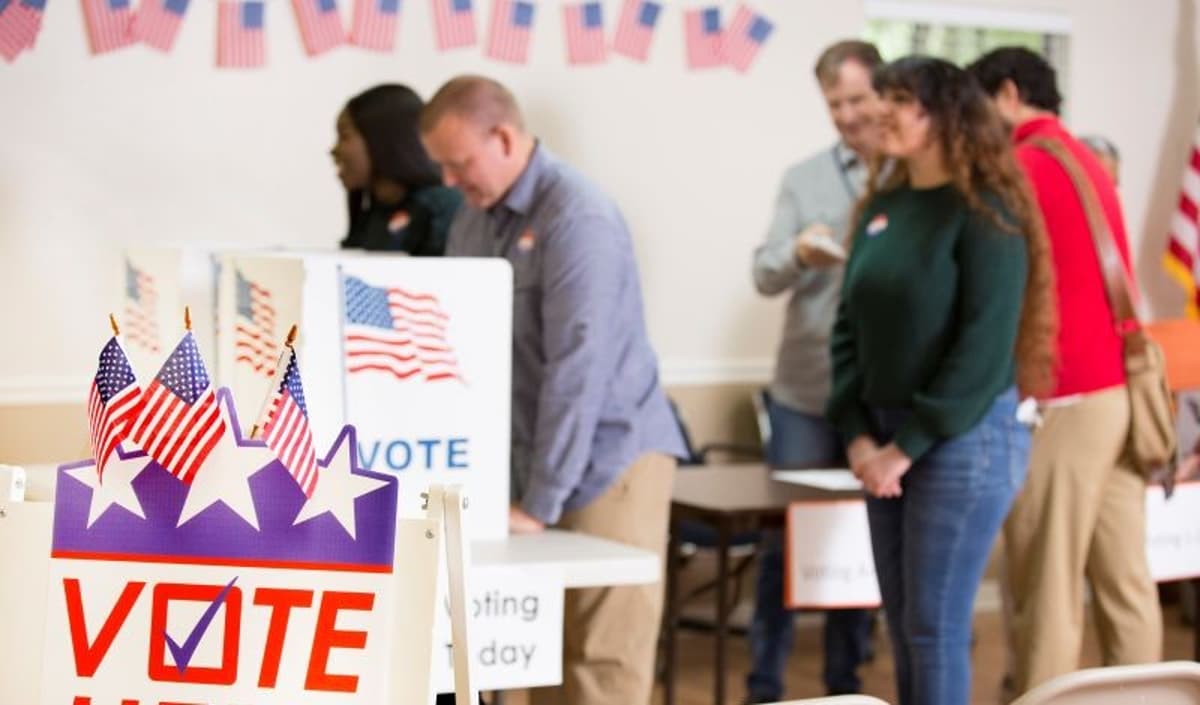
The SAVE America Act, passed by the House in February 2026, expands the earlier SAVE Act by demanding documentary proof of U.S. citizenship for anyone registering to vote or changing registration. The bill would require passports, certified birth certificates, or...
History, Ambassadors, and Birthright Citizenship
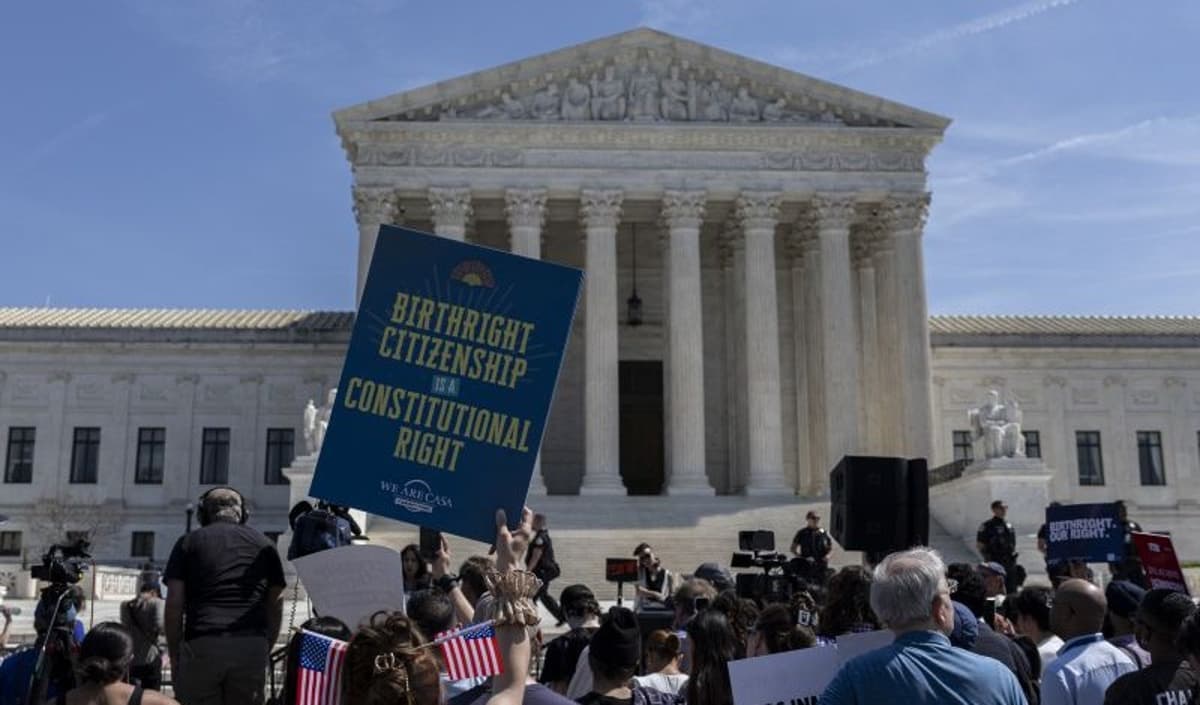
President Donald Trump’s executive order reclassifies children born in the United States to undocumented parents as non‑citizens, directly challenging the long‑standing interpretation of birthright citizenship. The move has prompted the Supreme Court case Trump v. Barbara, which will decide whether...

Ending EPA’s Endangerment Finding Won’t End Climate Change Regulation
The EPA announced it will rescind its 2009 endangerment finding, arguing the Clean Air Act only authorizes regulation of local and regional emissions, not global greenhouse‑gas impacts. The agency’s move revives a legal debate that the Supreme Court already settled...

Multiracial Democracy and Civil Rights Enforcement
Columbia Law professor Olatunde Johnson argues that a true multiracial democracy depends on robust civil‑rights enforcement through administrative agencies. She highlights how statutes such as the Fair Housing Act’s AFFH provision and Title VI of the Civil Rights Act were designed...

K-Pop’s Global Rise Tests Labor Protections
South Korea’s K‑pop industry, now a multibillion‑dollar global export, is confronting intensified scrutiny over its labor practices. New standard contracts that took effect on Jan 1 2026 aim to improve profit‑sharing transparency, mental‑health safeguards, and protections for minor trainees. Yet agencies continue...

Week in Review
A New York jury found Live Nation and Ticketmaster liable for antitrust violations, determining they overcharged concertgoers by $1.72 per ticket at major venues. Maine’s legislature approved an 18‑month ban on large data centers, the first such statewide prohibition, while...

Uncovering Hidden AI in Commercial Artwork
Artificial intelligence is increasingly used to create commercial artwork, yet producers often hide this fact. Professor Jacob Noti-Victor argues that financial incentives and current copyright rules encourage non‑disclosure, depriving consumers of informed choices. He documents the ethical and market harms...

Protecting U.S. Research From Foreign Influence
The U.S. government has intensified rules to protect federally funded research from foreign influence, especially programs linked to China. Beginning with a 2021 Trump presidential memorandum, both Trump and Biden administrations mandated disclosures of foreign ties, cybersecurity safeguards, travel‑security protocols,...

A Closer Look at U.S. Electricity Rate Trends
A new Charles River Associates report, using five years of EIA and FERC data, shows that national retail electricity price growth is driven largely by outliers in California and the Northeast. While those regions experienced sharp spikes—California due to $40 billion...

The Right to Eat in Prison
A recent Justice Department inspection of six federal prisons uncovered mold, insect infestations, broken freezers and unsecured knives, highlighting severe food‑service deficiencies. Because Congress has never set specific nutritional standards, the Federal Bureau of Prisons relies on internal manuals and...

A Postcard From Abroad on Regulatory Simplification
The OECD’s 2025 “Simplifying for Success” symposium revealed that despite widespread adoption of regulatory impact analysis and new simplification measures, businesses across 28 member states still report higher compliance costs, frequent rule changes, and poor inter‑agency coordination. Governments have introduced...

Fixing the Nuts-and-Bolts of the Economy
The article highlights the impact of micro‑level process reforms, using India's voluntary company liquidation overhaul as a case study. By mapping and streamlining administrative steps, the average closure time dropped from 499 days in 2021‑22 to just 60 days by...

Regulatory Simplification as a Strategic Priority
Italy faces a massive regulatory burden, with businesses spending roughly $63‑$88 billion annually on paperwork and delays costing the economy about $247 billion each year. In 2025 the government approved a sweeping simplification law that repealed 30,709 obsolete statutes—about 28% of the...

Regulatory Simplification Around the Globe
The OECD’s "Simplifying for Success" symposium highlighted that 90% of surveyed businesses and 72% of government leaders view regulation as excessively burdensome. Participants cited layered rules and rapid tech change as drivers of complexity. Countries such as Argentina and Italy...

The Evolution of Environmental Regulation
In an interview with The Regulatory Review, Georgetown law professor Lisa Heinzerling examined the legal architecture shaping U.S. climate policy, from the 2007 Supreme Court ruling that affirmed the EPA’s authority to regulate greenhouse gases under the Clean Air Act...
Week in Review
This week saw a flurry of federal actions spanning environmental, election and consumer‑protection policy. The Endangered Species Committee granted Gulf of Mexico oil producers an exemption from the Endangered Species Act, while President Trump issued an executive order tightening absentee‑ballot...

Regulating Payment of Participant Data in Clinical Trials
A team of scholars led by Steve Calandrillo proposes that FDA and IRBs adopt fair‑market‑value (FMV) payments for the data participants generate in clinical trials. Currently, participants receive modest compensation—about $4,000 per year—solely for trial involvement, not for the valuable...

Effective AI Oversight Through Proof Drills
Effective AI oversight now hinges on the ability to reconstruct a single AI‑influenced decision with verifiable records. The EU AI Act makes automatic event logging a compliance prerequisite for high‑risk systems, but merely having policies is insufficient. A "proof drill"—a...

Managing Uncertainty in Benefit-Cost Analysis
Since the Reagan era, federal agencies have relied on benefit‑cost analysis to justify regulations, but a 2025 OMB report shows that over a third of major non‑transfer rules still lack quantified costs or benefits. Scholars argue this gap fuels both...

Rescheduling Cannabis Under the Controlled Substances Act
President Donald J. Trump issued an executive order directing the Attorney General to initiate rulemaking that would move marijuana from Schedule I to Schedule III under the Controlled Substances Act. The order follows a 2023 recommendation from the Department of Health and...

A Year at the Justice Department’s Antitrust Division
In its 2025 fiscal year, the DOJ Antitrust Division pursued a series of high‑profile actions that reshaped competition policy. The division secured settlements in the RealPage and Constellation‑Calpine cases, forced Google to share search data, and readied a Live Nation‑Ticketmaster...

Administrative Law and AI’s Overconfidence
The article warns that large language models like ChatGPT often deliver confident, plausible‑sounding answers that can be factually wrong, likening them to overconfident taxi drivers. It explains that under the Administrative Procedure Act, courts will reject agency actions that rely...

Evaluating the Impact of Federal Student Loan Policy
Federal student loan debt now exceeds $1.8 trillion, with one in six U.S. adults carrying balances and a 10 % delinquency rate projected for 2025. The Trump administration’s One Big Beautiful Bill Act will cap borrowing amounts and eliminate the Grad PLUS program, effectively ending the...
Week in Review
This week’s federal actions spanned health, environment and constitutional law. A U.S. District Judge halted the CDC’s plan to cut child vaccine recommendations, deeming the process arbitrary, while another judge struck down Arkansas’s Ten Commandments classroom display law as a...

Regulating City Finances
Michael Francus proposes that states create a regulatory framework for city finances that prioritizes stable revenue sources and limits debt, mirroring the safeguards used by counties. He highlights county practices such as reliance on property taxes, state aid, debt caps,...

Bitcoin’s Political Orphanhood
The 2025 GENIUS Act created a federal framework for dollar‑pegged stablecoins, granting them regulatory approval and a clear compliance perimeter. By requiring licensed issuers and 1:1 reserve backing, the law effectively excluded Bitcoin from the U.S. payment infrastructure. On‑chain data...

Stress-Testing Proposals to Add Autism to the VICP
U.S. Health and Human Services Secretary Robert F. Kennedy Jr. is steering a push to expand the National Vaccine Injury Compensation Program (VICP) to cover autism spectrum disorder claims. Recent actions include a proposal to amend the VICP Injury Table,...

The Three Great Lies About Climate Change
The article debunks three common myths about climate change: that it is not happening, that mitigation is quick, easy and cheap, and that the National Environmental Policy Act (NEPA) is the primary barrier to essential infrastructure projects. It cites recent...
Week in Review
The week saw a surge of lawsuits targeting the Trump administration, including Anthropic’s dual suits over alleged unlawful sanctions, Liberty Justice Center’s challenge to a new 10% global tariff, and the DNC’s FOIA suit against multiple federal agencies. Courts also...

Tearing Down the Paper Ceiling
AI-driven skill assessments could replace degree requirements, offering faster, merit‑based hiring. The article proposes a Department of Labor challenge to create portable, job‑specific AI tests for high‑demand roles. Successful tools would lower hiring costs, improve labor mobility, and reduce reliance...

The EU’s Transformative Short-Term Rental Regulation
The EU Short‑Term Rental Regulation (EUSTRR) takes effect in May, creating a unified registration system and mandatory data‑sharing protocol for an estimated four million short‑term rental units across all 27 member states. While substantive rules such as caps or quotas...

The Paradoxes of the European Union’s AI Regulation
The European Union’s AI Act adopts a rights‑driven, human‑centric regulatory model, aiming to protect fundamental rights while curbing the power of large tech firms. Critics argue the EU has used regulation as a substitute for a coherent AI investment strategy,...

Regulating AI Washing
Federal regulators, led by the SEC, are cracking down on “AI washing,” where firms exaggerate or falsify AI capabilities in investor communications. Recent enforcement actions cite violations of the Securities Act of 1933, the Exchange Act of 1934, and Rule 10b‑5...
Starving the Watchdog
Congress has stripped more than $40 billion of IRS funding authorized by the Inflation Reduction Act, threatening the agency’s capacity to combat cross‑border financial crime. IRS Criminal Investigation referrals fell to a 40‑year low in FY2024, and its special‑agent force has...

Revisiting the Nature of Regulation
The article argues that regulator‑regulatee agreements are not merely a peripheral tool but the dominant paradigm shaping modern regulation. Across sectors—from automobile safety to artificial intelligence and data‑privacy settlements—agreements precede, accompany, or replace traditional command‑and‑control rules. This perspective blurs the...