
Ask These 3 Questions About Your Learning Space Technology Budget
Colleges are pouring capital into learning‑space technology—AV systems, hybrid tools, and video‑enabled lecture halls—to boost student experience and faculty productivity. However, many projects falter because decision‑makers skip critical planning questions before finalizing budgets. The article outlines three concise queries: whether the purchase is an integrated system or a collection of products, if the physical infrastructure supports the technology, and who will own ongoing support and total cost of ownership. Answering these early can prevent costly retrofits and operational headaches.

AI Is Here. You Can Stop Investing in Two Futures
Higher education is at a tipping point where incremental digital upgrades give way to a full AI‑driven transformation. Campus leaders are still hedging with half‑measures, maintaining legacy systems while dabbling in pilot AI projects, a strategy the author argues is...

How This University Reduced Data Siloes to Maximize a Chatbot’s Potential
Texas A&M University System launched an AI‑driven student engagement platform that uses a Mainstay chatbot to guide Pell‑Grant‑eligible students through financial aid, registration, counseling and other services. The rollout required a university‑wide effort to break down data silos across IT,...

New Research Tracks AI’s Early Footprint on Graduate Employment
Anthropic researchers found that hiring of 22‑ to 25‑year‑old graduates in AI‑disrupted occupations fell about 14% after ChatGPT’s launch, even as overall unemployment in those roles stayed flat. Their March 2026 paper shows AI is currently applied to roughly one‑third...

Trump Administration Delays Rule Aimed at Improving Disability Access in Schools
The U.S. Department of Justice has postponed the enforcement of new digital accessibility rules that update the Americans with Disabilities Act for public schools and colleges. The original deadline, set for this Friday, is now extended to April 26, 2027 for institutions...

Student AI Use Is Now Frequent Even when There Are Restrictions
A Gallup‑Lumina poll of 4,000 college students shows that AI tools like ChatGPT, Microsoft Copilot and Google Gemini are used daily or weekly by a clear majority, even as many campuses discourage or ban them. Despite 42% of schools discouraging...

How to Conquer the Efficiency Tax in Higher Ed Marketing
Higher education marketers are chasing tighter targeting to prove ad spend efficiency, but this creates an "efficiency tax"—higher media costs with diminishing incremental impact. As audiences shrink, institutions recycle the same prospects across channels, inflating frequency without expanding reach. The...
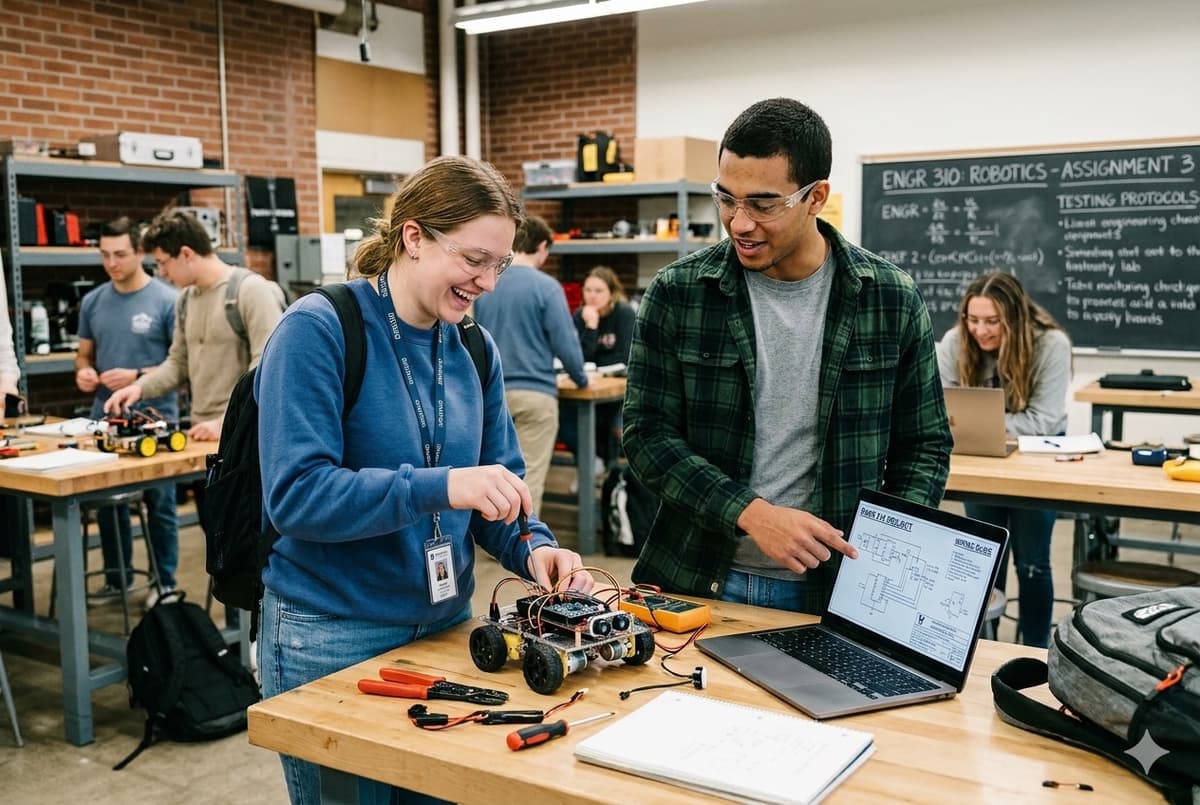
Internship Bottleneck: How to Break the Work Experience Catch-22
College students face a persistent Catch‑22: experience is required for jobs, yet jobs provide the experience. Each year, over eight million U.S. undergraduates chase internships, but only 3.6 million secure one, leaving many underemployed shortly after graduation. While internships boost post‑college...

New Earnings Test Moves One Step Closer to Reality
The U.S. Department of Education has proposed a rule that would strip federal loan eligibility from undergraduate programs that do not produce higher earnings than a typical high school graduate, and require graduate programs to out‑earn comparable undergraduate offerings. The...
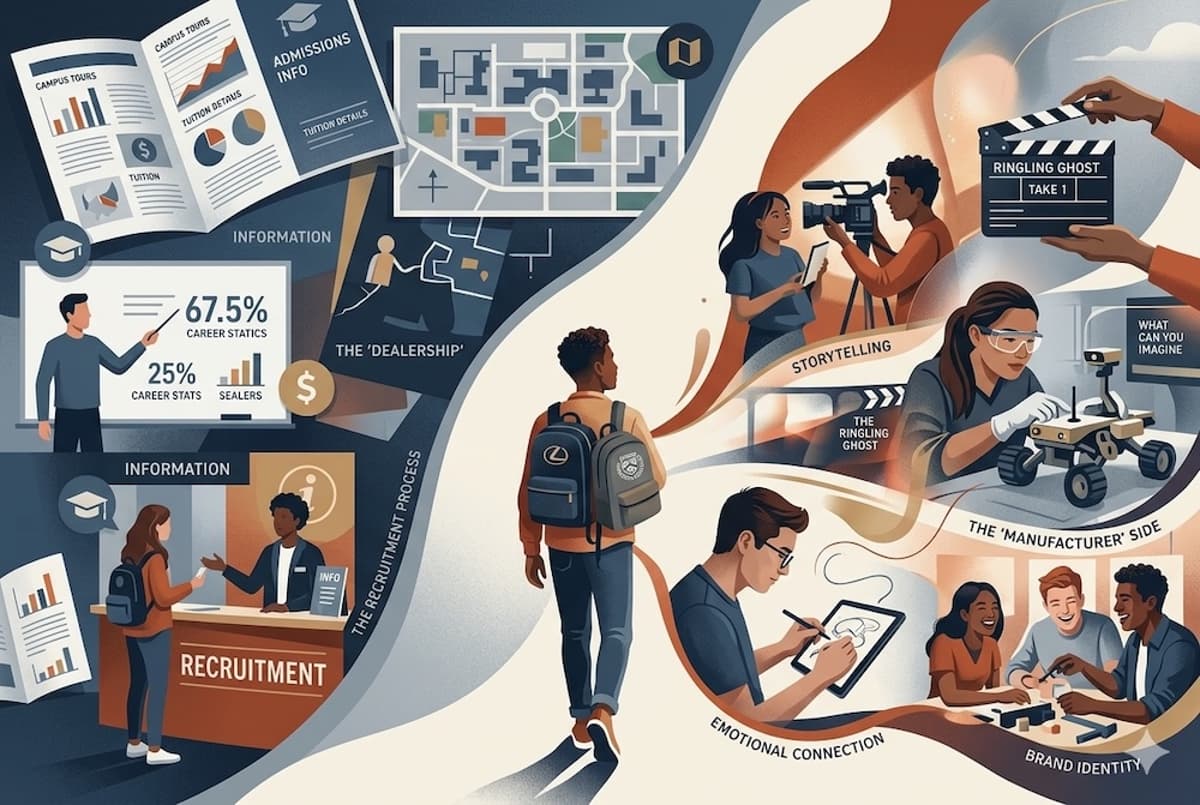
Why Brand Affinity Is More Powerful than Admissions Marketing
The article argues that higher‑education institutions must prioritize brand affinity over traditional admissions marketing. While colleges excel at presenting facts once prospects enter the funnel, they often neglect the emotional storytelling that shapes perception beforehand. Examples like Purdue’s kinetic "What...

College Philanthropy Grew to an Estimated $78 Billion Last Year
Philanthropic gifts to American colleges and universities reached an estimated $78 billion in fiscal year 2025, according to the Council for Advancement and Support of Education (CASE) survey. The figure represents a 4 percent increase over the previous year and marks the...
As AI Pushes Students to Reconsider Majors, Universities Struggle to Adapt
A Gallup‑Lumina 2026 survey shows 47% of college students have seriously considered switching majors because of AI, and 16% have already changed fields. Alex Kotran, CEO of the AI Education Project, says universities are failing to give students meaningful AI‑related...

Why Your Campus Needs to Fill This New Post
Universities are moving beyond traditional project‑management offices by creating a University Transformation Office (UTO) that reports directly to the president. Led by a chief transformation officer with corporate experience, the UTO aligns institutional priorities, accelerates decision‑making and turns strategic intent...

One New Thing: Colleges Use AI to Address Civic Challenges
Think tank New America urges colleges to move beyond internal AI use and partner with civic groups and government. Its recent reports, AI Lab Next Door and Making AI Work for the Public, showcase projects like Tulane’s AI‑driven court database...

Students Are Becoming AI Fluent. Universities Aren’t.
Universities are grappling with artificial intelligence as a fragmented policy issue, even though AI is reshaping teaching, recruitment, risk assessment, and decision‑making across campuses. Students, meanwhile, are rapidly moving from basic AI awareness to true fluency, using AI as a...

Declines in Tuition Revenue Signal Budget Risks
A SHEEO FY2025 report shows state funding for public colleges rose 3.4% in inflation‑adjusted dollars to $149.2 billion, but per‑student appropriations fell 1% to $12,082 as enrollment grew 3.6% to 10.8 million. Net tuition revenue per full‑time equivalent dropped 3.5% to $7,459,...

Why William Woods Turned to a Proven K12 Veteran for Its Next Chapter
Sarah Wisdom, a four‑time alumna and former superintendent of the New Bloomfield School District, will become president of William Woods University in Missouri this summer. Her two‑decade K‑12 leadership gives her deep insight into the regional student pipeline and operational...

College Students Are Writing with AI—But a Pilot Study Finds They’re Not Simply Letting It Write for Them
A pilot study at Kennesaw State University used think‑aloud protocols to observe how undergraduate writers interact with generative AI tools during composition. Researchers found students are not merely outsourcing entire drafts to AI; they actively edit, prompt, and make strategic...

Web Accessibility: The 2026 Deadline You Can’t Ignore
State and local governments must bring their public‑facing digital properties into compliance with the Department of Justice’s WCAG 2.1 Level AA standards by April 24, 2026 if they serve 50,000 or more residents, with a later deadline of April 26, 2027 for smaller entities. The mandate,...

Kansas Hopes to Lure Law Students to Rural Areas by Offering to Pay Part of Their Tuition
Kansas lawmakers introduced House Bill 2595, the Attorney Training for Rural Kansas Act, to combat a chronic shortage of rural lawyers. The bill creates two incentive programs: a tuition stipend for law students who pledge to practice in rural communities...

How to Be Ready for Whatever AI Becomes on Campus
Grand Canyon University has crafted an AI strategic plan that translates its long‑standing educational philosophy into concrete AI decisions, rather than chasing the latest tools. The plan rests on four pillars—operational efficiency, academic support, AI literacy, and security and integrity—each...

How Smart Buildings Improve Safety and Lift up Staff
Campus facilities teams are grappling with aging buildings and tighter staffing, prompting a shift toward smart building technology. By embedding IoT sensors and AI analytics, institutions gain real‑time visibility into HVAC, lighting, water and security systems. This data enables condition‑based...

What Is ‘Micromobility,’ and How Can Campuses Get It Right?
Campus corridors are increasingly populated by e‑bikes, e‑scooters, and other micromobility devices, reshaping student travel patterns. While these low‑speed vehicles offer affordable, time‑saving alternatives to walking or driving, most universities lack coordinated policies and dedicated infrastructure. Institutions that have acted...

Why Strategic Budgeting Is Crucial in an Era of Uncertainty
Colleges face a perfect storm of demographic decline, volatile public funding, rising costs and heightened accountability, making the FY2027 budget a strategic imperative rather than a routine exercise. The article argues that budgeting must become a central governance function that...

Why Sorority Video Recruitment Risks Members’ Digital Identities
Sorority recruitment has shifted toward self‑submitted videos, a trend amplified by platforms like RushTok. These polished clips capture voice, facial features and personal details, creating biometric datasets that AI firms and malicious actors can exploit. In the era of generative...

Microcredentials Get First-Ever Endorsement From Accreditor
The Higher Learning Commission (HLC) has formally endorsed four third‑party providers of microcredentials, marking the first accreditor‑backed quality seal for short‑term certificates and digital badges. With over a million microcredential offerings nationwide, the market has grown faster than regulatory oversight,...

Why Universities Should Anchor State Quantum Computing Initiatives
Universities are urged to become anchors of state quantum computing initiatives, mirroring their early role in the AI boom. As quantum hardware moves from research labs to operational systems, federal agencies and private firms are investing heavily. The article argues...

Biden’s SAVE Plan for Student Loans Is Officially Dead. Here’s What Experts Suggest Now
A federal district court has struck down the Saving on a Valuable Education (SAVE) income‑driven repayment plan, effectively ending the program that offered low monthly payments for millions of student‑loan borrowers. The rule was challenged by Republican attorneys general, and...

Ransomware Data Breaches Soar in the U.S., Affecting K12 and Higher Ed Privacy
Ransomware attacks on educational institutions reached 251 incidents in 2025, with the United States accounting for 130 of those events. American schools and universities suffered 3.89 million compromised records, representing over 98% of all stolen data in the sector, while global...

Portland Community College Faculty and Staff Commence Historic Strike over Wages
Hundreds of faculty, staff, and students gathered at Portland Community College campuses to launch a historic strike over wages. Demonstrators at four sites, including the Cascade campus, carried signs demanding a living wage and cost‑of‑living adjustments. The strike follows nearly...

CU Faculty, Staff and Students Push Back Against University-Controlled AI Rollout
The University of Colorado signed a three‑year, $2 million‑per‑year agreement to deploy OpenAI’s ChatGPT Edu to more than 100,000 students, faculty and staff, with the rollout slated for March 31. Hundreds of faculty, staff and students have signed a dissent letter, arguing...

The Future of Enrollment: AI, Trust, and the Next Era of Student Engagement
University Business announces a 30‑minute Ed Talk on April 7, 2026, focusing on AI‑enabled enrollment for adult learners. Speakers Brian Hartnack and Jill Maksymec will explore how immediacy, transparency, and continuity reshape the traditional enrollment funnel into a connected, omnichannel experience. The...

How Universities Can Close a Critical Healthcare Gap
The United States faces a critical shortage of physician assistants, with only 56 per 100,000 residents nationally and just 36 in California. Universities are stepping in by partnering with regional health systems to create pipeline programs that train PAs directly...

AI Broke the College Degree: Why Higher Education Matters More than Ever
Patrick Dempsey, co‑CEO of Pend AI, illustrated AI’s classroom reach during a Feb. 18 keynote, using Gemini AI to generate answers and Bubble AI to assemble a live quiz. He highlighted that students now bring AI agents into lectures, allowing the...

AI’s Mission Evolves as Adoptions Spreads
A recent Ellucian survey of 779 college administrators shows AI is becoming mainstream in higher education, with two‑thirds reporting implementation across business units and 43% embedding AI in strategic plans. Over 60% of institutions are already funding AI projects, primarily...

Why Fundraising Is Now More Crucial—And Risky—For Colleges Today
Colleges face intensified federal oversight of foreign gifts as data reveal billions flowing from nations like China and Qatar, while shrinking federal research dollars force institutions to lean heavily on private donors. High‑profile scandals—such as Bard College’s probe into ties...
How Schools Can Keep up as AI Changes College Search
Nearly 80% of prospective students now rely on Google’s AI-generated overviews for degree information, often bypassing university websites entirely. This shift forces colleges to rethink digital visibility, ensuring that AI tools surface accurate, institution‑specific data. Answer Engine Optimization (AEO) and...
How Dartmouth Is Rolling Out AI on Campus Faster than Other Colleges
Dartmouth College appointed an English professor as special advisor to the provost on artificial intelligence, tasking him with a campus‑wide temperature check. His report identified lingering faculty resistance but also outlined 22 actionable recommendations for AI integration. The plan includes...

A+ Connectivity: Why Smart Campuses Need the Right Foundation
Universities are shifting to data‑intensive research, AI, and immersive learning, demanding campus‑wide, high‑performance connectivity. Legacy copper LANs struggle with bandwidth, latency, and scalability, forcing costly, disruptive upgrades. Optical LAN (OLAN) leverages fiber to deliver 10‑25 Gbps today and a clear path...