Amazon and Walmart Ramp Up $1 Trillion Rural U.S. Retail War

Companies Mentioned

Why It Matters
The race for rural America represents a seismic shift in retail strategy. For decades, low population density made these markets unattractive, but rising incomes and remote‑work‑driven migration have turned them into a $1 trillion revenue frontier. Success in this arena could unlock new growth streams for Amazon and Walmart, while also redefining last‑mile logistics standards across the industry. If either company secures a dominant share, it could force a reallocation of capital from urban fulfillment centers to rural micro‑hubs, accelerate the adoption of drone and AI technologies, and pressure traditional carriers to innovate or lose market relevance. The competition also raises questions about labor, infrastructure investment, and the environmental impact of intensified delivery activity in remote regions.
Key Takeaways
- •Amazon invested $4 billion to extend same‑day delivery to 4,000 rural towns.
- •Walmart has stores within 10 miles of 90% of Americans; 45% of Supercenters serve towns under 20,000.
- •Rural U.S. consumer spending is estimated at $1 trillion annually.
- •Median household income in rural counties rose 43% to about $60,000 since 2010.
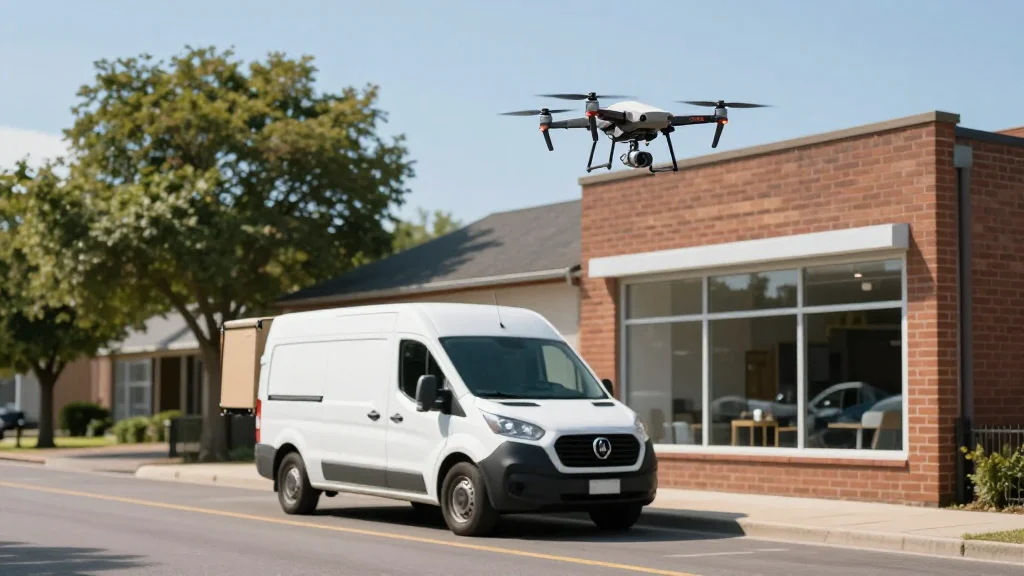
- •Both retailers are testing drone deliveries; Walmart plans pilots in five states by 2026.
Pulse Analysis
Amazon’s strategy hinges on data‑driven micro‑fulfillment, a model that reduces inventory holding costs while delivering speed previously reserved for metropolitan hubs. By embedding AI into demand forecasting, Amazon can pre‑position stock in tiny markets, turning what used to be a cost center into a profit generator. This approach mirrors its earlier success in urban micro‑hubs, suggesting a scalable template for rural expansion.
Walmart’s advantage lies in its physical footprint, which provides a ready‑made distribution network and a trusted brand in small towns. The drone initiative is less about technology for its own sake and more about overcoming the last‑mile cost curve that has historically eroded margins in low‑density areas. If Walmart can prove drones lower per‑package expenses, it could set a new industry benchmark, forcing competitors to adopt similar aerial solutions.
The broader implication is a potential re‑balancing of retail power away from legacy carriers and toward the two giants. As FedEx, UPS and the USPS retreat from unprofitable routes, Amazon and Walmart could capture not just the consumer spend but also the logistics market share. This could accelerate consolidation in the delivery sector, spur regulatory scrutiny over market dominance, and reshape the expectations of rural consumers who will increasingly demand urban‑level service standards. The next few years will reveal whether the $1 trillion rural prize is a fleeting opportunity or a lasting transformation of the American retail landscape.
Amazon and Walmart Ramp Up $1 Trillion Rural U.S. Retail War
Comments
Want to join the conversation?
Loading comments...