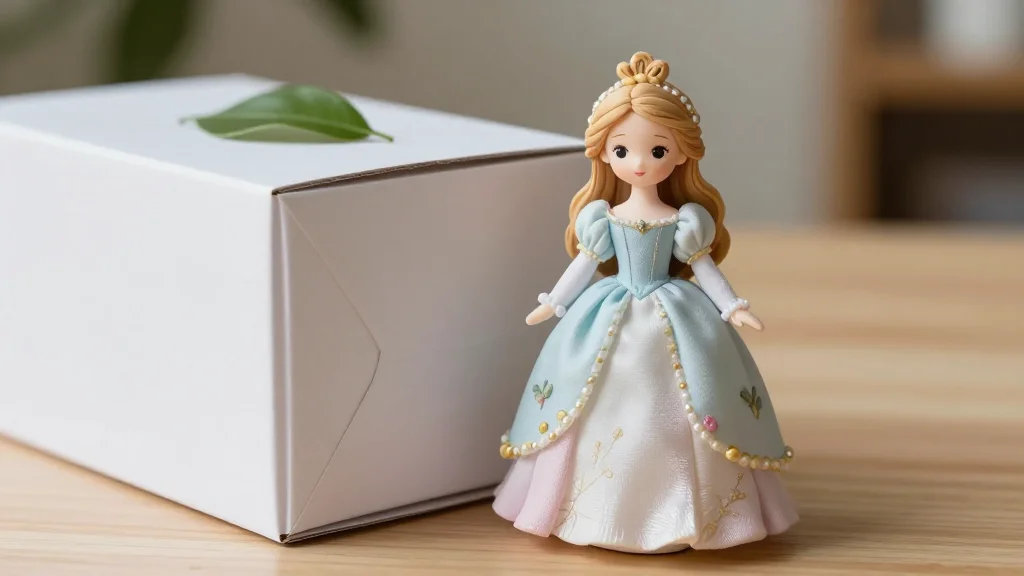
Disney Shifts to Plastic‑Free Packaging for Princess Dolls, Citing Design Hurdles

Companies Mentioned
Why It Matters
Disney’s plastic‑free Princess doll packaging signals a watershed moment for the toy sector, where sustainability is no longer a peripheral concern but a core design driver. By cutting 40% of material use and removing plastic components, Disney reduces landfill waste and aligns with global regulatory trends targeting single‑use plastics. The initiative also tests whether eco‑friendly packaging can maintain the visual allure that fuels in‑store sales, a critical factor for retailers that rely on shelf impact to convert shoppers. If successful, the model could accelerate similar redesigns across the broader consumer‑goods landscape, prompting manufacturers to invest in paper‑based engineering solutions and prompting retailers to rethink inventory handling, display fixtures, and marketing narratives around sustainability. Conversely, any shortcomings in durability or consumer acceptance could caution other brands about the trade‑offs inherent in rapid packaging transitions.
Key Takeaways
- •Disney launches plastic‑free packaging for 15 Classic Princess dolls, starting in U.S. stores.
- •New paper boxes use roughly 40% less material than the previous plastic‑free design.
- •Vice President Stefanie Majoras cites presentation as the biggest engineering challenge.
- •Rollout expands to EMEA in late 2026 and APAC/LATAM in 2027.
- •Disney’s retail empire generates about $62 billion annually across 180+ countries.
Pulse Analysis
Disney’s packaging pivot arrives at a time when retailers are under intense scrutiny to curb plastic waste. The company’s scale—$62 billion in annual sales—means even modest material reductions translate into massive environmental impact. By opting for corrugated paperboard, Disney not only cuts plastic but also leverages a material that is widely recyclable and familiar to supply‑chain partners, potentially lowering end‑of‑life processing costs.
Historically, toy packaging has prioritized visual appeal, often at the expense of sustainability. Disney’s approach—integrating a die‑cut front opening and concealing the doll’s feet—demonstrates that design ingenuity can reconcile these objectives. However, the shift may entail higher upfront tooling costs and longer lead times for paper‑based inserts, pressures that could be passed to suppliers or reflected in marginal price adjustments for consumers.
Looking ahead, the success of Disney’s rollout could set a precedent for other legacy brands, especially those with iconic product lines where packaging is part of the brand experience. Competitors may accelerate their own eco‑packaging programs to avoid falling behind in a market where shoppers increasingly reward sustainability with loyalty. At the same time, retailers will need to adapt shelf‑space planning and merchandising strategies to accommodate the new form factor, ensuring that the visual merchandising that drives impulse buys remains effective. Disney’s experiment thus serves as both a catalyst and a litmus test for the broader retail industry’s capacity to embed sustainability without compromising commercial performance.
Disney Shifts to Plastic‑Free Packaging for Princess Dolls, Citing Design Hurdles
Comments
Want to join the conversation?
Loading comments...