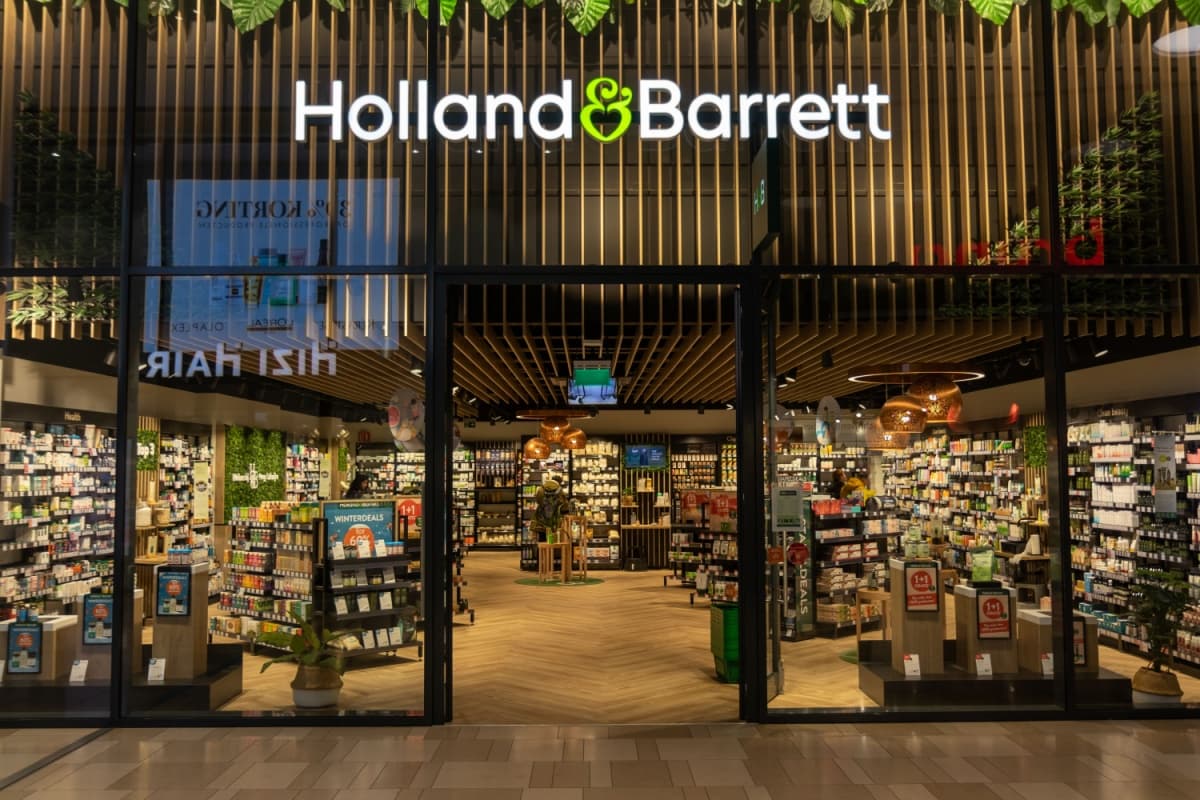
Holland & Barrett Sales Boosted by TikTok Trends, as Losses Widen
•March 3, 2026
0
Why It Matters
The results highlight how viral social media can boost retail traffic while underscoring the cost challenges of scaling digital and experiential investments. For the wellness sector, it signals both opportunity and the need for disciplined profitability.
Key Takeaways
- •Sales rose 11% to £981 million, driven by TikTok trends.
- •Store revenue increased to £731.3 million, up £60 million YoY.
- •Pre‑tax loss widened to £71 million despite higher gross profit.
- •Cash fell to £43.1 million; net assets dropped 13%.
- •New “inside‑out” beauty line supports broader wellness strategy.
Pulse Analysis
TikTok’s algorithmic reach has become a powerful catalyst for health‑focused retailers, and Holland & Barrett is a prime example. Short‑form videos showcasing rosemary oil, weight‑loss jabs, and appetite‑suppressing supplements have translated into measurable shelf‑traffic, lifting overall sales by double‑digits. This trend reflects a broader shift where consumers trust peer‑generated content over traditional advertising, prompting brands to embed social listening into product development and inventory planning.
Financially, the retailer’s top‑line momentum masks deeper margin pressures. While gross profit rose to £579.9 million, pre‑tax losses expanded to £71 million due to rising staff wages, accelerated depreciation on new store formats, and sizable outlays for digital upgrades such as the H&B&Me platform. Cash reserves slipped to £43.1 million, and net assets fell 13%, indicating that growth investments are outpacing cash generation. Analysts will watch whether the enhanced store experience and omnichannel capabilities can eventually translate into sustainable earnings.
Strategically, Holland & Barrett is betting on an "inside‑out" wellness model, merging high‑performance topical beauty products with ingestible supplements. This aligns with consumer demand for holistic health solutions and differentiates the brand in a crowded market. Coupled with upgraded store layouts and a stronger e‑commerce presence, the company aims to capture higher‑margin shoppers while mitigating the volatility of trend‑driven spikes. Success will depend on balancing rapid innovation with disciplined cost control, a challenge that will shape the retailer’s trajectory in the coming fiscal years.
Holland & Barrett sales boosted by TikTok trends, as losses widen
0
Comments
Want to join the conversation?
Loading comments...