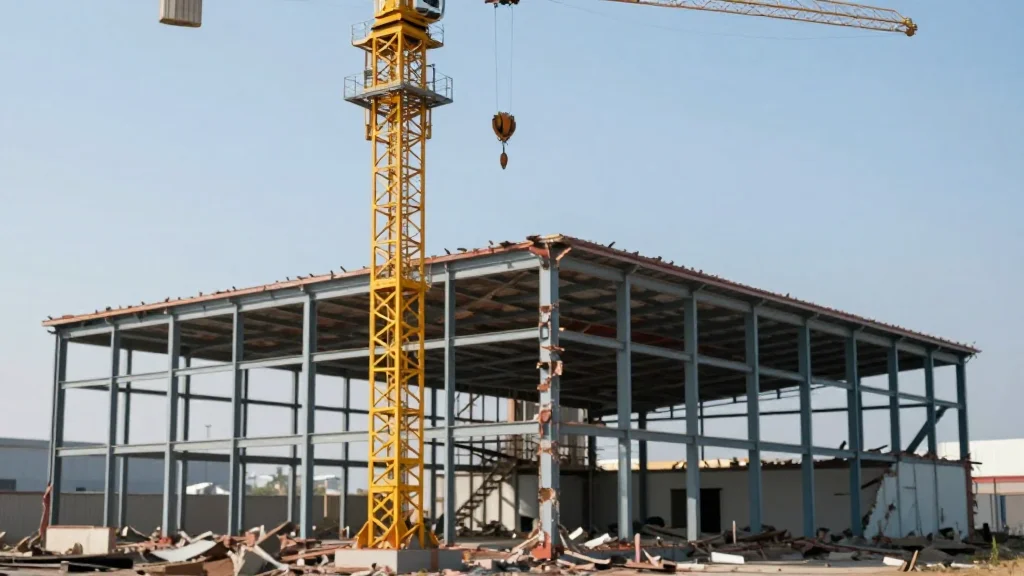
Lincolnwood Town Center Mall to Be Demolished in Three Phases Amid Rising Vacancies

Companies Mentioned
Why It Matters
The demolition of Lincolnwood Town Center illustrates the accelerating conversion of failing malls into mixed‑use developments that prioritize tax‑generating retail over traditional department‑store anchors. By replacing a largely vacant mall with a large discount retailer and automotive services, the village aims to revitalize a 35‑acre parcel that has contributed little to the local economy in recent years. The outcome will provide a case study for other suburban jurisdictions grappling with similar property challenges, especially as e‑commerce continues to pressure brick‑and‑mortar formats. Moreover, the project's reliance on substantial cash deposits and a phased demolition schedule reflects a growing emphasis on financial safeguards and flexible timelines in real‑estate redevelopment. Stakeholders—including existing tenants like Kohl’s—must navigate uncertainty about lease terminations and future occupancy, highlighting the human impact of these large‑scale retail transformations.
Key Takeaways
- •Lincolnwood Town Center demolition approved; first phase starts May 2024
- •Owner group Prairie Ridge Development and XR Advisors took over the 35‑acre site Dec 2025
- •XR Advisors proposes a 175,000‑sq‑ft big‑box discount store, car dealership and smaller commercial space
- •Village ordinance requires $1.5 M deposits per phase and final zoning approval by Nov 2024
- •Kohl’s says it will maintain its presence while negotiations continue
Pulse Analysis
The Lincolnwood demolition plan is emblematic of a broader retail real‑estate pivot from traditional enclosed malls to purpose‑built, tax‑efficient formats. Historically, malls like Lincolnwood thrived on anchor tenants and a dense mix of specialty stores. The rise of e‑commerce and the proliferation of discount chains have eroded that model, leaving many centers with vacancy rates exceeding 50 percent. By targeting a single, high‑volume retailer and ancillary uses, the village hopes to capture a more predictable revenue stream and reduce the operational complexity of managing a multi‑tenant mall.
From a market perspective, the decision to exclude warehouses and office space signals a strategic focus on consumer‑facing activities that generate sales tax. This aligns with municipal priorities but also raises competitive concerns; adding another large discount retailer could dilute margins for existing Target and Walmart stores, potentially prompting price wars or over‑saturation. The $1.5 million deposit requirement is a prudent risk‑mitigation tool, ensuring the developer has skin in the game and reducing the likelihood of a stalled project that would leave the site vacant for years.
Looking ahead, the success of the Lincolnwood redevelopment will hinge on the ability to secure a retailer willing to commit to a 175,000‑square‑foot footprint in a market already served by national discounters. If the village can lock in a tenant and deliver on the promised tax revenue, it could serve as a template for other municipalities facing similar mall decay. Conversely, failure to attract a suitable anchor could leave the site in limbo, reinforcing the challenges of repurposing legacy retail assets in an increasingly digital shopping environment.
Lincolnwood Town Center Mall to Be Demolished in Three Phases Amid Rising Vacancies
Comments
Want to join the conversation?
Loading comments...