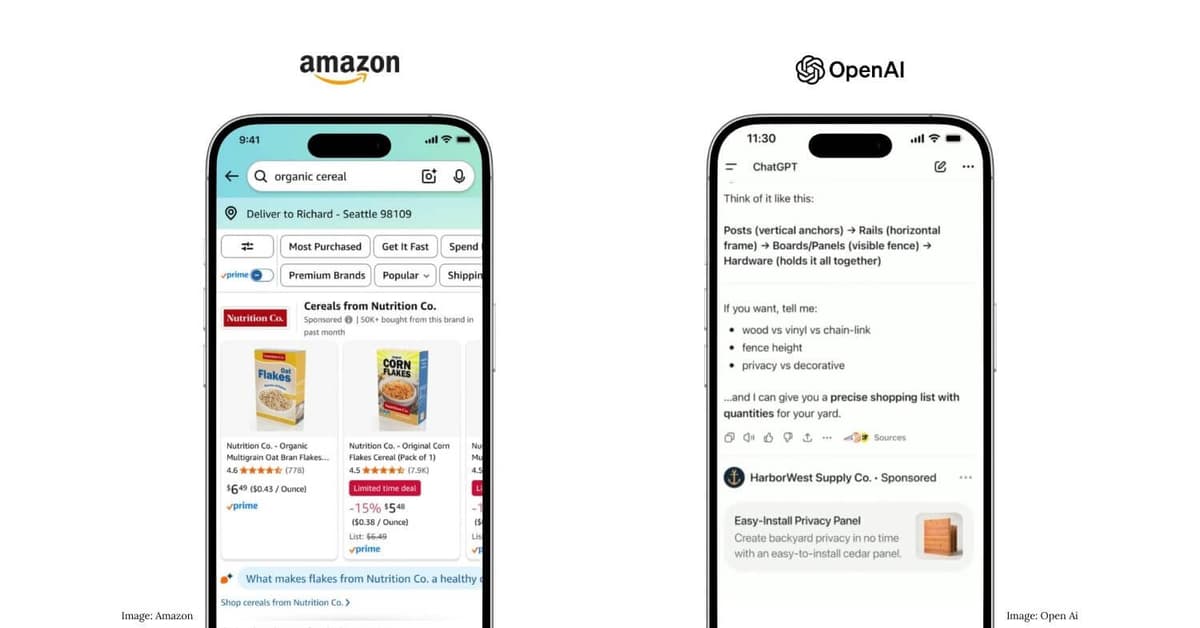
Rufus, ChatGPT, and the Agentic Ad Convergence
Why It Matters
The shift confirms that AI‑driven shopping will be monetized primarily through advertising, giving platforms with large audiences—like Amazon—a decisive advantage and reshaping how merchants reach consumers.
Key Takeaways
- •Amazon reports 20% of Rufus shoppers continue brand conversations.
- •Rufus drives $12 billion incremental sales, up 115% YoY MAU.
- •OpenAI opens ads manager to all U.S. advertisers, drops $50k minimum.
- •Shopify adds ChatGPT and Claude connectors for 83% of its merchants.
- •Agentic commerce projected to reach $1 trillion by 2030.
Pulse Analysis
Agentic commerce, the fusion of AI assistants and e‑commerce, is rapidly moving from concept to mainstream. McKinsey and ICSC estimate the U.S. market will top $1 trillion by 2030, driven by the fact that 68% of consumers have used an AI tool for shopping in the past three months. This surge is not just about convenience; it creates a new discovery surface where brands compete for attention within conversational flows, fundamentally altering the traditional search‑and‑browse funnel.
Amazon’s Rufus provides the first hard data on how that surface performs. By Q1, Rufus’s user base grew 115% year‑over‑year, and the assistant generated roughly $12 billion in incremental sales. Crucially, about one‑fifth of shoppers who encounter a sponsored brand prompt stay engaged, signaling advertisers that conversational ad placements can sustain interest even if they don’t immediately convert. With advertising revenue up 22% on a constant‑currency basis, Amazon’s ad‑first strategy is proving scalable, especially as its seller base contracts, forcing merchants to lean on paid visibility.
OpenAI’s recent pivot—opening its ads manager to all U.S. advertisers and eliminating the $50,000 minimum spend—signals a convergence toward Amazon’s model. While Instant Checkout was shelved, the platform now offers a discovery‑centric ad inventory that rivals Amazon’s reach. Shopify’s rollout of ChatGPT and Claude connectors further embeds merchants in the winning consumer surface rather than building a competing marketplace. The combined effect accelerates an ad‑supported equilibrium for agentic commerce, where platforms that control both the audience and the data will dictate the rules of engagement for brands and sellers alike.
Rufus, ChatGPT, and the Agentic Ad Convergence
Comments
Want to join the conversation?
Loading comments...