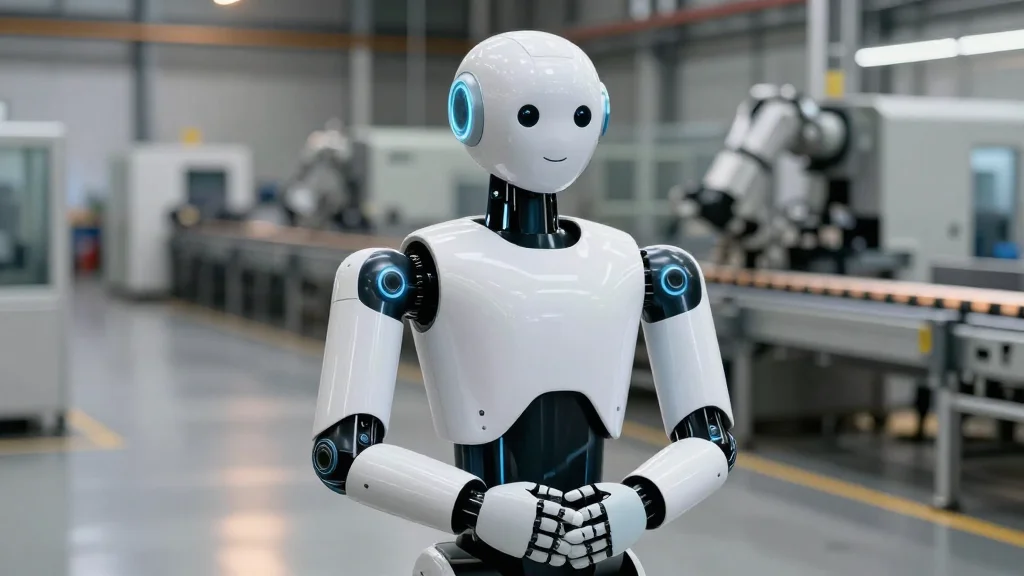
Apptronik Hires Waymo, Boston Dynamics and Amazon Veterans to Fast‑track Humanoid Robot Rollout

Companies Mentioned


Why It Matters
Apptronik’s hiring spree and massive Series A funding mark a decisive moment for the humanoid robotics market, which has long been dominated by research labs and niche pilots. By assembling a leadership team with proven experience in autonomous vehicles, consumer AI and health‑tech, the company is poised to address the reliability, safety and cost challenges that have stalled broader adoption. Successful commercialization of Apollo could unlock new use cases in logistics, manufacturing and elder‑care, sectors that together represent trillions of dollars in economic activity. The move also intensifies competition among established players like Boston Dynamics and emerging entrants such as Tesla’s Optimus. If Apptronik can deliver a production‑ready, general‑purpose humanoid at scale, it could force rivals to accelerate their own development cycles, driving faster innovation and potentially lowering prices for end‑users. The outcome will shape the trajectory of service robotics for the next decade.
Key Takeaways
- •Apptronik raised $935 million in a Series A round, one of the largest for a pure‑play robotics firm.
- •Daniel Chu, former Waymo and 23andMe CPO, joins as Chief Product Officer.
- •New hires also include senior leaders from Boston Dynamics and Amazon across software, services, marketing and people operations.
- •Apollo, Apptronik’s flagship humanoid, targets manufacturing, logistics and future elder‑care applications.
- •Company aims to unveil Apollo within six months and begin pilot deployments in U.S. factories.
Pulse Analysis
Apptronik’s strategy reflects a maturation of the robotics sector: the focus has shifted from proving concepts to building viable businesses. The $935 million capital injection provides the runway to invest in high‑volume manufacturing, a capability that has historically been a bottleneck for humanoid robots. By hiring executives who have already navigated the regulatory and safety landscapes of autonomous vehicles and consumer health platforms, Apptronik reduces the learning curve associated with scaling complex hardware‑software systems.
From a competitive standpoint, the company’s aggressive talent acquisition could force incumbents to reassess their own leadership pipelines. Boston Dynamics, for example, has relied heavily on its engineering core; bringing in seasoned product and market leaders could give Apptronik an edge in translating technical breakthroughs into revenue‑generating products. Moreover, the emphasis on elder‑care aligns with demographic trends—U.S. adults over 65 are projected to reach 95 million by 2030—creating a sizable addressable market that many robotics firms have yet to tap.
However, the path ahead is fraught with risk. Scaling humanoid robots requires not only robust hardware but also sophisticated AI that can handle unstructured environments safely. The company’s success will hinge on its ability to meet stringent reliability metrics while keeping unit costs competitive against traditional automation solutions. If Apptronik can demonstrate a clear value proposition in pilot programs, it could catalyze a wave of investment across the service‑robot ecosystem, accelerating the shift from industrial arms to collaborative, human‑centric machines.
Apptronik hires Waymo, Boston Dynamics and Amazon veterans to fast‑track humanoid robot rollout
Comments
Want to join the conversation?
Loading comments...