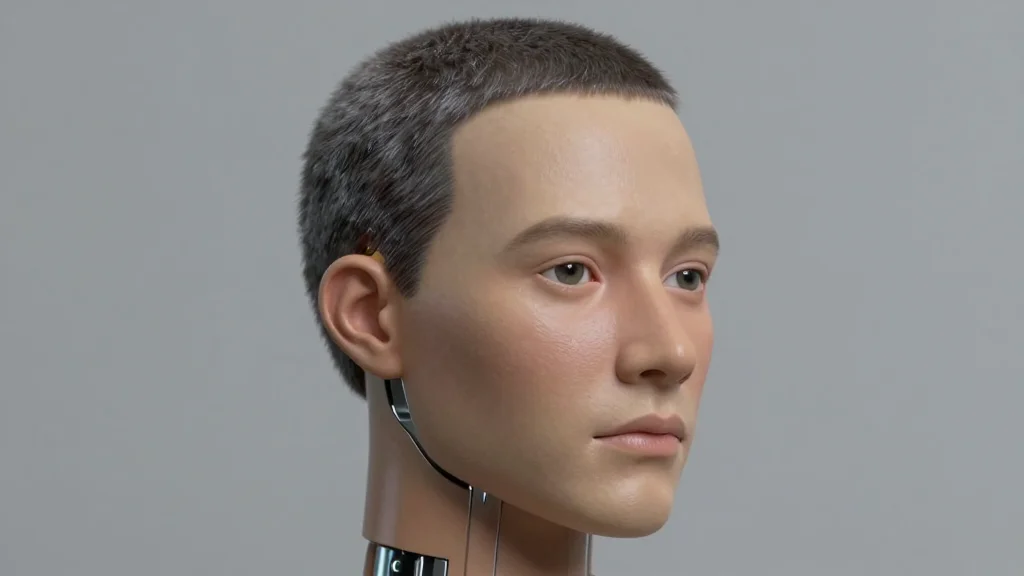
China’s X‑Humanoid Unveils Bionic‑Face Prototype as Nation Accelerates Humanoid Robot Race

Companies Mentioned

Why It Matters
China’s accelerated development of humanoid robots could reshape global supply chains, labor markets, and defense postures. By focusing on lifelike appearance and rugged capabilities, firms like X‑Humanoid aim to address domestic challenges—particularly an aging workforce—while positioning China as a technology exporter. The rapid pace also forces Western companies to reassess R&D spending and partnership strategies to avoid falling behind in a sector that blends AI, materials science, and advanced manufacturing. If Chinese humanoids achieve reliable autonomy at scale, they could displace low‑skill labor in manufacturing, logistics, and hazardous environments, prompting policy debates around job displacement and ethical deployment. Conversely, the emphasis on non‑militarized applications may set a precedent for international norms governing the use of humanoid platforms in civilian contexts.
Key Takeaways
- •X‑Humanoid displayed a bionic‑face prototype with synthetic skin and hair at its Beijing plant
- •More than 100 Chinese robots completed a 13‑mile marathon in under 50 minutes, beating the human record by seven minutes
- •Unitree Robotics introduced a 9‑foot humanoid priced at $650,000 that can carry a person and transform into a quadruped
- •The Chinese five‑year plan explicitly targets frontier technologies, including humanoid robotics, to support an aging population
- •Joanna Stern highlighted the software gap as the primary hurdle for widespread autonomous robot deployment
Pulse Analysis
China’s recent showcase underscores a strategic shift from purely functional prototypes to socially acceptable machines. The bionic‑face effort reflects an understanding that visual realism can lower user resistance, a factor that has been less emphasized in Western designs where functional performance often takes precedence. By investing heavily in both hardware scale—exemplified by Unitree’s $650,000 giant—and aesthetic refinement, Chinese firms are betting on a dual‑track advantage that could accelerate adoption in service sectors.
Historically, humanoid robotics has suffered from high cost and limited utility. The current wave, driven by state‑backed funding and a clear demographic imperative, is breaking that pattern. However, the software bottleneck identified by Joanna Stern remains a critical risk. China’s approach of crowdsourcing motion data through paid participants mirrors similar initiatives in the U.S., but the sheer volume of data required for truly autonomous operation may outstrip current processing capabilities. Partnerships with domestic AI chipmakers could provide a home‑grown solution, reducing reliance on foreign technology and further entrenching China’s position.
Looking ahead, the competitive dynamics will likely pivot on integration speed. Companies that can marry X‑Humanoid’s lifelike exteriors with robust perception stacks will command premium market segments, from elder‑care to disaster response. Western firms may respond by accelerating their own human‑like designs or by focusing on niche industrial applications where cost constraints are less severe. The outcome will shape not only market share but also regulatory frameworks governing safety, data privacy, and potential militarization of humanoid platforms.
China’s X‑Humanoid Unveils Bionic‑Face Prototype as Nation Accelerates Humanoid Robot Race
Comments
Want to join the conversation?
Loading comments...