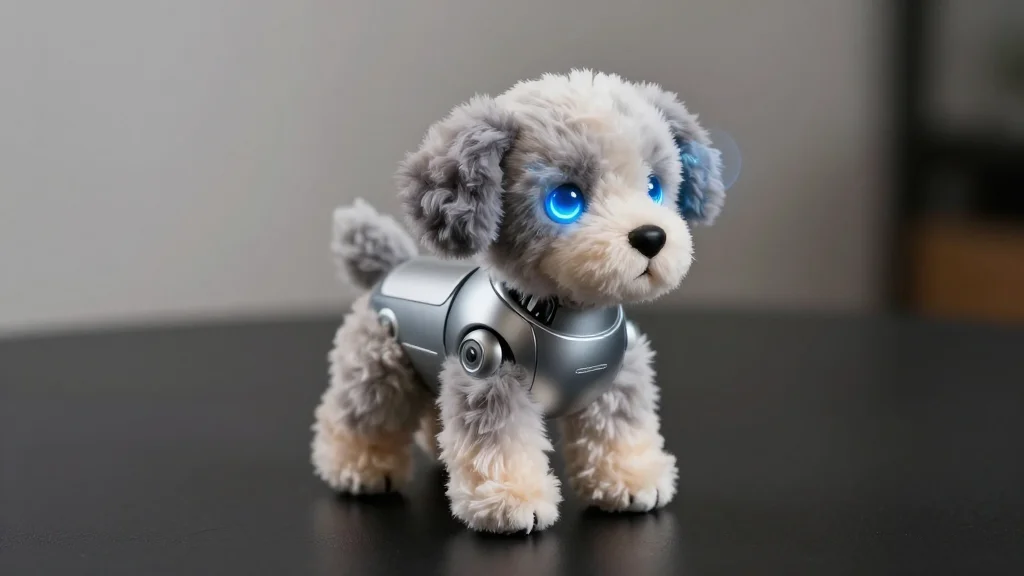
Colin Angle Launches “Familiar,” A Lifelike AI Companion Robot

Companies Mentioned
Why It Matters
The Familiar represents a strategic pivot from utility‑focused robotics to emotionally intelligent devices, potentially reshaping consumer expectations for home AI. By positioning a robot as a pet surrogate, Angle challenges existing norms around companionship, privacy and the economics of pet ownership. Success could validate a new revenue stream for robotics firms, while failure would reinforce caution around anthropomorphic AI. Beyond the commercial angle, the launch spotlights regulatory gaps in embodied AI. As robots become more lifelike, lawmakers will need to address data collection, consent and mental‑health safeguards, setting precedents that will affect the broader AI ecosystem.
Key Takeaways
- •Colin Angle, co‑founder of iRobot, announced the “Familiar,” an AI‑driven companion robot.
- •The robot uses on‑device generative AI to develop a unique personality for each owner.
- •Angle said interest in the Familiar exceeds that of the Roomba, with pricing “around the same as pet ownership.”
- •Launch planned for early 2027 after a beta later this year.
- •Product aims to avoid verbal advice, communicating via meows, purrs and body language to mitigate safety concerns.
Pulse Analysis
Angle’s entry into the companion‑robot market is both a bold diversification and a calculated gamble. Historically, iRobot’s success hinged on solving a clear, mechanical problem—floor cleaning. The Familiar, by contrast, tackles an intangible need: emotional connection. This shift mirrors broader AI trends where the value proposition moves from task automation to relationship building, a space still fraught with ethical uncertainty.
From a competitive standpoint, the Familiar could force established players like Sony (with its Aibo robot) and emerging AI‑hardware startups to accelerate their own pet‑like offerings. The decision to eschew humanoid forms sidesteps a saturated niche while leveraging the deep‑seated human affinity for animals. However, the lack of concrete pricing and a clear regulatory pathway introduces risk. If the device’s cost truly mirrors pet ownership, it may attract a broader demographic, but it also invites scrutiny from consumer‑protection agencies wary of hidden data collection.
Looking ahead, the Familiar’s market performance will likely become a bellwether for embodied AI. A strong uptake could catalyze a wave of “social robots” designed for companionship, education and therapy, expanding the robotics TAM (total addressable market) beyond industrial and service sectors. Conversely, any high‑profile safety incident could trigger stricter oversight, slowing innovation. Investors and policymakers should monitor the beta rollout closely, as early user feedback will shape both the product’s trajectory and the regulatory framework governing the next generation of home robots.
Colin Angle Launches “Familiar,” a Lifelike AI Companion Robot
Comments
Want to join the conversation?
Loading comments...