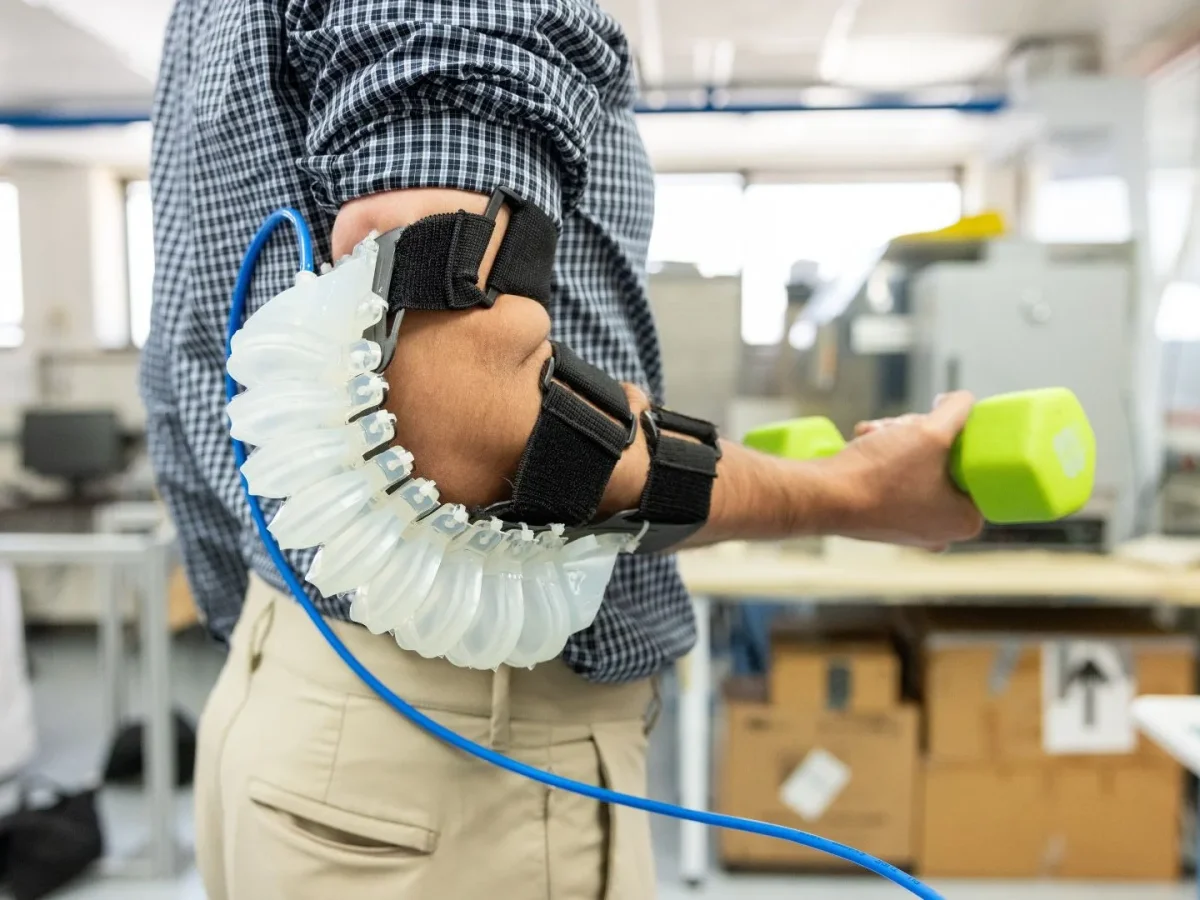
Engineers Develop Soft Robotic Exoskeleton That Cuts Muscle Strain by 22%
Why It Matters
By preventing musculoskeletal strain, PASE offers manufacturers a proactive tool to lower injury‑related costs and improve worker safety, addressing a $45‑$54 billion annual burden. Its plug‑and‑play design accelerates adoption across diverse production lines.
Key Takeaways
- •PASE reduces elbow muscle activity by 22% during lifts
- •Workers report 8‑10 point drop in perceived workload
- •Device uses existing pneumatic infrastructure, easing factory adoption
- •Musculoskeletal disorders cost U.S. $45‑54 billion annually
- •NSF proposal aims to expand exoskeleton to full upper limb
Pulse Analysis
The rise of soft robotics is reshaping occupational health, and PASE exemplifies how pneumatic actuation can deliver tangible ergonomic benefits. Unlike rigid exoskeletons that add bulk and require complex control systems, PASE’s silicone actuator conforms to the arm, providing assistance only when needed. This simplicity translates into lower manufacturing costs and easier maintenance, making it attractive for mid‑size manufacturers that lack deep automation budgets. Moreover, the reliance on standard compressed‑air supplies means plants can deploy the technology without extensive infrastructure upgrades.
From a financial perspective, the device directly tackles the hidden expense of work‑related musculoskeletal disorders (MSDs). With MSDs representing roughly 30% of workplace injuries and costing up to $54 billion annually in compensation and medical expenses, even modest strain reductions can yield significant ROI. A 22% drop in muscle activation not only lessens fatigue but also extends workers’ productive lifespan, potentially decreasing turnover and training costs. Companies that adopt preventive wearables like PASE can shift from reactive injury management to a data‑driven, health‑first strategy, aligning with emerging ESG and occupational safety standards.
Looking ahead, the research team’s NSF proposal aims to scale the technology into a comprehensive upper‑limb exoskeleton, integrating elbow, wrist, and finger support. Such expansion could open new markets in automotive assembly, aerospace manufacturing, and even logistics, where repetitive motions dominate. As the industry moves toward collaborative robots (cobots) and human‑machine symbiosis, soft exoskeletons may become a standard layer of protection, bridging the gap between automation and human labor while preserving flexibility and dexterity on the shop floor.
Engineers Develop Soft Robotic Exoskeleton That Cuts Muscle Strain by 22%
Comments
Want to join the conversation?
Loading comments...