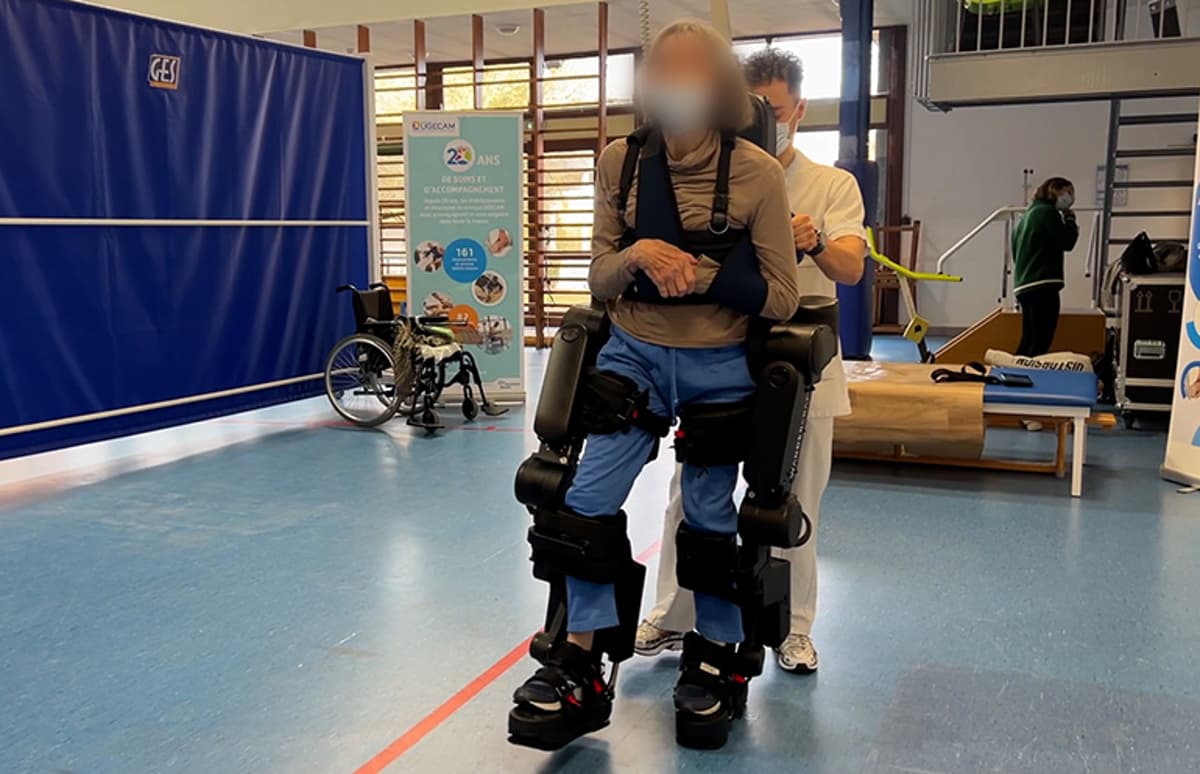
First Patient Enrolls in Clinical Trial for Wandercraft Atalante X Exoskeleton
Companies Mentioned

Why It Matters
Early ICU mobilization can cut complications and length of stay, offering hospitals a scalable tool to enhance recovery and reduce staffing costs. Successful results could accelerate adoption of wearable robotics across acute care settings.
Key Takeaways
- •First ICU patient enrolled in Wandercraft Atalante X trial
- •Study evaluates safety, feasibility, usability, effectiveness in thoracic ICU
- •Atalante X FDA cleared, CE marked, hands‑free exoskeleton
- •Early mobilization may improve post‑surgical outcomes and reduce staffing
- •Wandercraft aims to expand exoskeleton use to home and industry
Pulse Analysis
The Atalante X trial marks a pivotal moment for wearable robotics in critical care. While traditional gait trainers rely on crutches or walkers, Wandercraft’s self‑balancing platform frees patients’ upper bodies, enabling clinicians to deliver intensive therapy with fewer personnel. By targeting thoracic surgical ICU patients—who often remain supine for days—the study explores whether early upright positioning can stabilize vital signs, preserve muscle mass, and boost psychological well‑being, outcomes that have long been linked to reduced complications and shorter hospital stays.
Beyond immediate clinical metrics, the trial offers valuable data on operational efficiency. Measuring donning time, staff requirements, and session frequency provides a clear picture of how exoskeletons can alleviate the labor‑intensive nature of patient mobilization. If the feasibility and usability benchmarks are met, hospitals could see a tangible reduction in nursing workload, freeing resources for other critical tasks. Moreover, the effectiveness assessment using the Johns Hopkins Mobility Scale will quantify functional gains, supporting evidence‑based reimbursement models for advanced rehabilitation technologies.
Wandercraft’s broader strategy underscores the growing convergence of medical and industrial robotics. With the Eve personal exoskeleton slated for home use and the Calvin‑40 humanoid entering manufacturing, the company is positioning itself as a cross‑sector leader in AI‑enabled mobility. Successful ICU validation could accelerate regulatory pathways and market acceptance, paving the way for widespread deployment in both clinical and non‑clinical environments. Stakeholders—from hospital administrators to investors—should monitor trial outcomes closely, as they may reshape standards for post‑operative care and drive the next wave of exoskeleton adoption.
First patient enrolls in clinical trial for Wandercraft Atalante X exoskeleton
Comments
Want to join the conversation?
Loading comments...