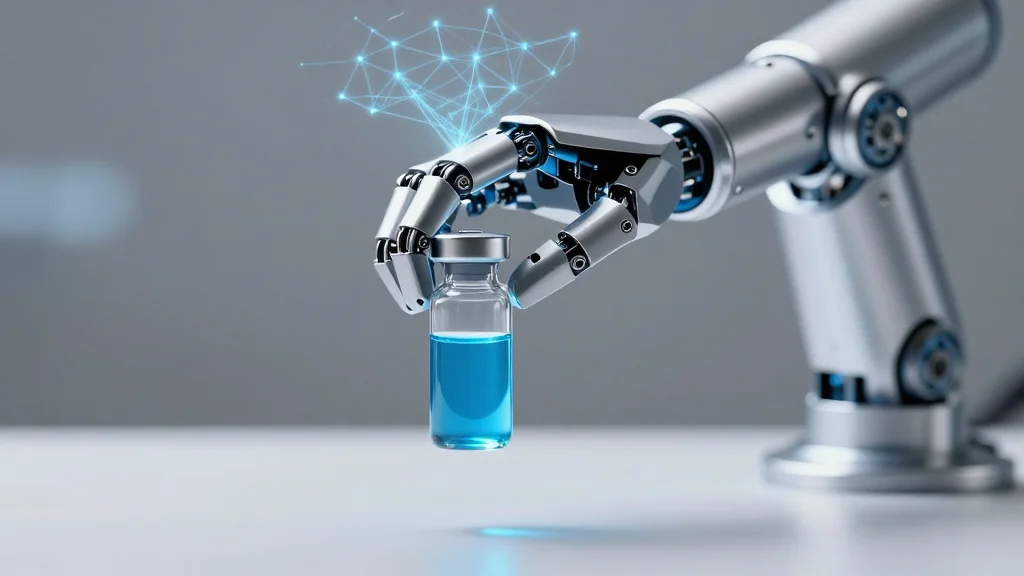
Ginkgo Bioworks Uses AI Robots for 30,000 Experiments, Cutting Costs 40%

Companies Mentioned

Ginkgo Bioworks Holdings Inc.
eBay
Why It Matters
The breakthrough demonstrates that generative AI can move beyond text generation to direct physical actions in a laboratory, fundamentally altering the cost structure and speed of biotech research. By automating both the design and execution of experiments, firms can explore larger chemical spaces, reduce human error, and accelerate the path from concept to commercial product. Beyond cost savings, the technology raises broader questions about the future of scientific labor, data ownership, and regulatory oversight. As AI‑driven robots generate experimental data, the provenance and validation of results will become a focal point for both investors and policymakers, shaping the next wave of biotech innovation.
Key Takeaways
- •Ginkgo Bioworks' AI‑controlled robots completed >30,000 experiments in six months.
- •Protein‑synthesis costs fell by 40% compared with traditional manual methods.
- •Reshma Shetty highlighted the first AI‑written lab notebook entry as a turning point.
- •Early funding was scarce; a 2014 Sam Altman blog post helped unlock Silicon Valley capital.
- •The autonomous lab uses a large‑language model to translate designs into robot instructions.
Pulse Analysis
Ginkgo’s achievement is a watershed for the convergence of synthetic biology and generative AI. Historically, biotech R&D has been hamstrung by the labor‑intensive nature of wet‑lab work, limiting the number of hypotheses that can be tested. By delegating both protocol creation and execution to machines, Ginkgo effectively multiplies the throughput of a typical lab by an order of magnitude. This shift mirrors the earlier automation wave in semiconductor manufacturing, where robotics and AI together drove down costs and accelerated innovation cycles.
From a competitive standpoint, the platform positions Ginkgo as a potential infrastructure provider for larger pharmaceutical players that lack in‑house automation expertise. The cost advantage—40% savings on protein synthesis—could be a decisive factor for contract‑research organizations seeking to improve margins. However, the model also introduces new risks: reliance on proprietary AI prompts may create black‑box elements that regulators could scrutinize, and the capital outlay for scaling robot fleets may limit adoption among cash‑strapped startups.
Looking ahead, the key to broader industry uptake will be standardization of AI‑generated lab notebooks and clear guidelines for intellectual property attribution. If Ginkgo can demonstrate reproducibility across diverse biological systems and secure regulatory buy‑in, the autonomous lab could become the default R&D environment for biotech, reshaping talent demand and redefining the role of the human scientist from hands‑on executor to strategic overseer.
Ginkgo Bioworks Uses AI Robots for 30,000 Experiments, Cutting Costs 40%
Comments
Want to join the conversation?
Loading comments...