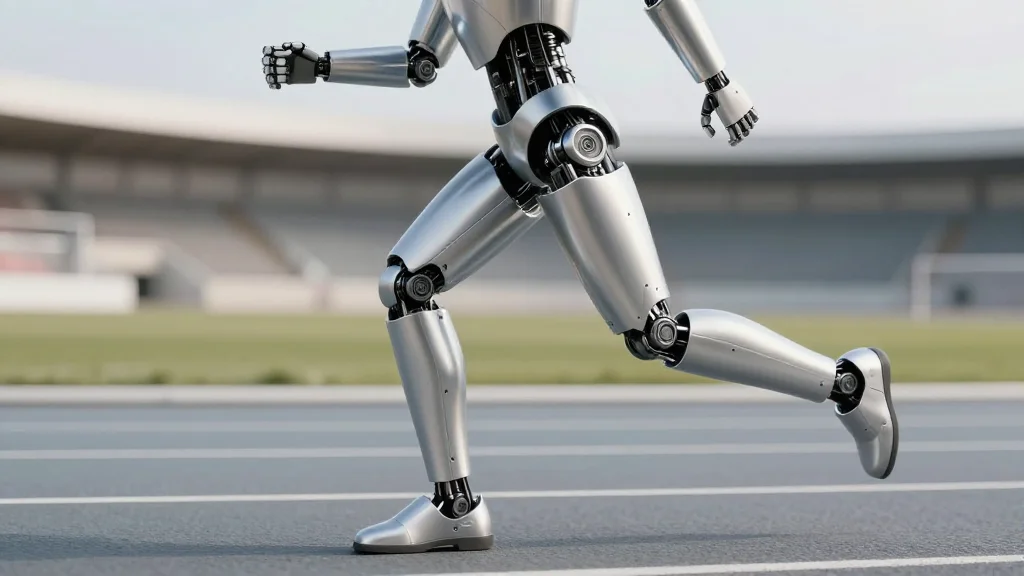
Honor's Lightning Humanoid Shatters Half‑Marathon Record in Beijing

Companies Mentioned
Why It Matters
Lightning’s sub‑hour half‑marathon underscores how far mobile robotics has come in power density, thermal management, and control algorithms. If robots can sustain high‑speed locomotion for 50 minutes, they become viable for logistics, search‑and‑rescue, and military patrols where endurance is critical. At the same time, the event highlights a gap between laboratory performance and safety‑critical autonomy; most robots still rely on pre‑mapped routes and human handlers. The public’s fascination, reflected in millions of video views and survey interest in robot sports leagues, could translate into new revenue streams for manufacturers and investors, accelerating funding for next‑generation actuation and perception systems. Beyond entertainment, the race raises policy questions about the regulation of autonomous machines in public spaces. As robots move from factory floors to streets and tracks, standards for collision avoidance, liability, and crowd interaction will need to evolve. The Beijing half‑marathon thus acts as a litmus test for both technological readiness and societal acceptance of high‑performance humanoids.
Key Takeaways
- •Lightning humanoid finished Beijing half‑marathon in 50:26, beating human record by ~7 minutes
- •Only 38% of 2026 race entries ran autonomously; Lightning required a support crew after a crash
- •Robotics participation rose to >100 teams, up from ~20 the previous year
- •Rodney Brooks called the event a "stupid publicity stunt" lacking real‑world safety relevance
- •YouGov 2025 survey: 33% of U.S. sports fans would watch robot‑athlete leagues
Pulse Analysis
Lightning’s achievement is less a breakthrough in general‑purpose robotics than a milestone in niche engineering. The robot’s speed derives from a highly specialized hardware stack—lightweight exoskeleton, high‑torque actuators, and a smartphone‑grade cooling system—optimised for a single, pre‑planned course. This mirrors the trajectory of early automotive racing, where purpose‑built machines proved concepts that later filtered into consumer vehicles. The next inflection point will be when such platforms can adapt on the fly, handling unpredictable obstacles and crowds without human intervention. That shift will require advances in perception, real‑time planning, and safety certification, areas where current research still lags.
Commercially, the spectacle fuels a nascent market for robot‑centric entertainment. Investors have already poured capital into humanoid platforms for retail and hospitality; the half‑marathon adds a sports‑entertainment dimension that could attract media rights deals and sponsorships. However, the hype must be balanced against practical ROI. As Rodney Brooks warned, a robot that can sprint on a cleared track does not automatically translate to productivity gains in warehouses or field operations. Companies that can repurpose the underlying technologies—high‑efficiency power electronics, compact cooling, and robust joint control—into cost‑effective solutions will capture lasting value.
Regulatory frameworks will also shape the sector’s trajectory. Public‑space deployments raise liability concerns; a robot colliding with a spectator could trigger legal challenges that stall broader adoption. Policymakers will need to define standards for autonomous navigation in mixed‑traffic environments, much as they have for autonomous vehicles. The Beijing half‑marathon, while a publicity event, forces the industry to confront these governance questions now, rather than after the technology has already permeated daily life.
Honor's Lightning Humanoid Shatters Half‑Marathon Record in Beijing
Comments
Want to join the conversation?
Loading comments...