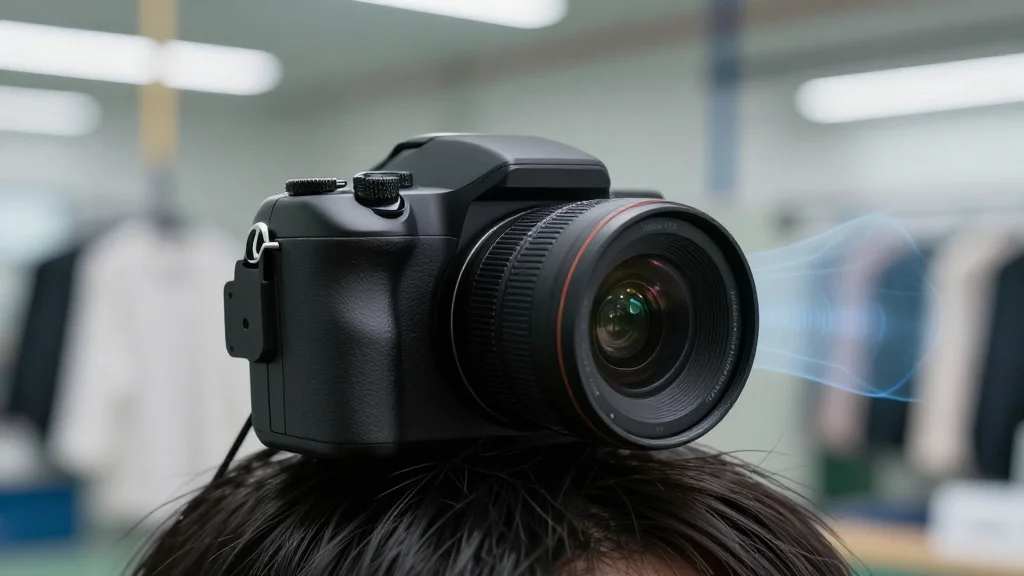
Human Archive Secures $8.2 Million to Deploy Head‑Mounted Cameras for AI Robotics Training in India

Companies Mentioned



Why It Matters
The venture underscores a shift in how robotics companies acquire training data: moving from synthetic simulations to real‑world, first‑person recordings. By capturing the subtleties of human motion and environment interaction, Human Archive could accelerate the deployment of robots that operate safely alongside people, a long‑standing hurdle for the industry. At the same time, the project raises ethical questions about consent, privacy, and the potential for technology to displace low‑skill labor in emerging economies. If the datasets prove effective, they may lower the barrier to entry for smaller robotics startups that lack the resources to generate their own large‑scale data, potentially democratizing advanced robot capabilities. Conversely, the concentration of such data in the hands of a few investors could create a new competitive moat, reshaping the economics of robot development.
Key Takeaways
- •Human Archive raised $8.2 M from Wing Venture Capital, NVP Capital, Y Combinator and angels from OpenAI, Nvidia, Google, Meta.
- •The company operates about 1,000 head‑mounted cameras on Indian garment workers and other laborers.
- •Two datasets are being built: a 3‑D reconstruction from visor cameras and a 2‑D hand‑movement set from wrist cameras.
- •Co‑founders Rushil Agarwal and Raj Patel say the goal is to model human sensimotor intelligence for robot training.
- •Investors see the data as foundational infrastructure for automating manual labor and advancing embodied AI.
Pulse Analysis
Human Archive’s funding round arrives at a moment when the robotics sector is hungry for richer, real‑world data. Historically, robot perception systems have been trained on curated image sets like ImageNet, which lack the temporal and spatial continuity of human activity. By delivering continuous egocentric streams, Human Archive could bridge that gap, enabling robots to anticipate and adapt to dynamic environments much like a human worker would. This could shorten the development cycle for robots in sectors where variability is high—think garment stitching or on‑site construction—where current solutions still rely heavily on handcrafted rules.
From a competitive standpoint, the startup’s dual‑camera architecture differentiates it from rivals that focus solely on vision or motion capture. The 3‑D dataset offers a holistic view of the workspace, while the wrist‑mounted footage captures fine‑grained hand gestures. Together, they provide a multimodal training corpus that could be attractive to firms building hybrid perception‑control pipelines, such as Boston Dynamics or Agility Robotics, which are increasingly integrating large‑language‑model reasoning with sensor data.
However, the venture also highlights a tension between technological progress and labor economics. While investors tout the potential for “increasing global abundance,” the deployment of cameras on low‑wage workers raises concerns about surveillance and the future of work. If the datasets accelerate robot adoption in factories, the very workers who generate the data may face displacement. Policymakers and industry leaders will need to consider how to balance the efficiency gains with safeguards for the workforce, perhaps by channeling a portion of the venture capital into reskilling programs or data‑ownership models that share benefits with contributors.
Human Archive Secures $8.2 Million to Deploy Head‑Mounted Cameras for AI Robotics Training in India
Comments
Want to join the conversation?
Loading comments...