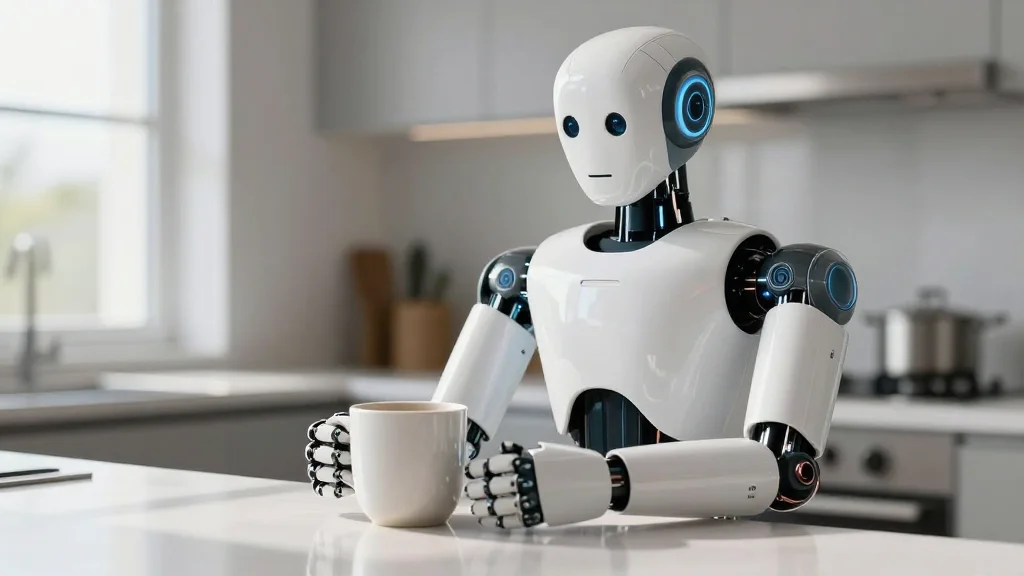
Meta Acquires Assured Robot Intelligence to Accelerate Humanoid Robot Program

Companies Mentioned

Why It Matters
The deal signals that the race for household‑level humanoid robots is moving from speculative research to commercial ambition. By pulling ARI’s talent into its own labs, Meta aims to create a seamless stack—from perception to whole‑body control—capable of learning from everyday human interaction. Success could reshape the consumer robotics market, turning robots from industrial tools into everyday assistants. Moreover, Meta’s acquisition adds pressure on rivals like Amazon, Google, and Nvidia to accelerate their own hardware programs. The convergence of AI and robotics at this scale may also drive new standards for safety, data privacy, and human‑robot interaction, influencing regulatory discussions worldwide.
Key Takeaways
- •Meta closed the acquisition of Assured Robot Intelligence on May 1; financial terms were not disclosed.
- •ARI’s co‑founders Lerrel Pinto and Xiaolong Wang join Meta’s Superintelligence Labs and Robotics Studio.
- •Meta’s Q1 revenue rose 33% to over $56.3 billion, despite a 8,000‑person layoff.
- •The acquisition follows Amazon’s Fauna Robotics purchase and SoftBank’s $5.4 billion ABB Robotics deal.
- •Meta aims to launch a household‑focused humanoid prototype by late 2026, with broader rollout slated for 2027.
Pulse Analysis
Meta’s purchase of ARI marks a decisive shift from software‑only AI to embodied intelligence, a transition that could redefine the company’s product portfolio. Historically, Meta has focused on virtual experiences—social media, VR, and the metaverse—yet the hardware demands of humanoid robots require a different set of engineering capabilities. By absorbing a team that explicitly targets physical AGI, Meta is attempting to shortcut years of in‑house development, a strategy reminiscent of its earlier acquisition of Oculus to jump‑start VR.
The competitive landscape suggests a brewing arms race. Amazon’s Fauna Robotics acquisition gave it a foothold in autonomous warehouse bots, but its consumer‑grade ambitions remain vague. Google’s recent AI model releases hint at a software advantage, yet it lacks a dedicated hardware pipeline. Nvidia’s claim that robotics is its fastest‑growing AI market underscores the sector’s revenue potential, but hardware execution still lags. Meta’s deep pockets and massive data ecosystem could provide the missing link—real‑world interaction data to train humanoid agents at scale.
However, the path forward is fraught with challenges. Translating lab‑level perception and control into reliable, safe home robots involves solving complex problems in power management, tactile sensing, and human‑centric design. Meta’s recent workforce reductions may limit the engineering bandwidth needed for rapid prototyping. If Meta can deliver a functional, affordable humanoid by 2027, it could unlock a new consumer market worth billions, forcing incumbents to rethink their strategies. Failure, on the other hand, would reinforce the notion that humanoid robotics remains a distant dream, keeping the industry’s focus on narrower, task‑specific bots.
Meta Acquires Assured Robot Intelligence to Accelerate Humanoid Robot Program
Comments
Want to join the conversation?
Loading comments...