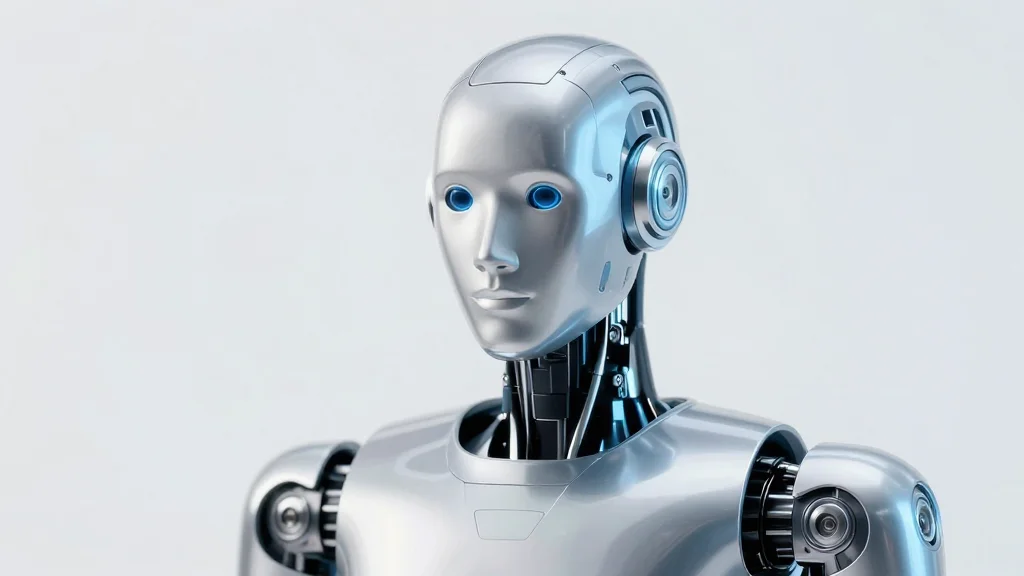
Meta Acquires Assured Robot Intelligence to Accelerate Humanoid Robot Push

Companies Mentioned

Why It Matters
Meta’s entry into humanoid robotics could reshape the competitive dynamics of the AI‑hardware market. By focusing on the software brain rather than just the chassis, Meta aims to create a platform that other manufacturers can adopt, potentially standardizing robot perception and control across the industry. If successful, the move could accelerate the commercialization of service robots, opening new revenue streams beyond advertising and social media. Conversely, the acquisition highlights the high stakes of AI‑driven restructuring, as Meta balances massive capital outlays against workforce cuts and shareholder pressure. The deal also signals a broader shift: major tech firms are betting that physical embodiment of AI—robots that learn by interacting with the world—will be the next frontier for artificial general intelligence research. Meta’s investment may spur faster innovation cycles, prompting rivals to double down on their own robot‑centric AI labs, and could attract further venture capital to the niche of robot‑focused foundation models.
Key Takeaways
- •Meta confirmed acquisition of Assured Robot Intelligence, a San Diego AI startup for humanoid robots.
- •Co‑founders Lerrel Pinto and Xiaolong Wang join Meta’s Superintelligence Labs.
- •Deal terms undisclosed; acquisition aligns with Meta’s $125‑$145 billion AI cap‑ex plan for 2026.
- •Meta aims to build a platform for whole‑body humanoid control, competing with Tesla, Google, and Amazon.
- •Analysts note the move comes amid a 9.4% share decline and a 10% workforce reduction.
Pulse Analysis
Meta’s acquisition of Assured Robot Intelligence is less about an immediate product launch and more about staking a claim in the emerging AI‑robotics stack. Historically, platform plays—Android for phones, Linux for servers—have unlocked ecosystems that outsize the original developer’s hardware sales. By securing ARI’s expertise in perception, prediction, and adaptive control, Meta is positioning itself to supply the ‘brain’ that could run a variety of robot form factors, from warehouse assistants to home helpers. This mirrors Google’s strategy with TensorFlow and Qualcomm’s with Snapdragon, where the software layer becomes the moat.
The timing is critical. Meta’s recent $10 billion cap‑ex boost reflects a broader industry scramble for compute resources, driven by memory shortages and soaring AI model sizes. While Meta’s shares have suffered, the company’s willingness to double‑down on AI suggests confidence that the long‑term payoff—new hardware revenue, data collection from embodied agents, and a foothold in AGI research—justifies short‑term volatility. The acquisition also serves a talent‑acquisition function; both Pinto and Wang bring deep academic credentials and prior startup experience, assets that are scarce in a market where AI talent commands premium compensation.
However, the path to a market‑ready humanoid robot is fraught with technical and regulatory hurdles. Safety standards, liability concerns, and the need for robust perception in unstructured environments remain open challenges. Meta’s history of overpromising on hardware (e.g., the Metaverse headset) could temper expectations. Yet, if Meta can integrate ARI’s models with its existing AI infrastructure—like the Muse Spark LLM—and deliver a demonstrable robot within the next 18 months, it could catalyze a wave of third‑party developers building on Meta’s platform, accelerating the overall adoption of service robots. In that scenario, the acquisition would be a pivotal inflection point, turning Meta from a purely digital platform into a hybrid AI‑hardware player.
Meta Acquires Assured Robot Intelligence to Accelerate Humanoid Robot Push
Comments
Want to join the conversation?
Loading comments...