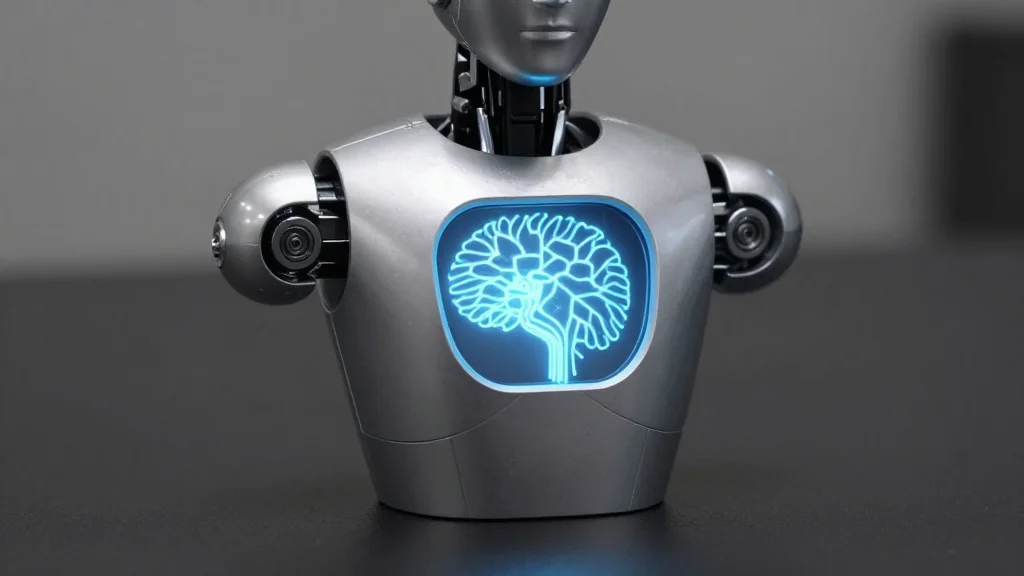
Meta Acquires San Diego Robotics Startup ARI to Accelerate Humanoid Robot Push

Companies Mentioned

Why It Matters
Meta’s purchase of ARI marks one of the largest corporate bets on humanoid robotics by a non‑hardware tech firm. By adding AI‑driven perception and control capabilities, Meta aims to create robots that can operate safely alongside people, opening new revenue streams in home services, retail fulfillment and enterprise automation. The deal also intensifies competition with firms like Tesla, Boston Dynamics and Amazon, all of which are pursuing similar goals. Beyond the commercial angle, the acquisition underscores a broader industry belief that physical AI—robots that learn by interacting with the world—will be a critical pathway toward artificial general intelligence. If Meta can successfully marry its massive data and AI infrastructure with ARI’s robot‑brain technology, it could accelerate the timeline for truly autonomous, general‑purpose machines.
Key Takeaways
- •Meta acquires Assured Robot Intelligence, a San Diego startup with ~20 staff, for an undisclosed sum.
- •ARI builds AI foundation models for humanoid robots, focusing on high‑precision dexterity and manipulation.
- •Co‑founders Lerrel Pinto (ex‑Fauna Robotics) and Xiaolong Wang (ex‑Nvidia, UCSD) join Meta’s Superintelligence Labs.
- •Industry forecasts range from $38 billion (Goldman Sachs, 2035) to $5 trillion (Morgan Stanley, 2050) for the humanoid robotics market.
- •Meta plans to integrate ARI’s technology into its AI pipeline, with a prototype expected by the end of 2026.
Pulse Analysis
Meta’s entry into humanoid robotics is less about a single product launch and more about building a long‑term platform that can leverage its massive AI and data assets. The company’s recent $145 billion capital‑expenditure outlook, driven largely by AI compute needs, gives it the financial runway to fund high‑risk hardware projects that other tech firms shy away from. By acquiring ARI, Meta sidesteps the years‑long talent hunt required to build a robot‑brain from scratch, instead tapping a team that already has a working prototype and a research track record.
The strategic calculus also reflects a shift in Meta’s growth narrative. After the Metaverse’s disappointing consumer uptake, the firm is hunting for tangible, revenue‑generating use cases for its AI investments. Humanoid robots could become a new interface for Meta’s social and commerce ecosystems—imagine a robot that can fetch items, demonstrate products or even act as a physical avatar for virtual meetings. However, the path is fraught with engineering hurdles, regulatory scrutiny, and the need to convince consumers that a robot in the living room is safe and useful.
Competitors are moving in parallel. Tesla’s Optimus project, Boston Dynamics’ Spot, and Amazon’s Astro all aim to prove that robots can be both functional and affordable. Meta’s advantage lies in its data moat; its AI models already power recommendation engines for billions of users. If it can translate that personalization expertise into physical interaction, it could create a feedback loop where robot usage generates new data, further refining the AI. The acquisition of ARI is therefore a calculated gamble: a bet that the convergence of AI, robotics and consumer data will unlock a new frontier of hardware‑software synergy, reshaping how people interact with digital services in the physical world.
Meta Acquires San Diego Robotics Startup ARI to Accelerate Humanoid Robot Push
Comments
Want to join the conversation?
Loading comments...