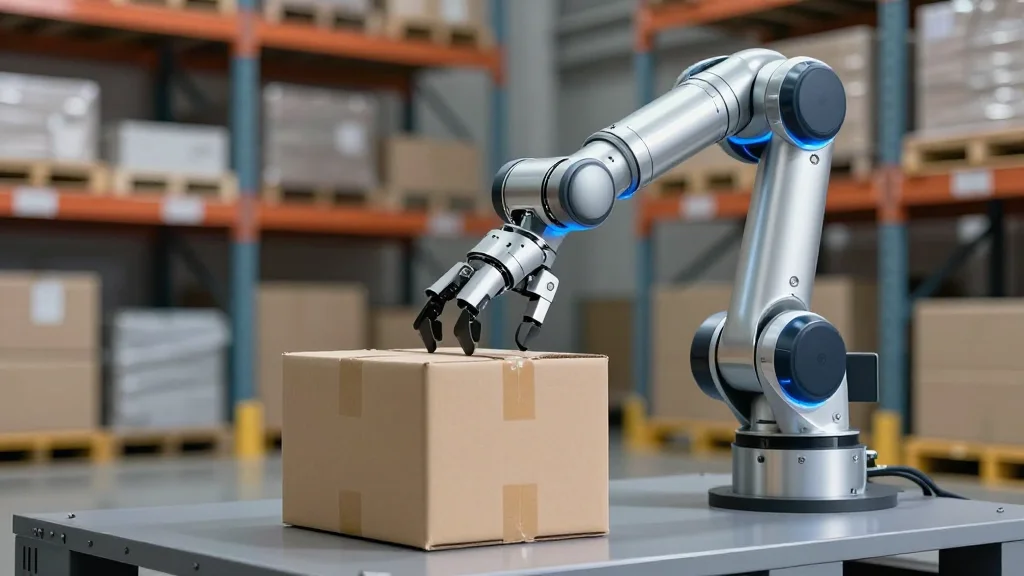
Remy AI Founder Oscar Brisset Raises $650K to Disrupt Warehouse Robotics at 25

Companies Mentioned

Why It Matters
Remy AI’s approach illustrates a broader shift in industrial robotics: the move from rigid, pre‑programmed automation toward systems that can learn and adapt in real time. By proving that a small, founder‑led team can develop such capabilities with a sub‑million‑dollar seed round, the startup challenges the notion that only deep‑pocketed incumbents can innovate in warehouse automation. If successful, Remy AI could lower the barrier to entry for midsize e‑commerce firms, democratizing high‑efficiency fulfillment and reshaping supply‑chain economics. The company also highlights the growing role of large language models as accelerators for non‑technical founders. Brisset’s self‑taught coding journey, powered by Claude and ChatGPT, underscores how AI tools are compressing the learning curve for entrepreneurship in hardware‑intensive sectors. This could spur a wave of similar ventures, intensifying competition and accelerating the diffusion of AI‑driven robotics across logistics.
Key Takeaways
- •Oscar Brisset left BCG in November 2025 to focus on Remy AI full‑time.
- •Remy AI raised over $650,000, including a $500,000 Y Combinator investment.
- •The startup’s robots can adapt to new objects without pre‑programming.
- •Target market: midsize e‑commerce warehouses seeking flexible automation.
- •Next steps: beta deployment by Q4 2026 and a $5 million Series A in early 2027.
Pulse Analysis
Remy AI’s seed raise is emblematic of a new financing paradigm for robotics, where venture capitalists are willing to back early‑stage, AI‑centric hardware teams with relatively modest capital. Historically, robotics startups required multi‑million‑dollar rounds to cover expensive prototyping and tooling. The integration of LLMs into the development workflow has dramatically reduced the time and cost of building perception and control software, allowing founders like Brisset to bootstrap hardware prototypes with far fewer resources.
From a competitive standpoint, Remy AI is positioning itself against entrenched players that dominate large‑scale fulfillment centers. By focusing on adaptability, the startup addresses a pain point that larger vendors have struggled to solve: the high cost of re‑configuring robots for new SKUs. If Remy AI can demonstrate reliable performance in real‑world pilots, it could carve out a defensible niche and attract larger logistics operators looking for modular solutions.
Looking ahead, the company’s success will hinge on its ability to translate AI research into rugged, production‑grade hardware. The upcoming beta deployment will be a critical proof point for investors and potential customers. Moreover, the anticipated $5 million Series A will likely be used to scale manufacturing, hire specialized robotics engineers, and expand sales. Should Remy AI secure that funding and deliver on its performance promises, it could catalyze a wave of AI‑first robotics startups, further blurring the line between software and hardware innovation in the logistics sector.
Remy AI Founder Oscar Brisset Raises $650K to Disrupt Warehouse Robotics at 25
Comments
Want to join the conversation?
Loading comments...