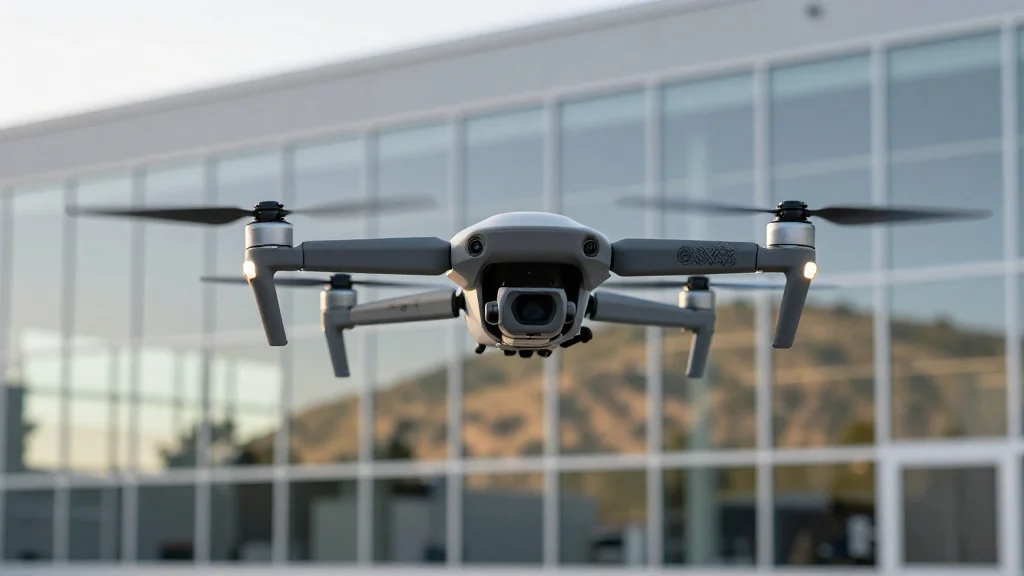
Skydio Commits $3.5 Billion to U.S. Drone Manufacturing, Adding 2,000 Jobs

Why It Matters
Skydio’s $3.5 billion commitment marks one of the largest private‑sector infusions into U.S. drone manufacturing, a sector critical to national security and emerging commercial applications such as logistics, infrastructure inspection, and emergency response. By reshoring production, the company not only mitigates supply‑chain risks exposed by recent geopolitical tensions but also sets a precedent for other domestic firms to follow, potentially accelerating the overall pace of American innovation in autonomous systems. The investment also has macroeconomic implications. The creation of 2,000 high‑skill manufacturing jobs and the support of 3,000 additional positions could stimulate local economies, increase tax revenues, and reinforce California’s reputation as a hub for advanced technology despite its regulatory environment. For the defense community, a reliable, domestically sourced drone supply chain could translate into faster procurement cycles and reduced vulnerability to foreign embargoes.
Key Takeaways
- •Skydio will invest $3.5 billion in U.S. manufacturing over five years.
- •The plan includes a new facility five times larger than its current Bay Area space.
- •More than 2,000 direct jobs and ~3,000 indirect positions are expected.
- •$1 billion of the budget is earmarked for domestic parts and component production.
- •The move aims to reduce reliance on Chinese suppliers after a 2024 blacklist incident.
Pulse Analysis
Skydio’s aggressive capital deployment reflects a broader strategic pivot in the U.S. robotics sector: moving from a low‑cost, globally dispersed supply chain to a high‑value, domestically anchored model. Historically, American aerospace firms have relied on a mix of foreign and domestic inputs; the current geopolitical climate, however, has forced a reassessment of that balance. By committing $3.5 billion, Skydio is betting that the cost premium of U.S. manufacturing will be offset by the strategic advantage of supply‑chain security and faster iteration cycles.
The timing is also crucial. Federal defense budgets are increasingly earmarked for autonomous systems, and the Department of Defense has signaled a preference for vendors with secure, on‑shore production capabilities. Skydio’s investment positions it to capture a larger slice of upcoming contracts, especially as the military modernizes its aerial reconnaissance and logistics fleets. Competitors that remain dependent on overseas components may find themselves at a disadvantage, both in pricing negotiations and in meeting stringent security requirements.
Looking ahead, the success of Skydio’s expansion will hinge on its ability to scale production without sacrificing the sophisticated AI algorithms that differentiate its drones. If the company can integrate its software stack with a domestically sourced hardware base, it could set a new benchmark for end‑to‑end American autonomy. Conversely, any bottlenecks in component availability or cost overruns could dampen investor enthusiasm and slow the broader reshoring trend. The next few years will reveal whether Skydio’s bet catalyzes a wave of similar investments across the robotics ecosystem.
Skydio Commits $3.5 Billion to U.S. Drone Manufacturing, Adding 2,000 Jobs
Comments
Want to join the conversation?
Loading comments...