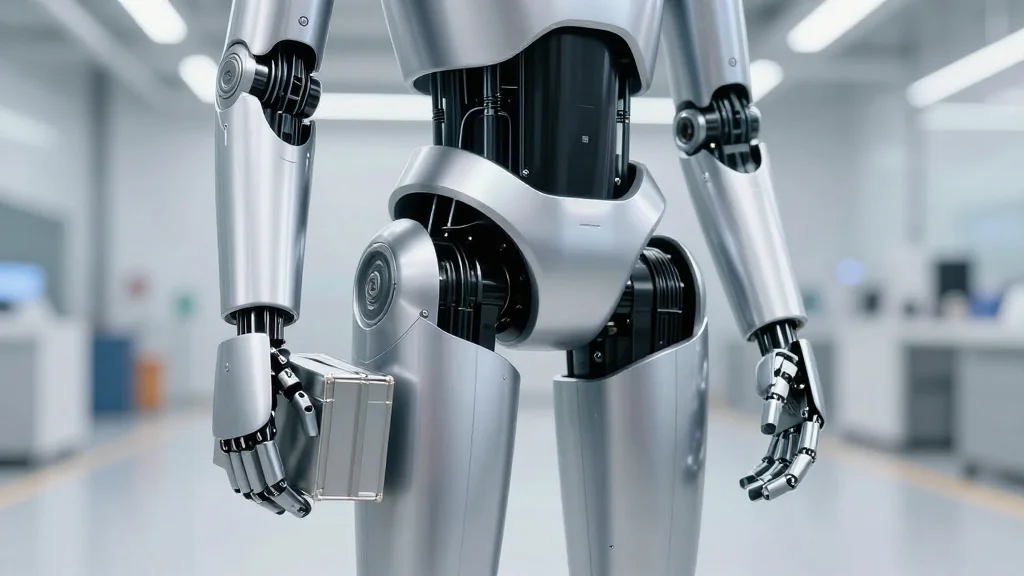
Tesla Rolls Out Optimus Gen 2, Aims at Indian Automation with $20,000 Price Tag

Companies Mentioned
Why It Matters
Optimus Gen 2 could redefine the economics of factory automation in India, a market where labor costs are rising and skilled worker shortages are acute. By offering a humanoid platform at a price comparable to a mid‑range industrial robot, Tesla may accelerate the shift from manual assembly lines to mixed human‑robot workcells, boosting productivity and potentially reshaping supply‑chain dynamics. The robot’s advanced perception and manipulation abilities also raise questions about safety standards and workforce displacement. Policymakers will need to balance the promise of higher output with the social implications of integrating autonomous machines into traditionally labor‑intensive sectors.
Key Takeaways
- •Tesla unveiled Optimus Gen 2 with a top speed of ~6 mph and 20 kg payload per hand.
- •New hands provide 11 degrees of freedom for delicate object handling.
- •Target production cost announced at $20,000 (≈₹16.5 lakhs).
- •Local assembly in India deemed essential to preserve price due to import duties.
- •Entry could spark a price competition with Indian robotics startups.
Pulse Analysis
Tesla’s foray into humanoid robotics has always been as much a branding exercise as a product launch, but Optimus Gen 2 narrows the gap between concept and commercial reality. The performance metrics disclosed—particularly the six‑mph gait and 20‑kilogram lift capacity—place the robot in the same operational envelope as many dedicated industrial arms, yet with the added flexibility of a mobile platform. This convergence could unlock use cases that traditional fixed‑base robots cannot address, such as dynamic material handling in sprawling assembly lines.
Historically, the robotics market in India has been fragmented, with a handful of niche players serving specific verticals. Tesla’s entry, backed by its AI expertise and economies of scale, threatens to consolidate demand around a single, globally recognized platform. If the company can secure a local supply chain and meet the $20,000 price target, it may force domestic firms to either specialize further or seek strategic partnerships to stay relevant. The competitive pressure could also accelerate standards development, as regulators scramble to certify a new class of humanoid machines.
Looking ahead, the critical variable will be execution. Tesla must translate the prototype’s lab‑level performance into reliable, high‑volume production while navigating India’s regulatory landscape and labor policies. Success would not only validate the commercial viability of humanoid robots but also set a benchmark for future entrants. Failure, on the other hand, could reinforce skepticism about the practicality of general‑purpose robots in cost‑sensitive markets. The next 12 months will therefore be a litmus test for both Tesla’s manufacturing prowess and the broader trajectory of automation in emerging economies.
Tesla Rolls Out Optimus Gen 2, Aims at Indian Automation with $20,000 Price Tag
Comments
Want to join the conversation?
Loading comments...