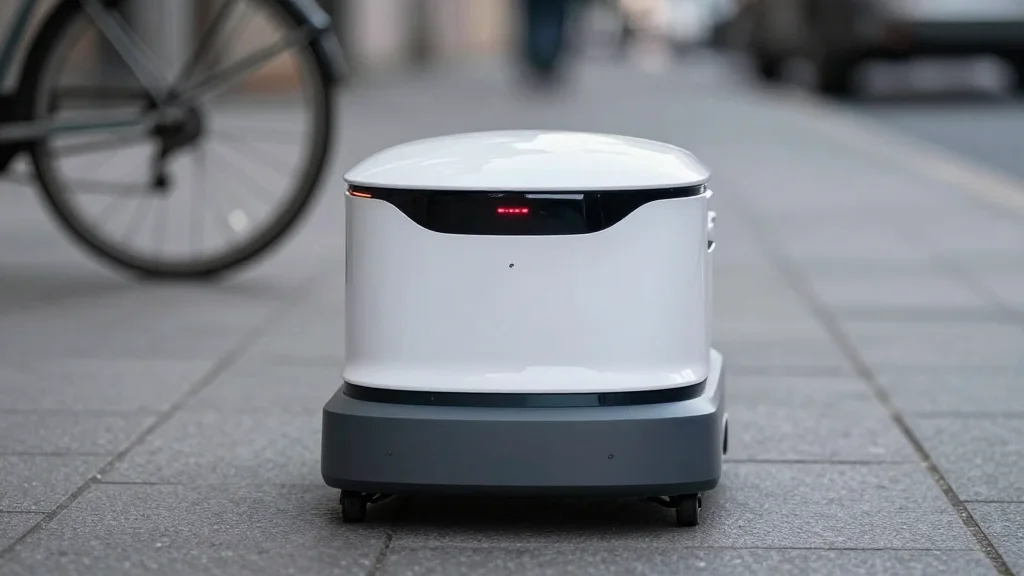
Uber and Avride Sued After Jersey City Delivery Robot Injures Cyclist

Companies Mentioned
Why It Matters
The lawsuit spotlights a critical gap in current regulations governing autonomous delivery robots. While federal and state agencies have begun drafting guidelines for driverless cars, similar rules for low‑speed sidewalk robots remain fragmented. A ruling that holds Uber and Avride accountable could compel the industry to adopt uniform safety standards, including mandatory real‑time monitoring and clear accident‑response procedures. This would not only protect vulnerable road users but also provide legal clarity for companies investing in robotic logistics. Beyond safety, the case could influence investor confidence. Funding for autonomous delivery startups has surged in recent years, but heightened liability risk may temper enthusiasm unless clear risk‑mitigation frameworks emerge. The outcome will therefore shape both the pace of technology rollout and the financial landscape for robotics firms seeking to scale their services nationwide.
Key Takeaways
- •Uber and Avride sued after a delivery robot injures cyclist Conor Shannon in Jersey City
- •Cyclist suffered a broken shoulder and head injury; lawsuit filed by Davis, Saperstein & Salomon, P.C.
- •Attorney Adam Lederman called the incident "beta testing these machines in the real world"
- •Avride’s robots claim an "immediate stop" function, but eyewitness says robot kept moving after collision
- •Case could set precedent for liability and safety standards for autonomous delivery robots
Pulse Analysis
The legal challenge against Uber and Avride arrives at a pivotal moment for the autonomous delivery market. Companies have been racing to capture the last‑mile segment, betting that low‑cost, sensor‑driven robots will replace human couriers in dense urban environments. However, the technology’s promise has outpaced the development of comprehensive safety oversight. Historically, the rollout of driverless cars prompted a cascade of regulatory responses—ranging from mandatory reporting of disengagements to state‑level safety certifications. Autonomous delivery robots have largely operated under a regulatory blind spot, relying on manufacturers’ self‑reported safety metrics.
If the court rules that Uber and Avride are liable, it will force the industry to adopt a more rigorous safety architecture. Companies may need to integrate redundant sensor suites, enforce remote‑operator intervention thresholds, and publish detailed incident logs. Such measures could increase operational costs, but they would also reduce the risk of costly litigation and public backlash. Moreover, municipalities could leverage the ruling to impose licensing requirements, similar to those for food trucks, ensuring that only vetted robots operate on public pathways.
From an investment perspective, the case introduces a new risk vector that venture capitalists will scrutinize. While the market for autonomous delivery is projected to exceed $30 billion by 2030, investors will likely demand clearer liability frameworks before committing large rounds of capital. In the short term, we may see a slowdown in aggressive expansion plans as firms prioritize compliance over rapid city‑to‑city rollouts. In the long run, however, a well‑defined legal environment could accelerate adoption by building consumer trust and providing a stable operating backdrop for innovators.
Uber and Avride sued after Jersey City delivery robot injures cyclist
Comments
Want to join the conversation?
Loading comments...